When I got into crochet and opened my Etsy shop, I was not part of a fiber community. I was inspired, energized and over-the-moon in love with making little funny creatures that made kids smile (and grown-ups). I would look at Etsy and marvel at the creativity and artistry of people all over the world, and often times, barely knew what I was looking at~ I had no idea what needle felting, wet felting or even fulling knitted items were! I was super green.
Until: Susi.
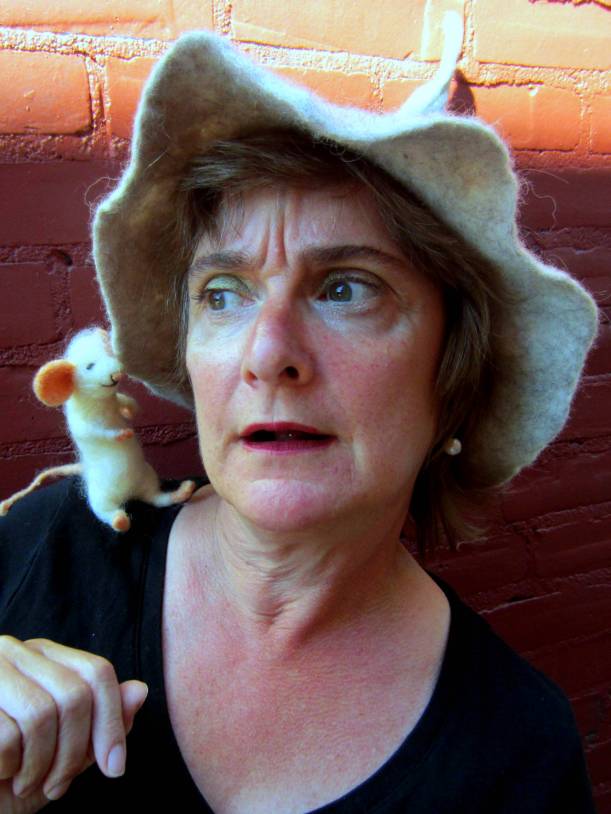
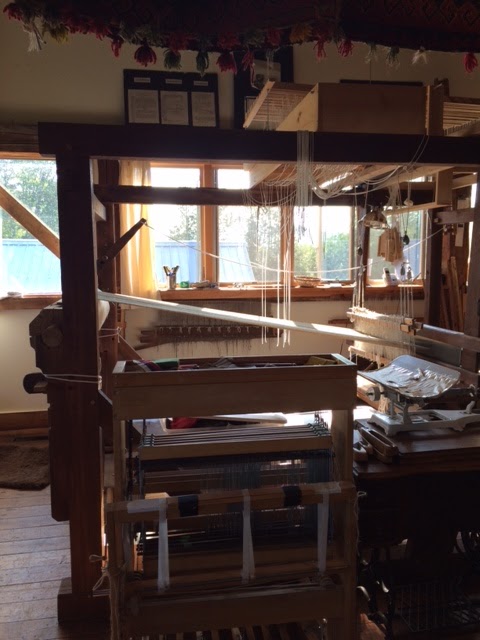
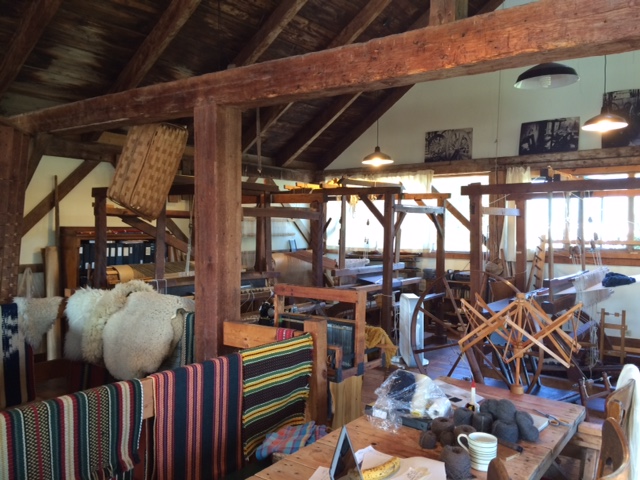
One day, I got an email through Etsy from someone who had an Etsy shop too, called The Felted Gnome Knows. The artist behind this great shop is Susanne Ryan, aka Susi; she introduced herself and I immediately realized that I had already been admiring her work. Her pieces are whimsical, gentle, and inspire creativity. And she lived just a couple of towns away from me! I had no idea what needle felting was at that time, but would see pictures of needle felted creations and ache to understand how they were made. I cannot remember the first time Susi and I met face-to face! Isn’t that funny? In no time at all, though, we became friends. And then we took our first trek up to Mountain Fiber Folk together, which changed my life in so many ways.
I recently sat down with Susi and asked her questions about her art, her craft, her opinions on fiber, her history, and I wanted to share our conversation with you.
The Interview:
HH: I feel like the process of working with wool inherently is soothing and centering. Obviously I’ll want to get to that, but first, can you tell the story of how you came into fiber art?
SR: Several years ago, my husband was transitioning into a new phase of his work life and consequently money was tight. We have a very large family, and that, for some reason, was the year that folks decided that we were going to get a little something for everybody. At that time, I was taking wool sweaters and fulling them down and making them into things. I was knitting and I had gotten a needle felting kit with my daughter at Kaleidoscope Yarn. It was to make little Santas. We made them, and there was something about needle felting where I thought, I could do so much with that.


Interestingly, I wasn’t interested in spinning wool at all. I started with needle felting and then went into wet felting. Initially, I found that there were not a lot of stores in the area that carried felting supplies. The area store that did had classes that were at times I couldn’t go. Also, there are some who are very ready and willing to help people learn things and some who are not, so I ended up learning a lot on my own.
Around that time, I ran into Leslie Lewis (Ewe Who Farm), an old friend from my school days, and we reconnected. Over time, she made a quilt for Maggie and told me about her sheep. So, after seeing that options were limited in terms of local stores helping with my fiber questions, or simply not having the supplies, I contacted Leslie again and asked her if she sold her fiber, and she said “Yes!” I had already been going to farmer’s markets and buying wool from farmers, but getting in touch with Leslie is really what started my seeking out of local farmers to buy fiber from.
When I was at Kaleidoscope yarn, I remember them handing me a brochure for Mountain Fiber Folk, so when I met you I said, you know, I’m going to go up there. I had gotten to the point where I wanted to buy local. I’ve always been interested in and shopped at farmer’s markets, and was involved in getting a farmer’s market in my town. I’ve always felt strongly about that. If you support a local business, they support local and your money goes back into the community.
Going up to Mountain Fiber Folk and seeing what they were doing and how they were doing it was very encouraging in terms of what I wanted to do.
I’m all self taught. I’ve only recently started taking classes this year for things that interest me like the masks and the clothes.
HH: And those classes are very specialized, right? This is a commitment to taking your craft to a whole new level.
SR: Yes, they are advanced classes. It’s interesting to meet all of these women who are so big in the fiber world. I thought Gladys Paulus and Anita Larkin, being in the upper echelons of the felting world, might not be approachable, but they were very down to earth and accessible. This is a passion for them.
HH: Oh yeah, it’s totally a passion! It grabs you and doesn’t let go! It is so inspiring to see what artists do with fiber. It seems infinite, the possibilities.
SR: It’s not going to support you… part of that is that people have no idea how much work goes into making needle felted sculpture, or hats and slippers. They take hours and hours, and sometimes many days. Especially when you take into consideration that often times, I’m getting these fleeces processed by Michael (of Hampton Fiber Mill), or processing them myself. I tend to be a very particular when it comes to skirting and cleaning a fleece, so that takes a lot of time! But you know, it’s frustrating when you pay for roving or batts and you’re picking out veggie matter!
And also, people are really getting a full-on, Vermont-made piece. Needle felting has become popular, so overseas companies are mass producing felted figures and selling them cheaply which makes it difficult for the consumer to understand why local pieces like mine are higher than other felted products.


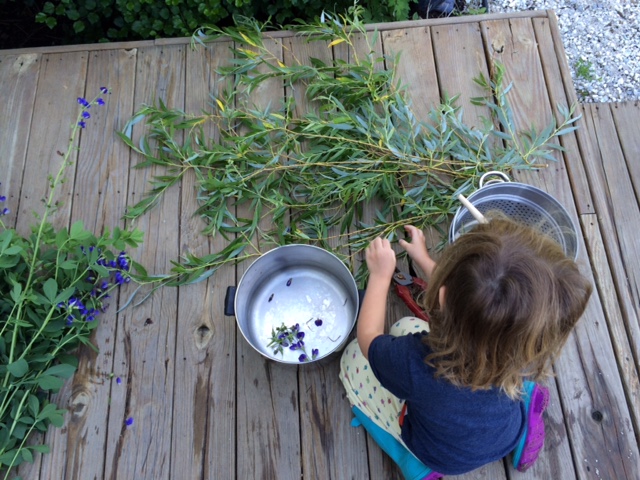
HH: I was thinking about the social and political aspects of fiber art yesterday when I was dyeing wool with kids at school. There is so much to think about and make choices about when it comes to where we buy our supplies, how we process our fiber, and where we spend our own money. It’s a whole mind-set.
SR: I also think too, in Vermont, we are so focused on the maple producers, and the organic food movement, people forget that there are a lot of sheep and goat people out there that are struggling. They have a wonderful renewable resource that is not being tapped into or marketed appropriately. Not only can we make clothing with it, but it can be used for insulation, you can compost it…. There’s so much you can do with this product. These people are living from hand to mouth, all for the love of their sheep!
HH: What do you think it is about working with fiber that makes people so passionate? Or, what grabbed you about working with wool?
SR: There’s something very earth-bound about it. It’s very grounding. There’s something about wool that’s very… I think it’s the same as gardening… it puts you back in touch with the natural side of the world. You are woking with a natural product that is renewable. It’s warm and it evokes a sense of homeyness and tradition. There’s something magical about it. You know, you can twist it and it becomes yarn! It magically transforms! There’s a whole magic to it… like alchemy.
I also really dig the fiber community. They’re really very down to earth people. Most of them, I have to say, especially those who raise their own animals, are very warm and open and generous about their knowledge.
HH: Isn’t that what was so wonderful about Mountain Fiber Folk? I walked in there that first time knowing nothing about handspun yarn, and walked out completely moved. Next time we went, I left with a drop-spindle that Ruth so generously helped me to figure out.
SR: It sucks you in! If you talk to Michael (Hampton Fiber Mill), he’ll talk about how he learned to knit from his grandmother, and then from there, he learned to spin, and then the next thing you know, he wanted to process fiber!
For me, I can tell you all about breeds and good wools for different projects! For some reason, I can retain this information. Who knew? I make the comparison to my father; he’s really into physics and he starts talking about it and everyone glazes over, but he’s so passionate about it. My sister says I’m like our dad….”you and the sheep, man!” I get so excited about it and want to talk about it, but nobody cares! That’s why it’s so great to get together with other fiber people who get it!
HH: I have to ask this… I know for me, I get around handspun yarn, and I must smell it. I can’t help myself. It’s an automatic thing I do. Do you do that?
SR: No, I don’t smell the wool, but I love to touch it and see the luster and sheen. I want to feel the coarseness of it. I don’t mind the smell of lanolin or raw wool at all. I do have to say, I don’t like skirting at all. There’s a big thing about not using chemicals to get the veggie matter out of fleeces. Well, you don’t have to use chemicals. You just have to be really detail oriented and pick the stuff out! The fiber you and I put out, it’s clean! But you’ve seen the fiber that has a ton of vegetable matter in it!
HH: You have to front load time and effort into preparing the wool. That’s the invisible work. There’s so much dirty work. And you can’t use “chemical free” as an excuse for not being careful with your product.
SR: It was the experience of paying for roving that was filled with veggie matter that really pushed me into preparing my own wool. Now I’m selling kits and supplies and it’s kind of exploded!
HH: What’s your favorite thing to do now? If you’re looking to spend the day however you want, what would you do?
SR: Making a hat. Making whatever kind of hat I want and not worrying about it if it turns out.


HH: What’s your favorite hat you’ve made?
SR: I have two: the felted Gnome Noggin hats, and the Ratagast hats. I love those two. Those are original designs. I make my hats with wool that some would not use for that purpose, but I line them with fleece. You know, I think I’m different than a lot of felters because I think merino is overrated.
HH: What fibers do you like to work with right now?
SR: Border Leicester, Gotland, Romney and Icelandic. With Icelandic- if you take the time to separate out the outer and inner fibers, the under coat is just as soft.
HH: Did you do handwork when you were young?
SR: No. My entire family is like, who knew?! I think what it was is I was never interested in the packaged craft kits available for children when I was young. I was always into the arts, but not in a very public way. I did win a poetry slam when I lived in the Carolinas and I was always around artists and musicians. I did do a lot of theater, too. But it wasn’t until I found felting that I found my medium. I did teach myself how to sew and knit, and I had the ability to put things together, but this really was the first medium where I knew what to do with it without having any prior introduction.
HH: What’s on the horizon for you? Anything you are looking forward to tackling?
SR: I want to fool around with very freeform clothing. I took with Linda Veilleux that was incredible; she’s an amazing artist. I am not as meticulous as she is, and I am learning why it is important to take careful measurements, but I want to play around with shapes and turn them into wearable, freeform clothes. I’m not really interested in making vases. It needs to be wearable or functional. If I’m going to do a sculpture, I’m going to needle felt it. I do like the idea of marrying wet felting and needle felting. Anita Larkin is a wonderful artist~ she stitches pieces together and wet felts them. Those types of ideas are interesting, but I’m also figuring out how to support my habit.
HH: So, you’re done with the holiday fairs…
SR: Yes, but I’ll be at the Stowe Renaissance Fair in the spring. I’m going to make hats for that.
HH: I know where I’ll be seeing you in the spring! I love a good Renaissance Fair and seeing your hats, and you!
Check out Susi’s links to her Etsy shop, her Facebook page, and her website. She keeps them up to date on where she’ll be and what classes she’ll be teaching.
Thank you, Susi, for taking the time to talk with me!