Healing Handcrafting


Leave a comment

Grieving While Knowing About Grief

(this post was originally published on The Long Grief Journey website)

This year is off to a very raucous and rather painful start. I know I am not alone in feeling this way, but I wanted to share with you what has been happening because it is so relevant to the topic of this site, which is in a word, grief.

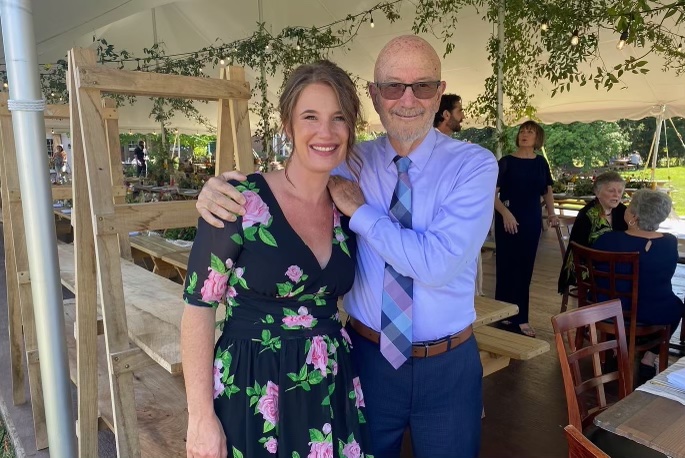
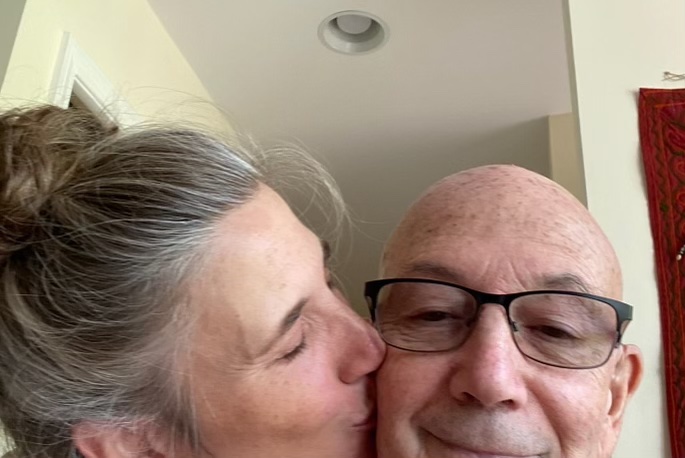
Just over three weeks ago, my father died. Six weeks to the day prior to his death, my grandmother died. In a matter of six weeks, my family lost two elders, and the reality of this is continuing to seep into my mind, heart, and bones.

Several people have asked me if the book I wrote with Pamela Blair has helped me deal with my grief. It’s been an interesting thing to think about. Going through the process of losing my dad with my family, I often thought to myself, “my god, I cannot believe how much this hurts.” There were times in the hospital as well as at my dad’s wake when I didn’t feel my feet on the ground. There were times sobs erupted from my body without warning. There was a lot of sleeplessness and anxiety.  What I realized was that knowing about grief doesn’t alter the pain of grief. But what it has done for me is to normalize my experience of it and not judge myself for anything. Steeping myself in research on grief and talking with so many people about their experience of it, I see that when we go through grief, we know it. When we listen to people who are suffering without trying to rush them to feel better, we absorb and open our hearts to humanity. We become part of the fabric of our shared experience, and it is textured, layered, real.

Our “culture” is often accused of not doing death and grief right. Collectively, we don’t talk about it enough, we keep it away from us and fear it. We try to outlive death and deny its existence. There is evidence of all of that, for sure. But I can say that going through these last couple of months, I’ve witnessed far more people getting grief than not. At my father’s wake, tons of people came and not one person said anything that made me bristle or think, “wow, they just don’t get it.” Mine and my family’s pain was held, responded to tenderly, and with deep interest and compassion. I wasn’t able to attend my grandmother’s services due to having COVID-19 but I feel sure the same energy was present for my family then.

What I do see in our culture is that capitalism and our bowing at the altar of work is a huge problem. One family member of mine had two unpaid days of bereavement for the death of a close family member. Two unpaid days. What? Is that a joke? Several others’ jobs had policies that were a little better than that and their management was very accommodating given the unbelievable losses affecting our family. But it’s important to know this: federal law does not require organizations or companies to include bereavement leave in their benefits packages. As of April 2023, only five states in the US had bereavement leave laws; three additional states had bereavement legislation efforts in the works. “As the Family and Medical Leave Act stands, bereavement is not an acceptable condition for taking unpaid leave from work.” Time minimums for bereavement leave as well as payment structures vary from state to state (or those five states that have actual bereavement laws). citation

For the rest of the country, it is up to the company or organization to determine their own bereavement policies including whether to have them at all. The typical scenario is three- to five-days leave. Sometimes these days are paid, sometimes not, sometimes a hybrid of the two. The size and financial constraints of companies obviously affect this to some degree. Also important to note, only 56% of the population works for places that even have benefit packages. What do hourly workers or those that are self-employed do when they suffer a loss or a family tragedy?

With this kind of pressure to get back to work, there is an underlying communication which is basically, “get yourself together enough to get back out there”, which for many people following the death of a loved one requires faking it. Big time. Feeling distracted, depressed, exhausted, confused, and vulnerable are very common emotional experiences following a loved one’s death, and having to fake it can make things more difficult for people. In fact, for some this is an added layer of trauma that complicates grief in the years to come.

I feel incredibly fortunate to have been in a position where I could take the time I needed to gather myself back into a place that was fit for work. I continue to be in a place where I can do what I need to do to take care of myself. But I am aware that this is not the case for many people, and that is unacceptable. I think this cultural problem of not “doing grief right” is less a human problem and more a political and economic problem.

In sharing these thoughts with you, I am channeling the energy of my dad. He had strong opinions about politics and policy. I loved talking to him about these kinds of things and often called him to get his opinion on something or his long-view perspective on issues I didn’t fully understand. I’ve gone to call him numerous times in the last couple of weeks, looking to catch up and shoot-the-breeze. I’ll miss doing that so much but hopefully he knows (and I believe he does) that I’ll keep at it and continue to advocate for what I believe in.

And if you’re reading this because you are grieving, you are not alone. I hope you are taking all the chances you can to be tender to yourself and that you hold yourself with all the compassion you would afford another person. ~ Bradie
Leave a comment

Supporting Grieving Children

Thursday is Children’s Grief Awareness Day. You can read about the origins of this important day here. If you have a child in your family, classroom, sports team, extracurriculars, or community that you know is grieving the loss of a loved one, you can find wonderful information on the Highmark Caring Place website about how to support them.

Definitely check out their Facts and Stats page for some insights into the breadth and depth of grieving children and the long-term flow of grief so many of them experience.

Below I’ve shared an excerpt from The Long Grief Journey in hopes of contributing to this very important conversation. There have been many times over the years where I’ve worked with children who appeared to be struggling with learning or behavioral issues who also had lost a loved one. Sometimes it was long enough before I became involved for educators and other important adults in their lives to not be aware of the child’s loss. Sometimes too, the assumption was made that so much time had passed between the child’s loss and whatever was happening at the moment that the two issues (or more) weren’t related. What we found, time and again, was that with tender care and raised awareness, support of children was more full-bodied, relevant, and empathetic when the picture of the child’s life was viewed as a whole, grief included.

I hope that if you are supporting a grieving child, you find this useful.

The Long Grief Journey, excerpt from Chapter 15:

Helping Children Cope with Long-term Grief While Tending to Yourself

It can be tough to help kids deal with grief when you’re grieving as well. It’s important to take care of yourself…

Amy Morin, LCSW, psychotherapist

A life built around a core sense of absence is its own type of grief and for many is difficult to describe in words. The journey begins early if your child lost a significant loved one at an age where they don’t hold any memories of them. If you’re helping your child grow up with the absence of a precious loved one, you already know you have a crucial role to play. It’s important to keep their deceased loved one in consciousness, by name and by image, to tell stories about them, saying their name in fluid, non-whispered ways. Consider also this truth: children will grieve and will process their grief in some way, no matter what we do. The more open we are, and the more space we can hold for them, the more fluidly their experience will go.

SPOTTING LONG-TERM GRIEF IN CHILDREN

When a child loses a parent…that child grows up feeling different and alone. A story is written in a secret place in that child’s mind—a story of loss and pain and the triumph over that pain.

Maxine Harris, PhD, author The Loss That is Forever: The Lifelong Impact of the Death of a Mother or Father

As much as we’d like to insulate ourselves from untimely loss, it’s proven to be impossible. Some people lose a loved one when they’re infants, and others after a long life lived together. There is no official roadmap detailing how loss will impact a life, but some themes emerge worth considering.

Here, we write as though you are a parent or caregiver to a child who has lost a significant loved one, but if you are reading this section with yourself in mind, hold a space for remembrance of your age and your thinking and needs from that time. So often as children go through their own grieving process, they are supported by people who are also grieving and who have varying levels of knowledge about developmental ages and stages and the needs associated with them. Those who are in the acute stage of grieving don’t generally have a lot of extra energy to spare.

Let’s begin with what unifies us all in the experience of long- term grief, regardless of the age you are at the time of loss. In the beginning, common feelings and reactions include anger, ambivalence, longing, and the persistent striving to recover the person lost. Age is what tends to dictate how these emotional reactions appear and are understood or expressed. As a rule, adults have more life experience than children and have more reference points for identifying feelings and for asking for what they need. Children are often confused about what their feelings are about and may even struggle with naming them. Anger can feel more like an urge. Persistent longing might be expressed through obsessive ritual and magical thinking. When young children lose a parent, sibling, or other precious loved one, the effects can last for years, especially if they are not supported by the important adults in their lives in a way that allows all of the feelings and fears to be expressed and processed. Michael described how his granddaughter continues to process the death of her father who passed away five years ago.

My granddaughter has hundreds of cuddly toys. So many around her bed that she can’t get in it! She fixates on keeping them all in the same order. She is ten now and she doesn’t look to be abandoning her teddy bears any time soon. We just accept it.

It’s so important for caregivers, teachers, and other adults to know that even years after a child loses a dear loved one, especially a parent or sibling, issues can arise which look like anxiety, depression, attention deficit disorder, autism, obsessive-compulsive disorder, and academic delays. In a child’s life, loss changes the shape, texture, flow, and rhythm of most everything. It doesn’t mean they can’t go on to live wonderful enriching lives, but it does mean the relevant and important adults in their lives need to keep an open ear to underlying issues as they express themselves.

Older children and adults understand time and finality, whereas infants, toddlers, and young children do not. Forever can be both an impossible concept to understand as well as terrifying when applied to the deceased loved one. It’s easy to see how immediate grief reactions can evolve and morph into long-term and unresolved grief as the child learns to have a relationship with someone who isn’t there. Even years later, people of all ages report “seeing” their loved ones in passing cars or in groups of people. Pam swears she saw her father sitting in a diner eighteen months after his death. “I saw him sitting in the window from the parking lot wearing his favorite baseball hat, and I almost approached him!” This kind of seeking behavior is found in people of all ages.

No matter the age a child is when they lose an important loved one, they are likely to regress to behaviors from a younger developmental stage, at least for a while. Children who were potty-trained may bed wet again for a time. Teenagers may want to sleep in their parent’s room or may not feel comfortable going out. Moreover, adults may wish for someone else to manage the nuts and bolts of life, responsibility feeling too burdensome and stressful. Herein lies the potential for a complicated battle of the needs. It’s easy to imagine that if an adult is feeling the pains of grief for a long time and needs a release of pressure, it might be doubly hard to care for children who suddenly are not only grieving but are also doing things that are unexpected, appear immature, or even are annoying. The way children’s caregivers respond to these regressions has a lot to do with the way grief is metabolized in the long run. That’s why getting support and gaining increased under- standing of how children express is so very important.

A LIFE REDEFINED

Ian was twelve when he lost his father. When he was twenty, he asked, “I wonder what kind of man I would have been if I’d had my father all this time.” Now he’s forty-one and told us, “I still miss him every day.”

Pam

Another thing to remember is that at every developmental stage or milestone, life is redefined. Graduations, new jobs, greater independence, a committed relationship, parenthood—all these things that come to pass in a life stand out as one more life event a parent didn’t witness, and one more moment to grieve. Over a lifetime, metabolizing this loss and incorporating it into one’s identity is the goal.

Those who lost a loved one at a young age might not feel free to talk about them. Some feel as though bringing up their name or names will make others uncomfortable. Some suffer from feelings of sadness and jealousy when they witness others having close and bonded relationships. There is a sense of difference, of otherness that marks a person’s life and can make special moments at best bittersweet, at worst, emotionally intolerable. It seems there is a value placed on the recency of loss. The further back one’s loss goes, the less room it gets to take up in conversation. Meanwhile, the person who lost someone at an early age may feel like this fact of their life is the first part of them that enters a room, the rest shaped by this loss.

Whether we’re healing our inner child, tending to our adult wounds, or helping another person on their long journey, it helps us to be oriented to where a person was in life when they sustained their profound loss. It can also help us serve ourselves from a tender and compassionate point of view.

~~~~~~~~~~~~~~~

A Book Recommendation: a dear friend of mine whose family has been impacted greatly by loss recommends the book The Invisible String, by Patrice Karst. She said this book was invaluable to her family when they were supporting her grandchild through grief. There are other books in the series that are all wonderful and deeply supportive of children and those who care for them.

Do you have books you recommend for grieving children?