Healing Handcrafting


4 Comments

Some Recent Fibery Work

Last weekend, I was able to be a part of a wonderful Open Studio day at Shelburne Pond Studios. I don’t have my own place there, but as part of their weekend, they invited local artists to show their wares. It was a good chance for me to finish up projects that had been drifting about, waiting for some attention amidst all of the things that can make a life so full. I was delighted to see how much I actually did make over the winter months. More than I realized! I think my obsession with circular weaving helped. It never felt like work, to pick up a little loom and let my gut tell me what color needed to come next, what texture, what material…

Below are some pictures of some things I had on hand.


FullSizeRender-103

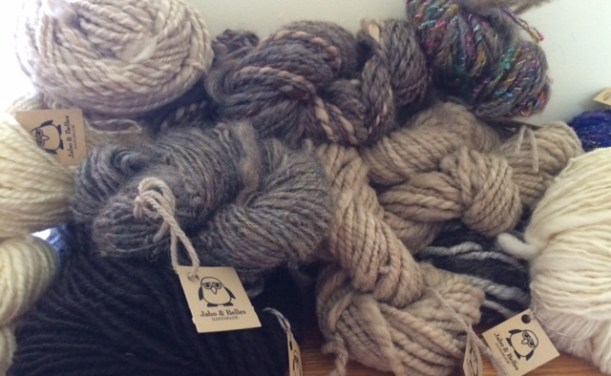
Skeins of yummy handspun yarn, all from locally sourced wool.

FullSizeRender-99

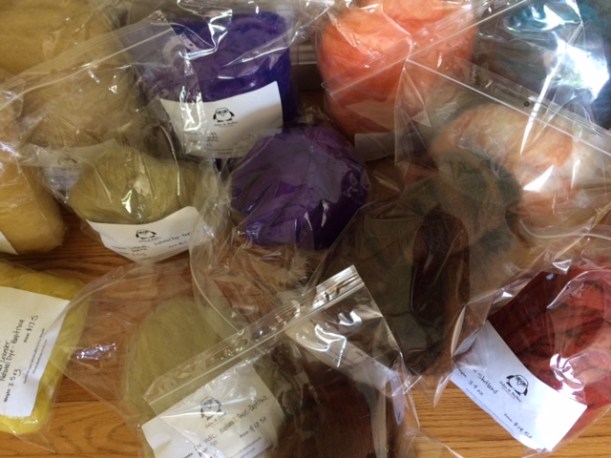
Loads and loads of batts ready for spinning or felting!

This little circular weaving piece was made using a loom from this Etsy shop. I love the sizes of looms this shop owner offers. They are affordable and very, very fun.

FullSizeRender-105

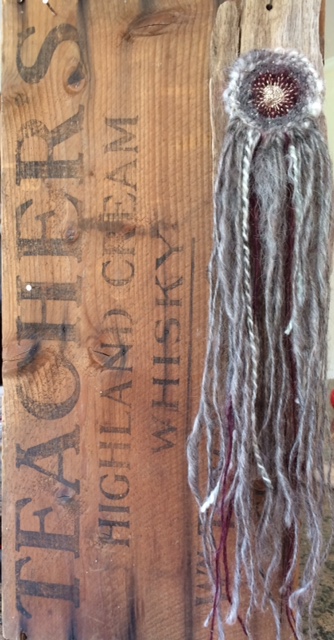
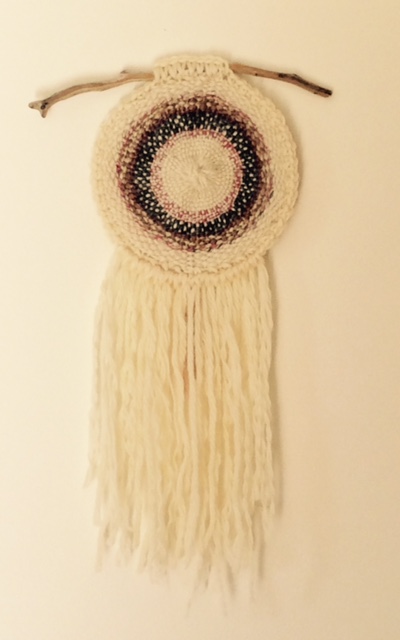
Circular weave wall hanging.

FullSizeRender-106

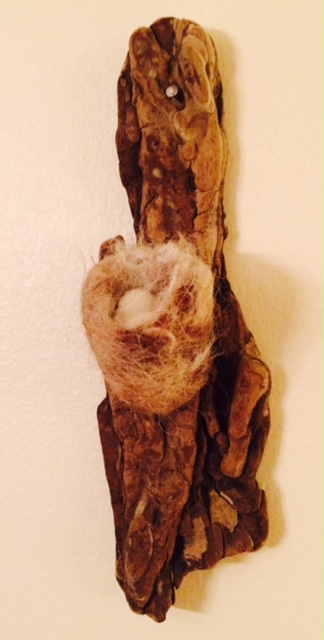
A little tiny nest with a little tiny egg on a little tiny piece of wood from our big beautiful lake.

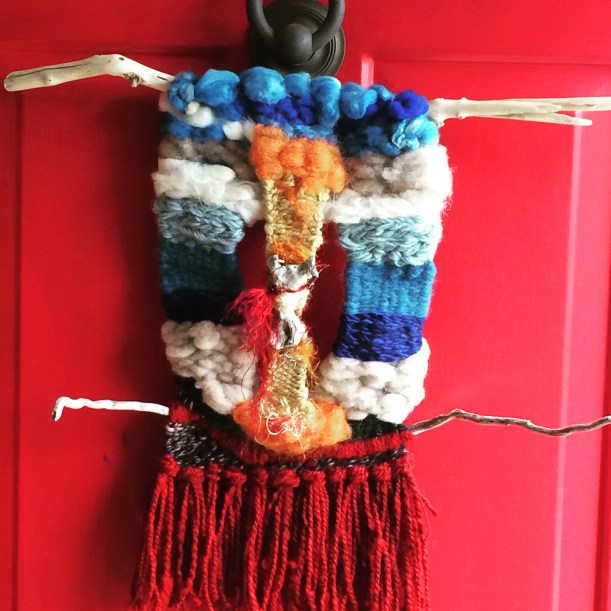
The wall hanging below was made in part with a Majacraft Circular Loom. I got mine here.

WallHanging

Another Wall Hanging.

FullSizeRender-102

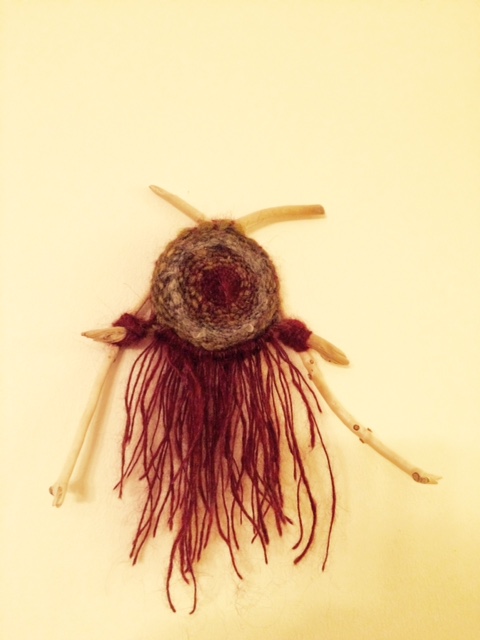
This “doll” sort of appeared. I love her but she also gives me the willies.

IMG_8738

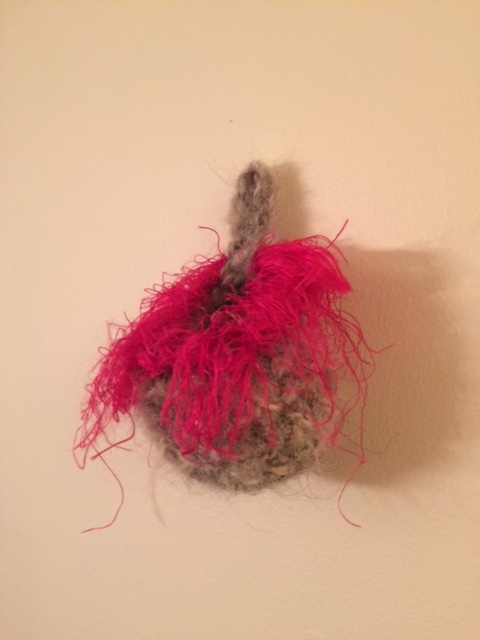
Wild hanging basket.

image

Woven piece highlighting a lovely bit of driftwood that looks to me like a lady dancing.

IMG_8754

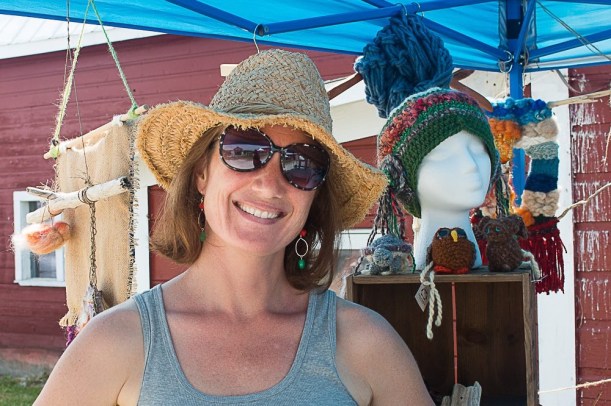
Hello from me.

FullSizeRender-107

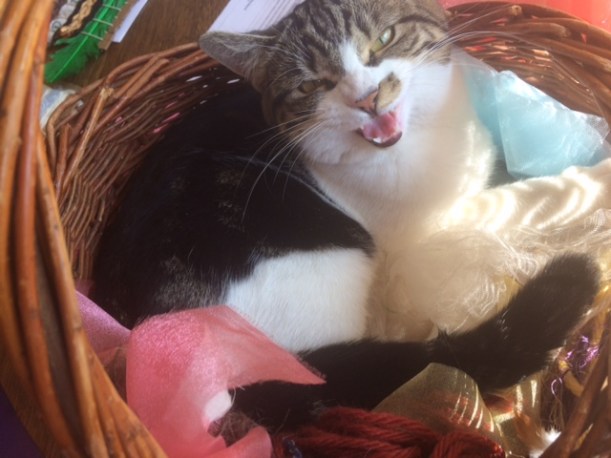
Mittens letting me know that for that moment, the fabric scrap basket was indeed HERS!


2 Comments

Valentines and Textiles

If you told my 18-year old self that one day I would be more than delighted to treat myself and family to a brand new dish towel for Valentine’s Day, I would have probably swam to a different land in an attempt to start over, reboot, reset my course to avoid such a fate. 

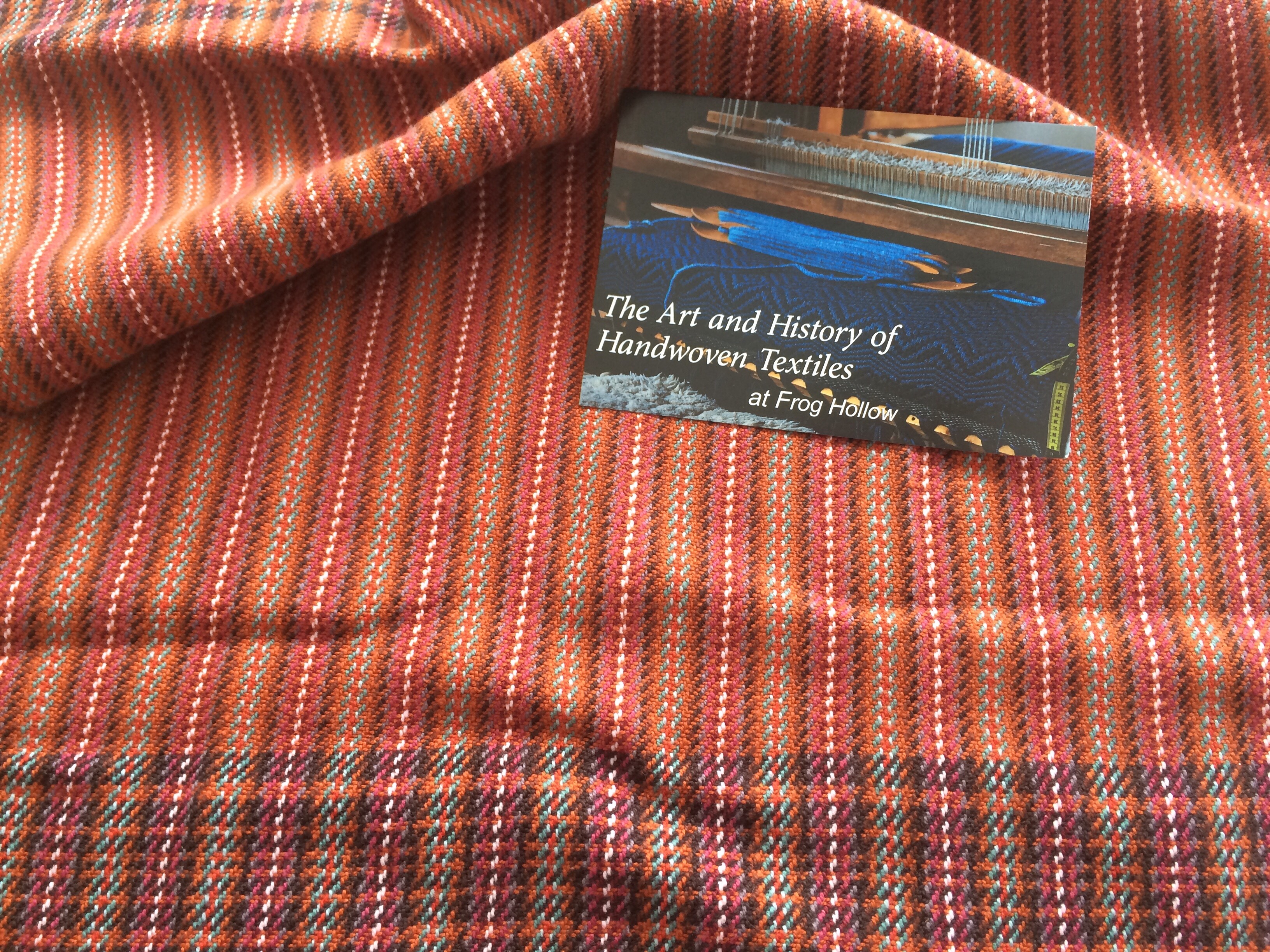
I’m so relieved no one meddled with my future in such a reckless way, because now I am the proud owner of hopefully the first of several hand woven towels made at the Marshfield School of Weaving. It is gorgeous, sturdy, soft and functional. It took time, great skill and a dedication to an “old” way of making. It felt like a decadent, yet moral and tame purchase. We will have this towel for decades, I’m sure. And every time I dry my hands, wipe up water or dry a pot with it, I will think about where it was made. I love this more than champagne and chocolate. 

Go to Frog Hollow in Burlington, VT to see a lovely exhibit from the Marshfield School of Weaving. It runs through the end of February and won’t disappoint. 


Leave a comment

Summertime Dyeing, Part 2

In Vermont, it is still hot. Too hot. I never thought I’d say that, but maybe after all of these years, the longing for the change into winter has evolved and grown. I’m catching up now, with projects begun in the early summer and late summer months, so that I might get some things in order to prepare for the coming autumn. I have a lot to make for the Women’s Festival of Crafts at the end of November, and there are new things I want to try. I would love to attempt weaving again, and I would love to try to knit something a little bit complicated, with color pick-ups, maybe, where gauge matters. I do worry a bit about getting frustrated or feeling defeated, but I think that’s exactly why I should try these things. If I want to make it, I gotta learn how to do it!

Anyway, before I wrap things up for the summer months in this blog, I wanted to document and share with you more about my plant dye experiments with wool. And I guess, writing a post that includes a “Part 1” in the title suggests that more is coming on the topic, right? Well, here’s Part 2.

In June, I was gripped by the pull of flowers, trees and all things planty. I longed to see what came of what was all around me in my yard. Here is a part of my dye journal: 

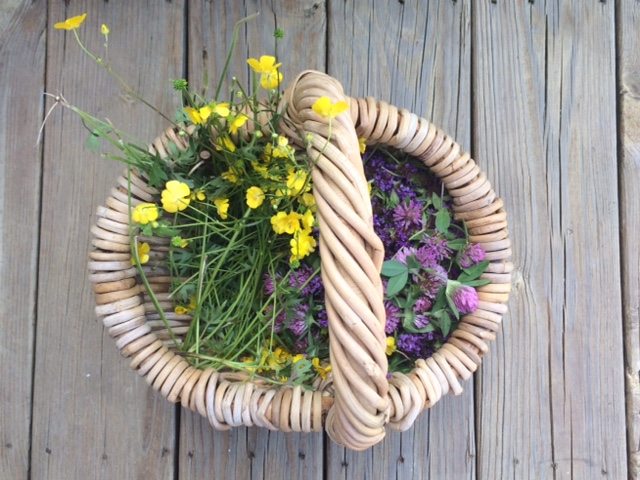
“I am at a stage of dyeing wool where experimentation and flexibility are key. The mystery is so much fun, but I know that around the corner is more discipline and study. This morning as my children played with a friend, I wandered around our wet yard and gathered purple clover and buttercup flowers. I filled a small basket my mom gave me; purple on one side, yellow on the other. My daughter occasionally ran to me with small bundles of flowers. I saw little grasshoppers and butterflies and I breathed and felt the air and heard the laughter. I was aware at one point of my own hastiness and then remembered there was no reason to rush or to apply urgency to this job. Urgency is everywhere. I carry it on my shoulders like a silent, heavy monkey. Once I realized my company, I uninvited it with each little pick and pinch of the lovely weeds. I could feel my belly relax and gratitude enter.”

 What I did:

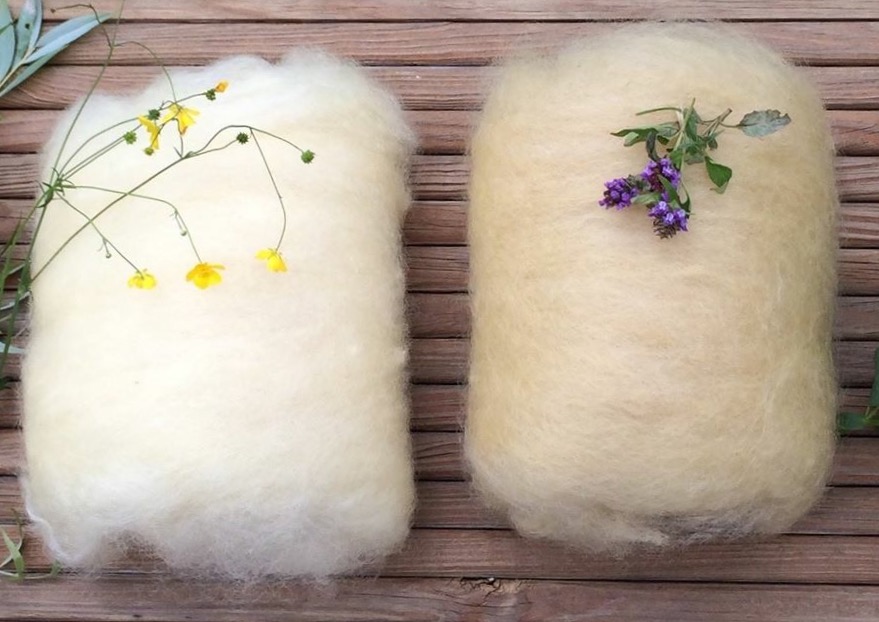
~ Buttercups with a few evening primrose flowers thrown in, plus stems from both. Mordant- alum.

~ Purple Clover, flowers and stems. Mordant- alum.

What I got:

It’s not especially easy to see, but trust me when I tell you that the buttercups made a lovely, light yellow, and the clovers made a very light brown. I was delighted with the outcome! 

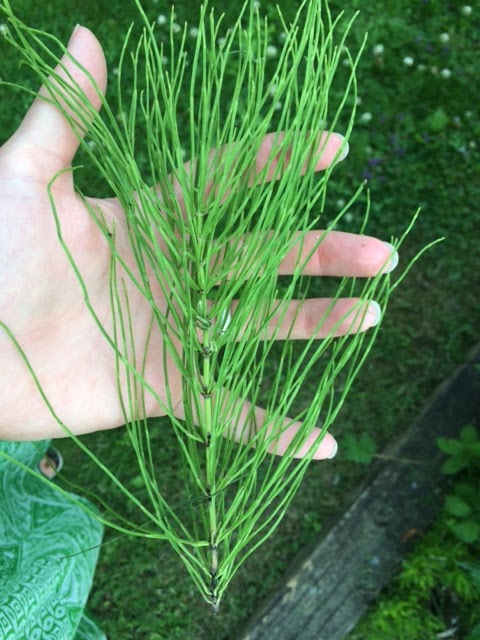
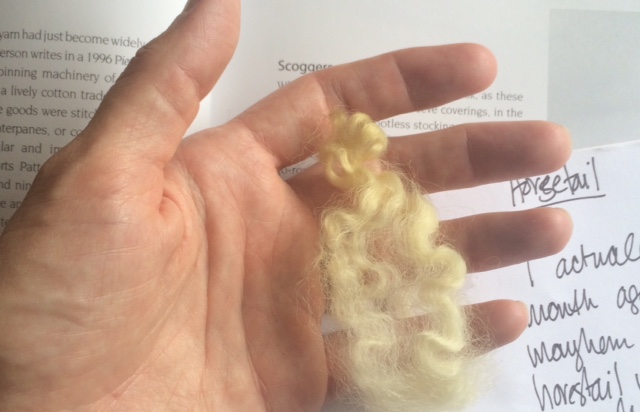
Around this same time, I did an experiment with horsetail. With this, I just poured almost boiling water over a lot of horsetail in a pot and let it sit in my garage for a few days. It was the boiling of that in my house that resulted in my moving my whole operation out into the garage. It sure did smell bad. Real bad. I didn’t admit it then in the face of the rebellion on my hands, but it did. I’m sure the soaking weed worked up a bit of gunk in those few days. The results though, were lovely! I got another nice golden yellow with a brown hue.

I’m sure by now, if you’ve read my other posts, you’ve noticed a theme. I seem to keep coming back to the idea of slowing things down. Way down. Maybe some of you are not afflicted by the sense of busy-ness, rushed-ness and too much of everything-ness always shaping a day, but I find those feelings or experiences of life impact even the most peaceful of days if I’m not careful. It’s sort of an automatic way of thinking and behaving. I think the act of going outside, collecting flowers or plants to dye with, when you don’t exactly know what the results are going to be, is an ultimate exercise in combatting that daily life habit. 


1 Comment

Marshfield School of Weaving- Plant Dyes for Wool

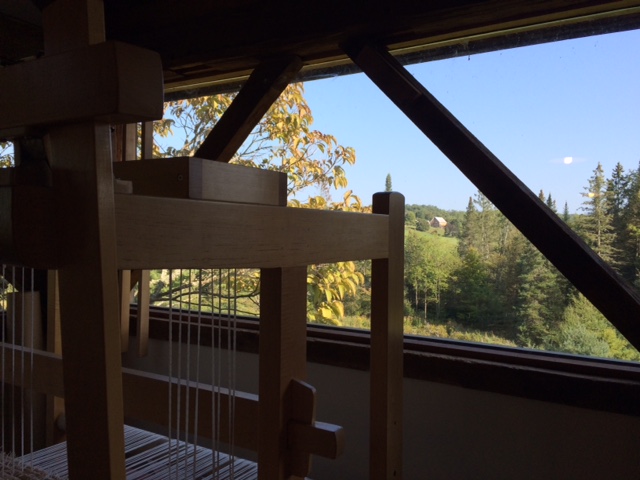
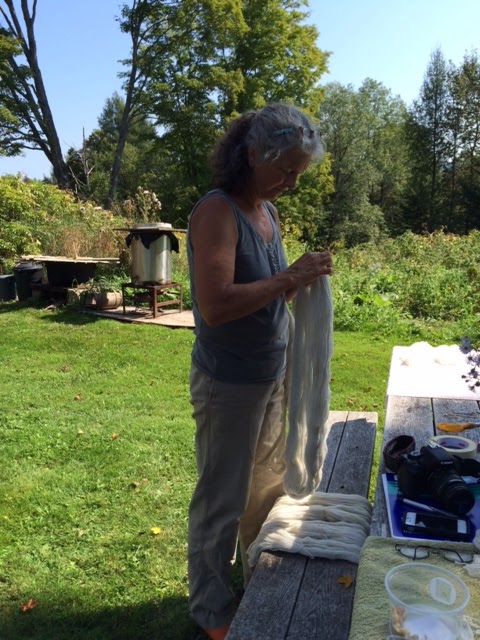
I had the great fortune to take a class at the Marshfield School of Weaving yesterday. This class was about dyeing wool with plants and other natural dyestuffs. Our teacher was Joann Darling, who is a weaver, dyer, soap-maker and plant expert (what is the word for that?). When asked what certain plants were, or what plant give which colors, Joann knew the scientific name; let’s just put it that way. Better put, our small group of five students was in very good hands. I think the best way to tell the story of yesterday would be to comment on each picture.

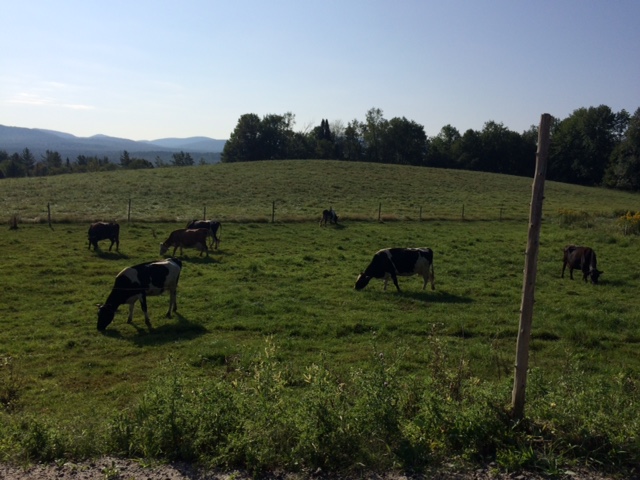
I left my home kind of early on Sunday morning to head down to the school, about an hour drive from my home. The front seat was full of food to bring for our potluck lunch, my sunhat, bags with snacks, drinks, notebooks and other essentials. It was a beautiful morning- dewey, quiet and kind of fuzzy around the edges. I felt a little nervous as I left, but more excited and curious about what was going to happen in the day. As I got closer to the school, I couldn’t help but be overwhelmed by, and grateful for, the beautiful views and the quiet. These are definitely a perks to living in Vermont. Oftentimes, where one must go to learn a traditional craft or skill is a beautiful place, set out of the way. Craggy land, full cows and swaying trees were balm to my eyes as I wove up these country roads I’d never been on before.
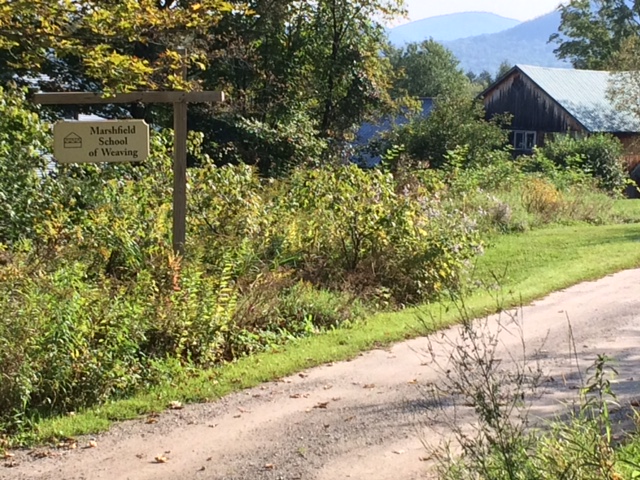
And here is the entrance to the school. I did laugh out loud with joy as I saw where I’d be spending my day.
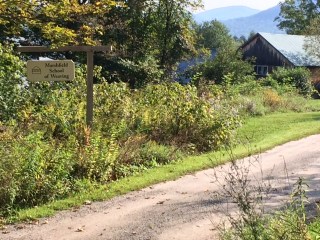
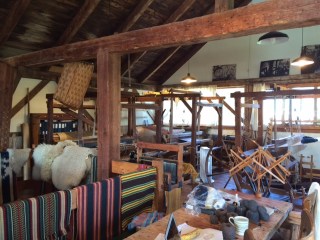
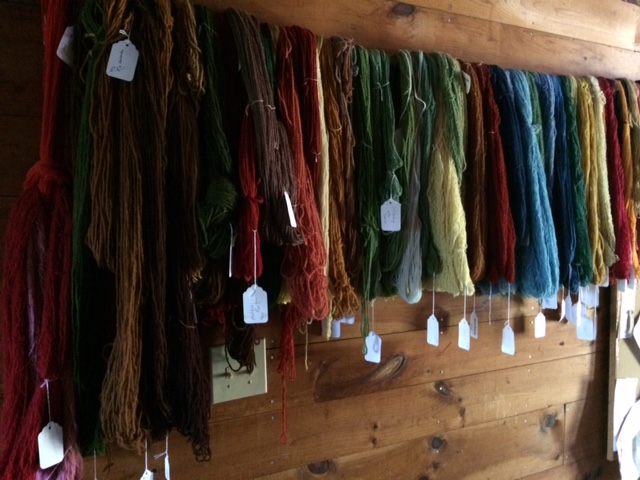
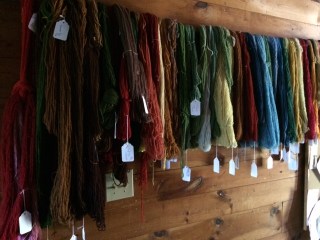
When I approached the building, our teacher Joann was busy outside getting things ready. She showed me into the studio and I felt immediately welcomed into the beautiful school. As I looked around, I was so happy to see yarn everywhere! And one whole wall was yarn dyed with natural dyestuffs. It was so beautiful. The light was soft and round, and every which way I looked, I saw things I wanted to touch, understand and look at.
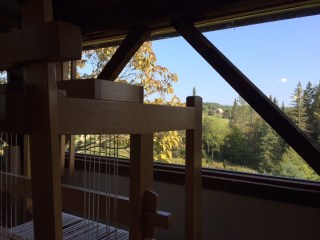
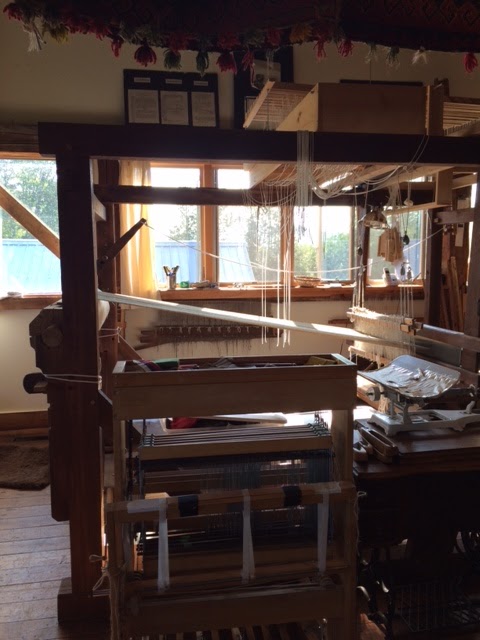
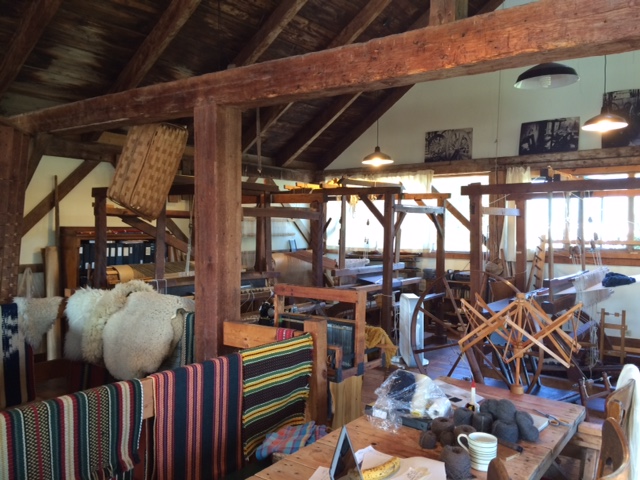
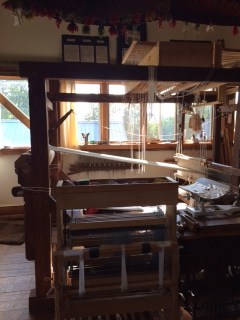
I wasn’t sure where we were meeting at first. I am so used to classroomy types of learning environments, so I made the assumption that there must be a place where we’d sit for a long time and take notes and get really official. I went upstairs assuming I’d find this. Instead, I found the studio. There were many looms of all different sizes. One gentleman was weaving at a very large loom (I don’t weave, so I don’t know what the different looms are called). And there were two women walking about, looking at things. We started talking and they were there to take the class, too. They are both weavers and were so generous with advice and knowledge about looms. I’m hoping to get a small one soon, and here already were two beautiful guides into that world. 
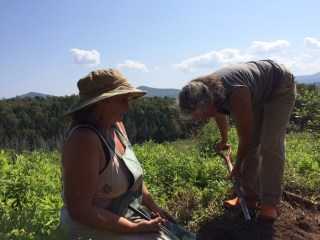
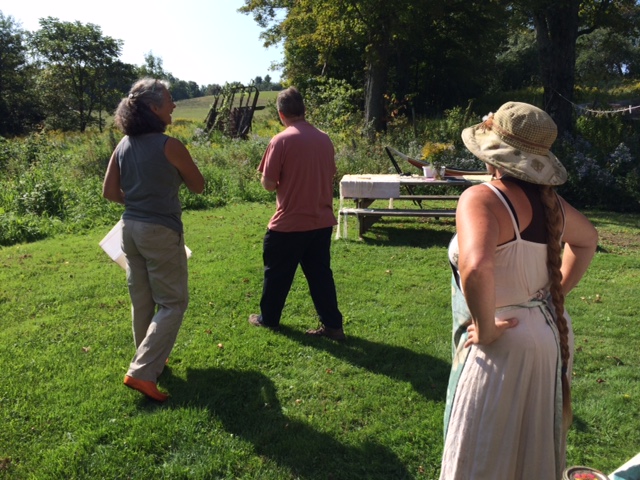
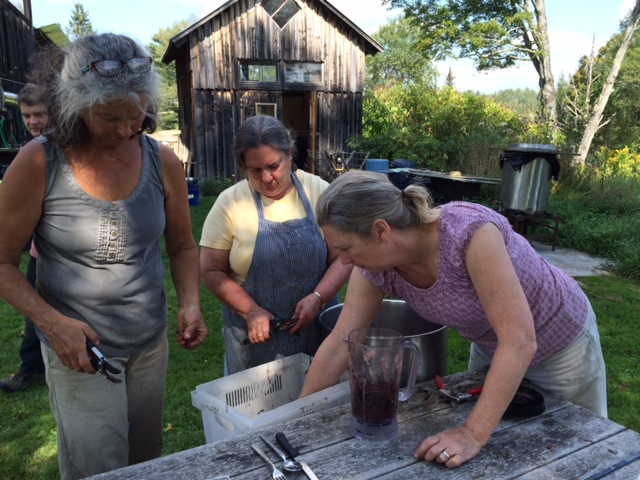
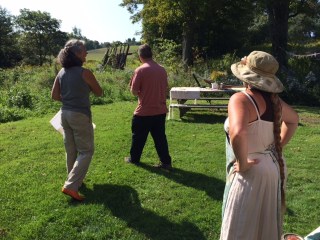
We learned soon that no, we’d not be sitting at tables taking notes. We’d be outside getting right into it with guidance from Joann. The other participants in our group were a sheep farmer and an herbalist. Within a short time, we found our rhythm and got to the work of collecting goldenrod, sorting mini-yarn skeins to be used in all the dye pots, chopping other plants, picking flowers, washing, tending to pots and listening.
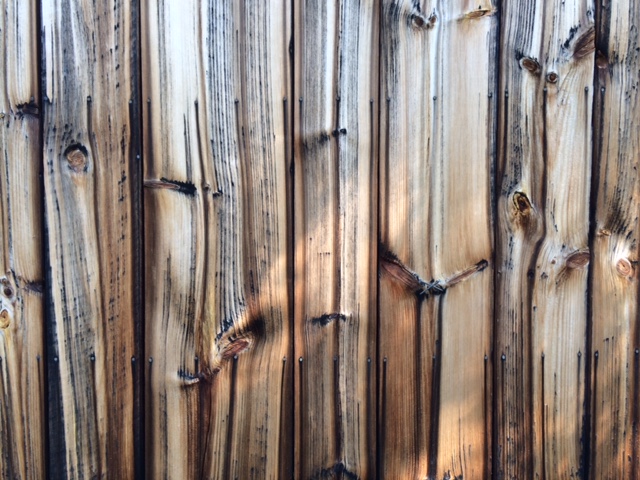
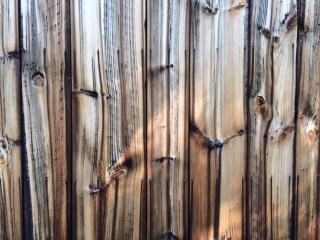
I just love this barn board. The colors and patterns are so strong. 
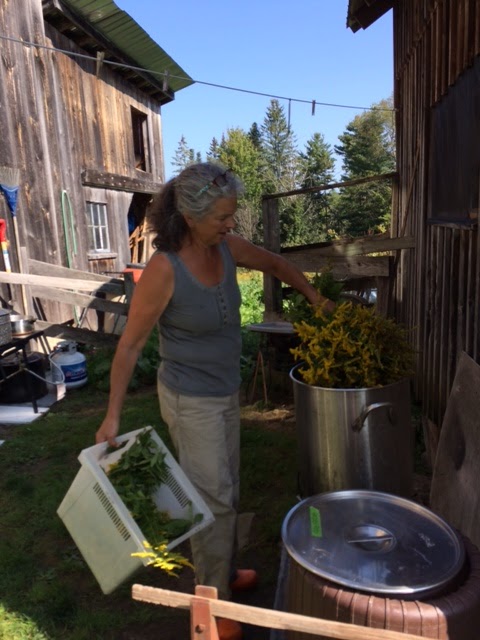
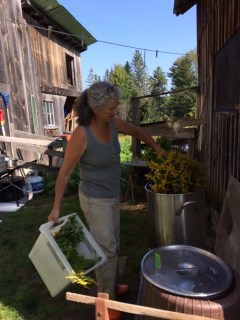
Below is a picture of goldenrod going into the pot.
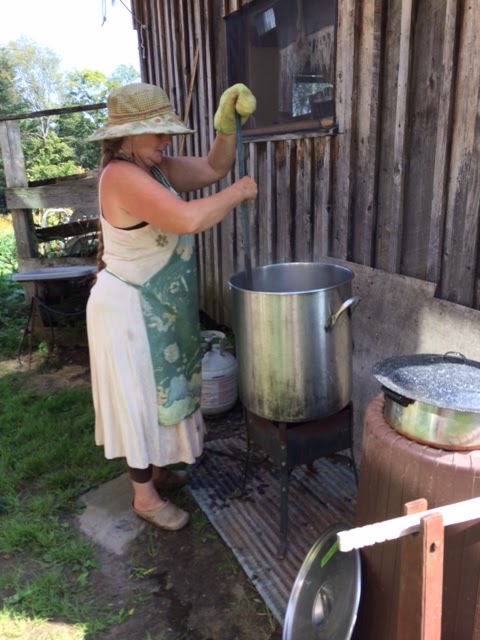
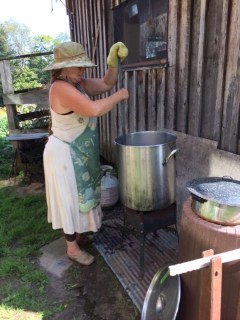
Here is a picture of Joann stirring the BIG pot~ I’m not sure what’s in there in this picture. There was a lot of boiling and a lot of rotating dye stuffs in and out. I love this picture. 
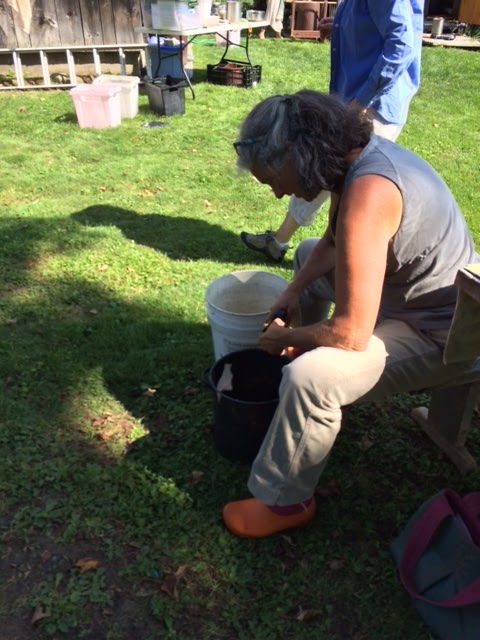
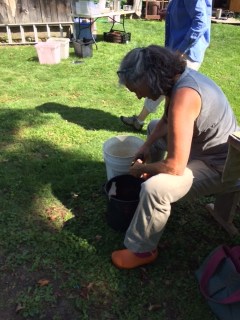
This is a student chopping up some flowers.
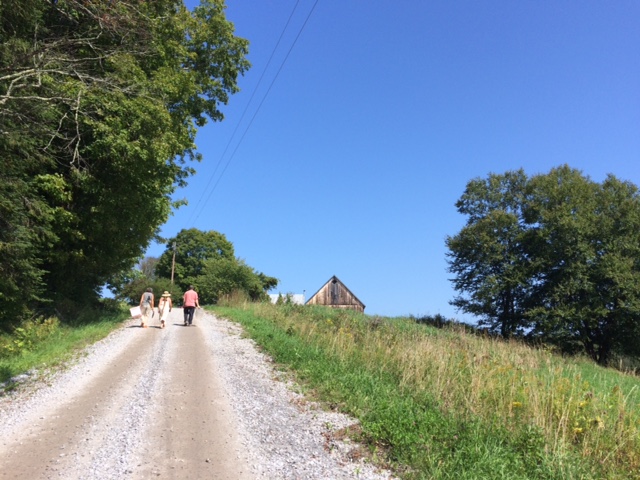
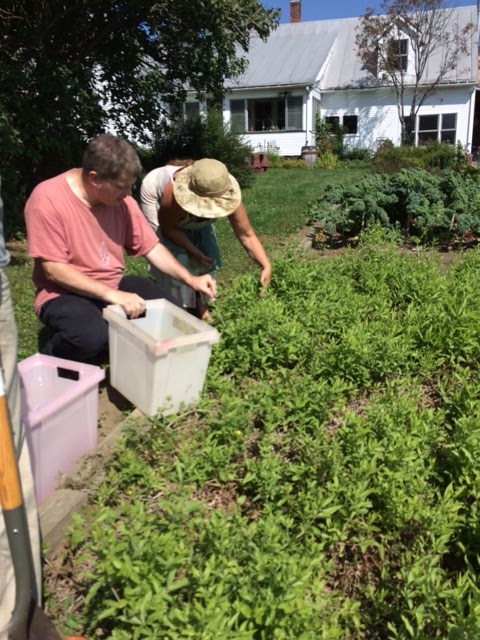
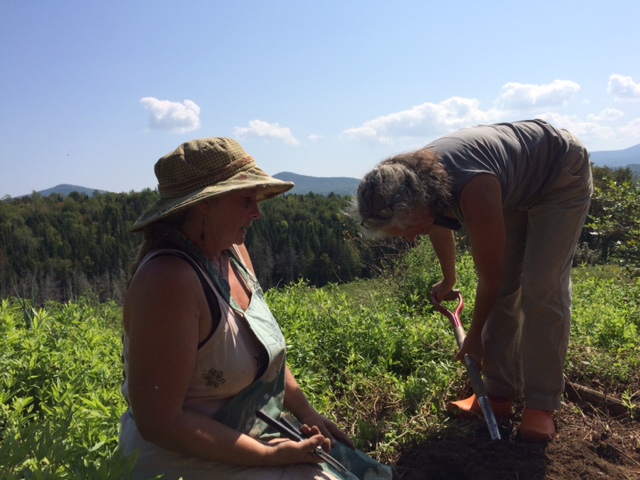
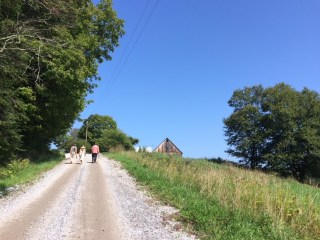
Once we got several dye pots going, we took a walk up quiet roads to the gardens of someone willing to share madder root and dyer’s greenwood. I haven’t gardened much this summer because of contracting the dreaded Lyme disease, so to get my hands in soil with a sweet purpose was just what the doctor ordered. The views and the quiet were also incredible treats.
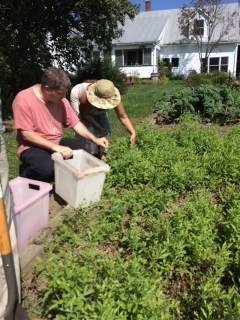
Once back to the pots, we broke for lunch in the shade, and then got to making more dyestuffs and hanging our wool to dry. We also did lots of overdyeing experiments with indigo. 
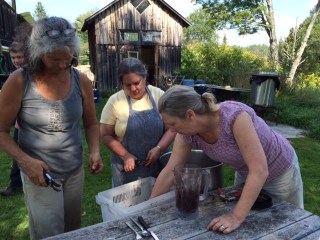
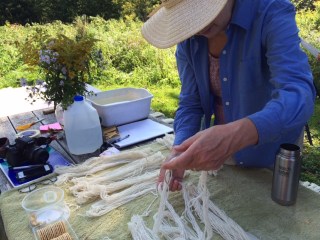
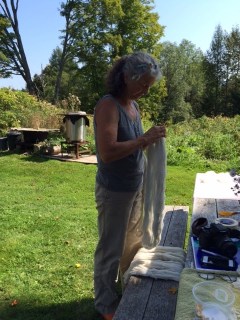
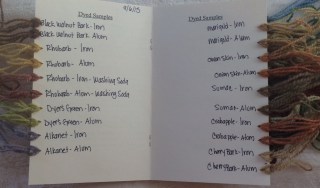
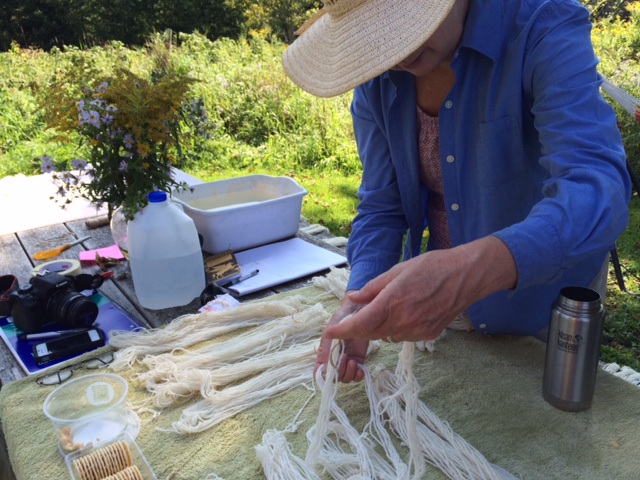
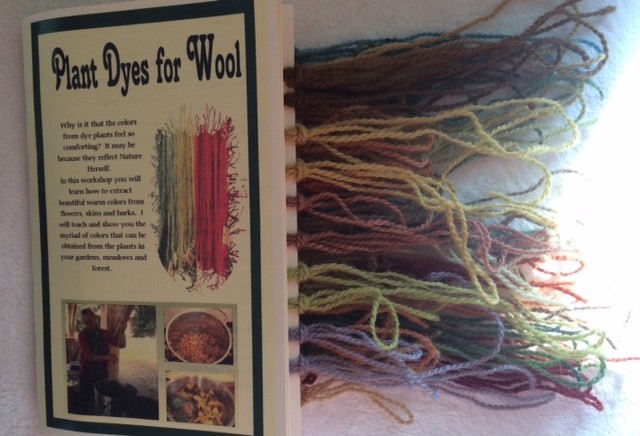
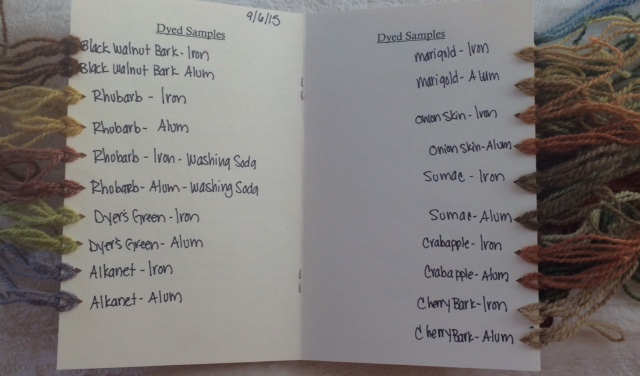
I wish I had taken better pictures of the yarn on the line, but you can see many of the colors we achieved in our efforts, and especially our teacher’s efforts, over the course of the day. Every dye pot had samples of yarn, half mordanted in alum and half in iron, so we got two color results from the same plant, plus a third if it was overdyed with indigo. As we got our books ready, Joann was available for questions and stories, and as each color was added to my book, I felt more and more proud and impressed by the outcome of our work. 
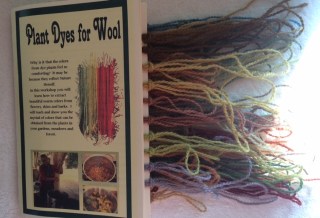
It was hard to leave this beautiful place. You know, the people going there to weave, to dye, to spin… I can only assume are not in a rush. Maybe I am projecting, but I think it must be true. Towards the end of the day, when I knew it was time to hit the road to get home to my family, I felt the first twinges of urgency, but that was only to do with my own inner need to reunite with my littles. There, in this extremely beautiful and entirely functional setting, I felt as if the sun and my stomach had become my clock. When the big beautiful tree covered us in lovely shade as we ate, it marked the natural passing of time, the pots simmering away with their unique and seasonally affected color potions.

On the way home, I could only daydream about following up on things I want to learn about, and experiment with. I think a forever student I’ll be.

Leave a comment

The Strength of the Warp Thread

“A true friend is someone who thinks that you are a good egg even though they know that you’re slightly cracked.” 

~ Bernard Meltzer

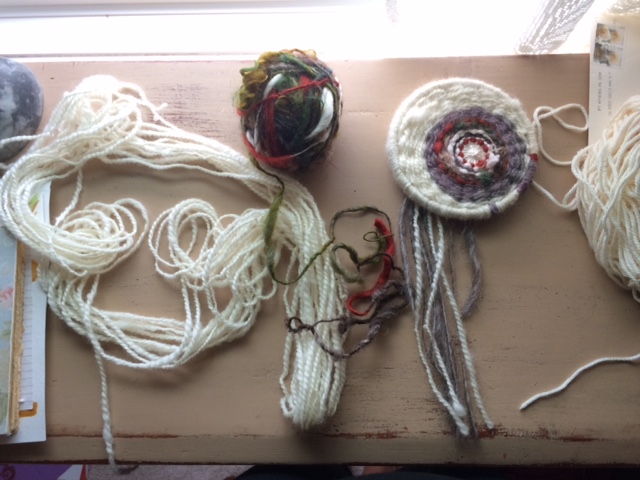
I like this quote. It is on a card that I bought a while back because I loved it, and it made me think of the friends I have that have kept being friends with me, even after they’ve seen the really me.  I thought about things kind of like this as I made a small circular weaving piece over the last few days. The warp thread in this is strong and sturdy. (The warp is the thread or yarn you attach to the frame to hold the tension and to give you something to weave around). When I chose it, I knew it wouldn’t break as I wove the weft yarn through. (The weft is the yarn that you weave over and under the warp thread). Here’s the thing about some of the weft yarn I used. First of all, I used almost all handspun, the majority spun by yours truly. Some of what I chose is from a skein I made using a lot of different fibers. There is wool roving in there, wispy locks and cotton from punis. It is strong in some parts and weak in others, and very inconsistent in thickness. I love this yarn. I love it so much it’s hard to use because I don’t want its texture and variations to get lost in stitches. I love how in some places I could pull it as hard as I might in opposite directions and it wouldn’t break, yet in others, it is so fragile that gently tugging on it would result in a tear.
I chose to weave with this special, fragile-strong yarn because it invites feeling and touching, and I knew that the warp yarn would hold it in place. I knew that using a solid, predictable and consistent yarn would protect my at-times-breakable treasure. And it worked. As I wove, I was sometimes able to move quickly, leading the yarn above and below the skeleton yarn without much thought. Other times I had to carefully push the yarn through so it made it to the opposite side in one piece. It didn’t always make it, requiring a quick repair, or a dedicated wrapping around the warp yarn. That extra twist, done by hand, of one yarn around another reminds me of the way sea horses hold on to seaweed to stay safe and secure in strong currents, an entwined tail around a grounded sea plant. It’s the same sort of thing.

The finished product shows the lovely handspun yarn in its full personality. I honored the weft yarn, though. It is the center of the circle. It is strong and sturdy and sits as evidence of what holds the whole thing together, its many arms reaching out to securely hold the frame with confidence.

We can be all of these things, all at the same time within ourselves. And of course we are different parts to different people throughout our lives, sometimes strong and reliable to another’s fragile and inconsistent fibers. We can also be the ones in need of the sturdy frame on which to lean and around which to wrap in times of frailty and moil. It takes both aspects responding to the other with the right amount of tension and just enough give to make a thing with depth and honesty. Mr. Meltzer had it right.


Leave a comment

Summertime Dyeing, Part 1

I cannot remember why I started the process of learning how to dye wool with plants. I did not arrive at the decision because of a strong opinion about synthetic dyes or because of an already held skill set. In fact, I hadn’t tried it until this summer because I found the whole thing to be rather intimidating. There’s a whole lot to it, especially if you’re going for a certain color. I find precision to be an anxiety-provoking requirement of any project. That is why I haven’t gone further with sewing. It really does matter if you measure correctly when you’re making pants, right? Anyway, I decided to relax into natural dyeing and just experiment and to allow myself the freedom to see what happens, which was also an exercise in patience, flexibility and managing expectations. While I’m not great at precision, the fantasy of perfection is a constant nagging companion, and reckoning with perfection’s shadow side is an important job for me.

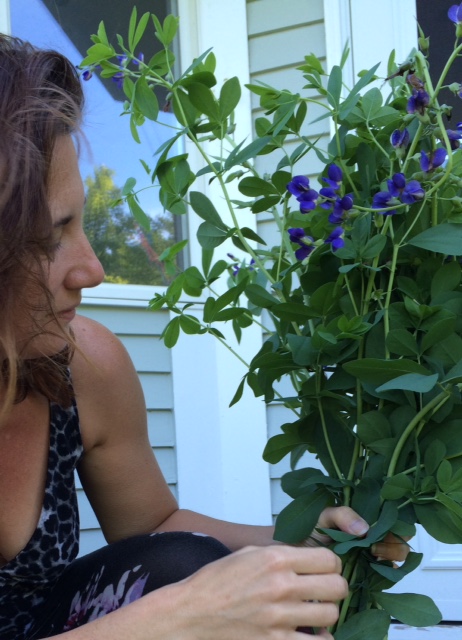
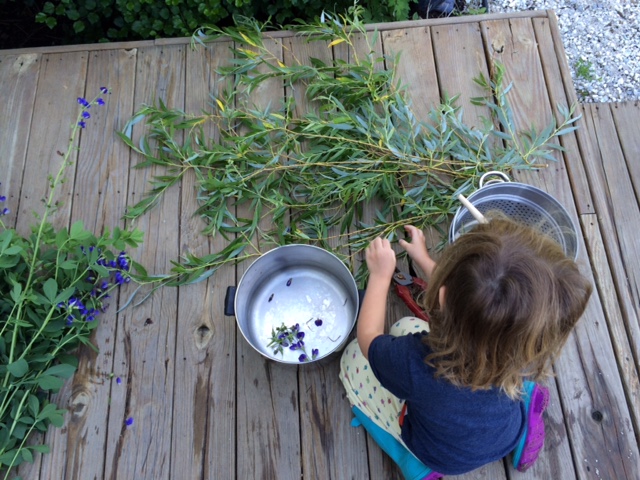
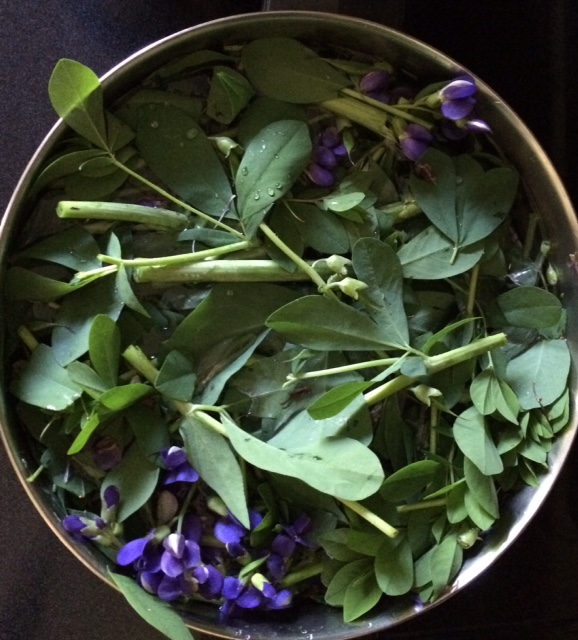
The first round of dyeing experiments started with an early morning walk with my daughter. We collected willow tree branches and leaves, and some long stems of some false indigo. We sorted and picked and plucked. It was quiet and kind of chilly. The birds were doing their early morning show and our cat was making his rounds around our home’s perimeter. Eventually, we put the plants in their own dye pots and started the slow process of simmering in water.


(Note: early this summer, I did my dyeing in the kitchen, but guess what? It’s stinks! Not to me, but to others who are not similarly obsessed and just want to eat their breakfast in peace. Now my operation is in the garage, which is fully aerated, and I have the company of a gigantic spider.) 

Once the dye pots were cooling, I got my creamy wool simmering in the mordant bath (alum). For the willow and false indigo, I used some border leicester wool I have on hand. Finally, it was time to introduce the wool to the dye baths! If I had to choose one aspect of dyeing with natural dyes that is so important, and on its own a wise teacher, it would be the demand for patience and for overcoming the urge to rush a pot. Too rapidly boiling the plants can damage the flowers and alter the color; too rapidly boiling the fiber can damage the quality of the wool. Not simmering fibers in the mordant for long enough will lead to a weaker uptake of color and not letting the fibers sit in the cooling dyepot long enough will do the same, plus you can hurt yourself! And in this case, the wool I used for these dyepots I received in its raw form; it had to be skirted, picked through and washed before it could even be dyed.

Breathe. 

Putter and check. 

Think and wonder and hope without attachment. 

Eat some snacks, drink some coffee. 

Do a chore, write a note.

Don’t forget to check the pot.

Look out the window and wonder about that flower and if it too could bring color.

Open up to learning about plants and their names.

Don’t panic about not knowing.


Here is what we got:

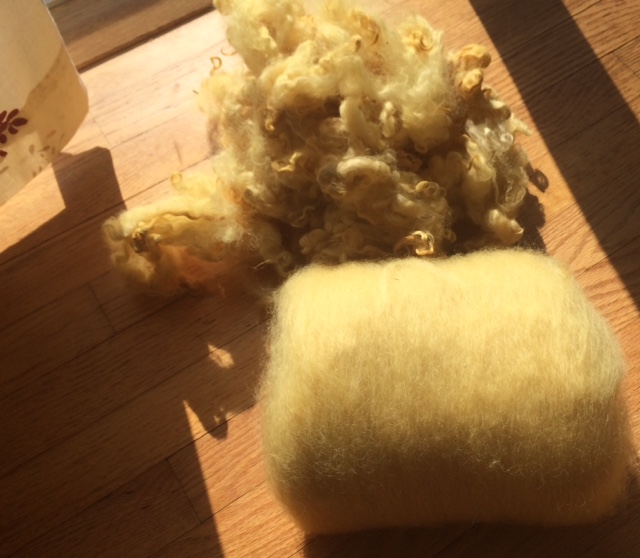
Weeping Willow Tree: leaves and twigs & border leicester wool; uncarded locks and carded batt. 


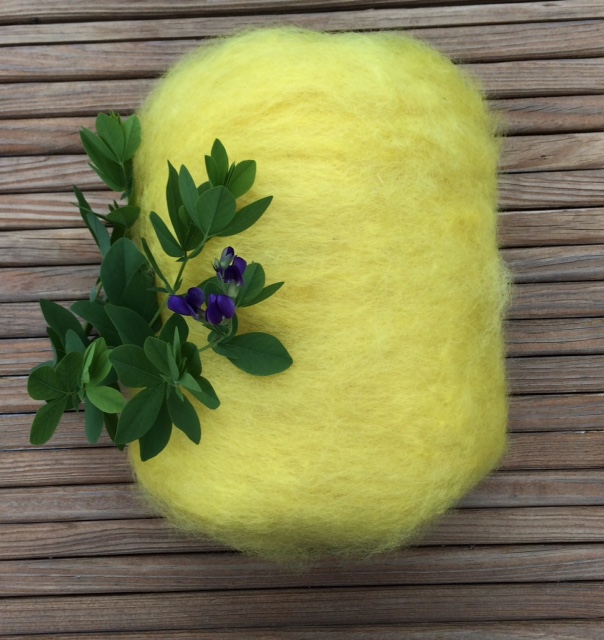
And the False Indigo leaves, stems and flowers & border leicester wool: 

Remember that whole thing about precision and my aversion for it? Well, if you follow directions really well and have the time and ability to focus on what you’re doing, I understand it’s possible to get blue. That is in my future. but for now, we got:

A wonderful first go at natural dyeing for me. And a funny thing has happened on the way to the natural dye pot. My eyes have opened up a bit more, and curiosity has expanded exponentially. Walking through my yard, or through the woods or in a field, I now see bits of color everywhere, some of which I overlooked in other days. Now I look at bark on a fallen log and wonder what it would do with some attention from heat and water. And how’s about those berries? Can I share them with the animals here? The tension between wanting to dye everything with everything I see now and knowing that time and patience are necessary ingredients of any dyeing experiment is a gift in its own right. 

I’ll share more of my summer experiments in posts to come. In the meantime, I want to share my go-to books right now on the natural dyeing process:

A Garden to Dye For, by Chris McLaughlin

Harvesting Color: How to Find Plants and Make Natural Dyes, by Rebecca Burgess

The Craft of Natural Dyeing: Glowing Colours From the Plant World, by Jenny Dean

What kinds of things do you do that allow you to slow down, exercise patience and enjoy curiosity?