Healing Handcrafting


Leave a comment

Summoning Creativity #9 ~ How Did You Do That?

I am on a plane right now, heading back to the Northeast US from Mexico. I was invited to go on the trip by the director of the Shelburne Craft School, Heather Moore, and was able to bring my daughter. Heather had her family with her, too.

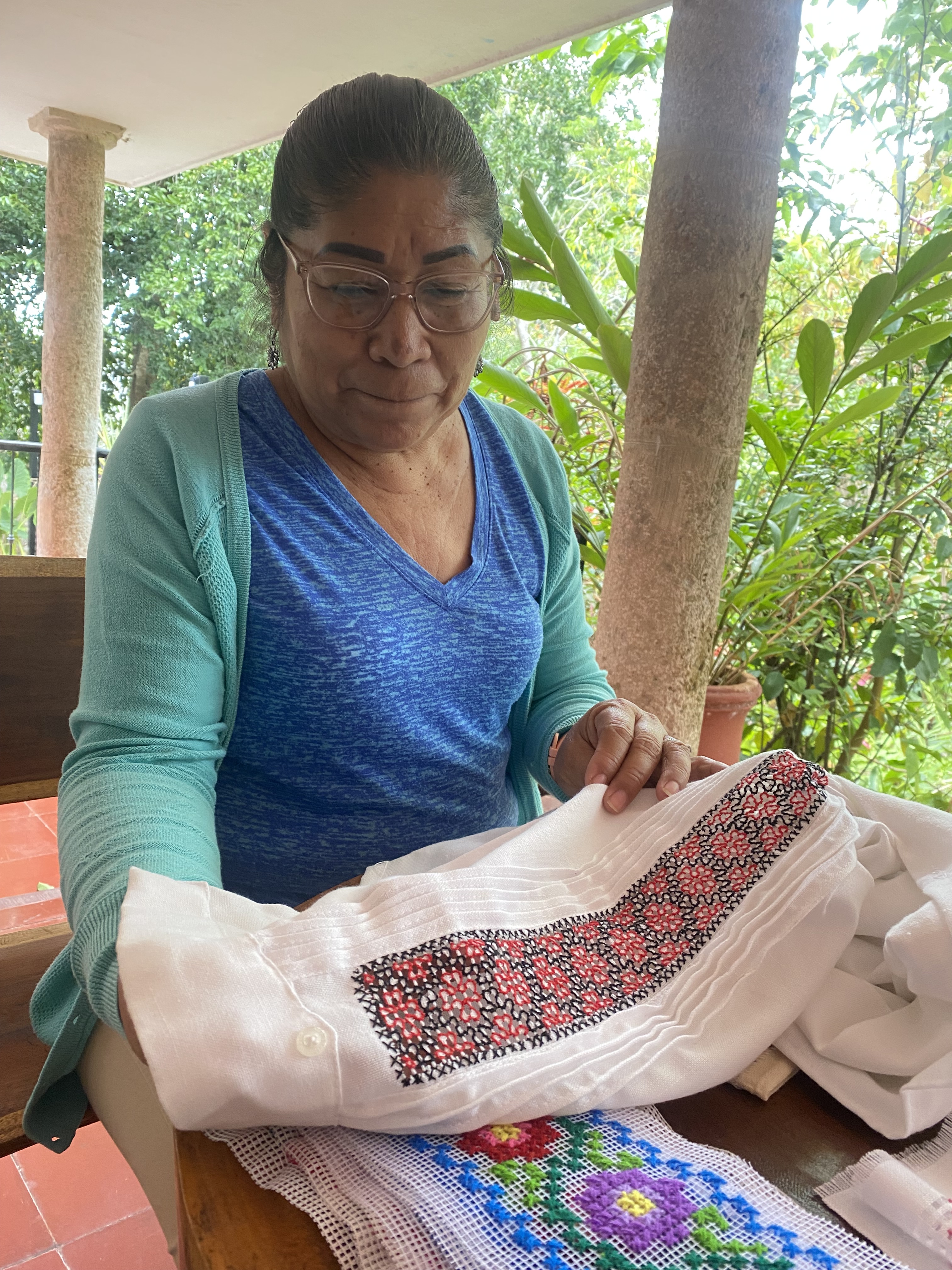
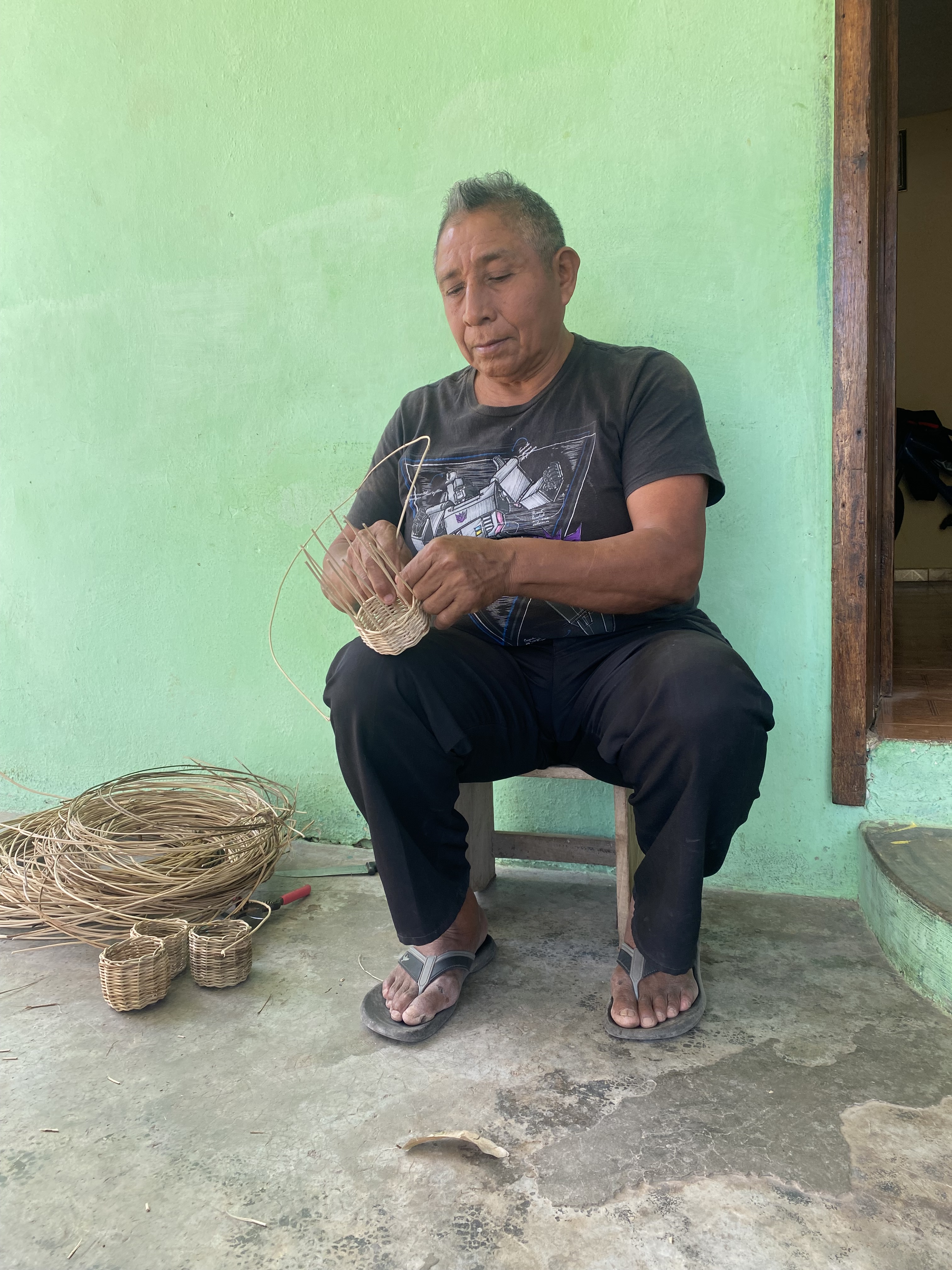
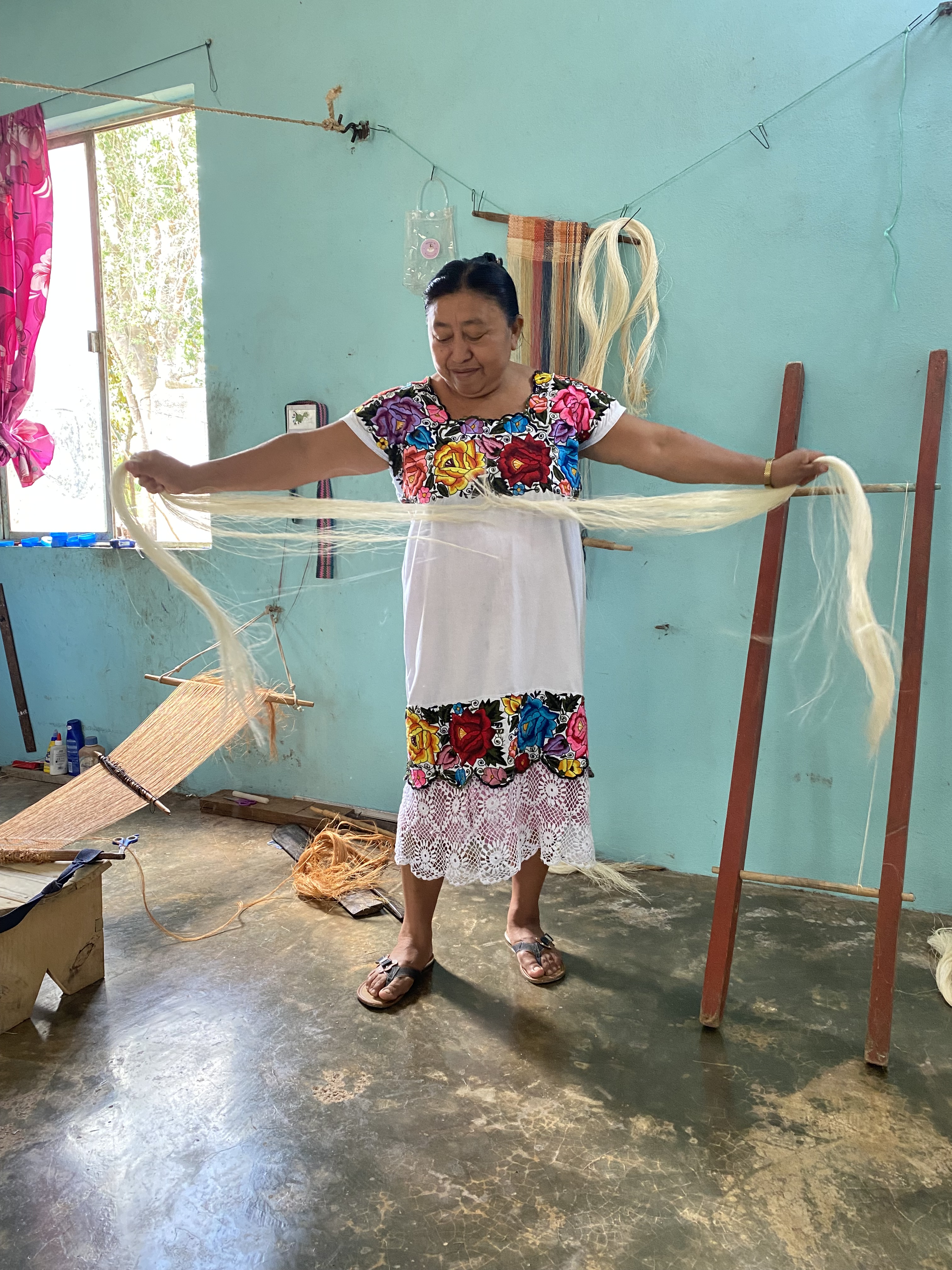
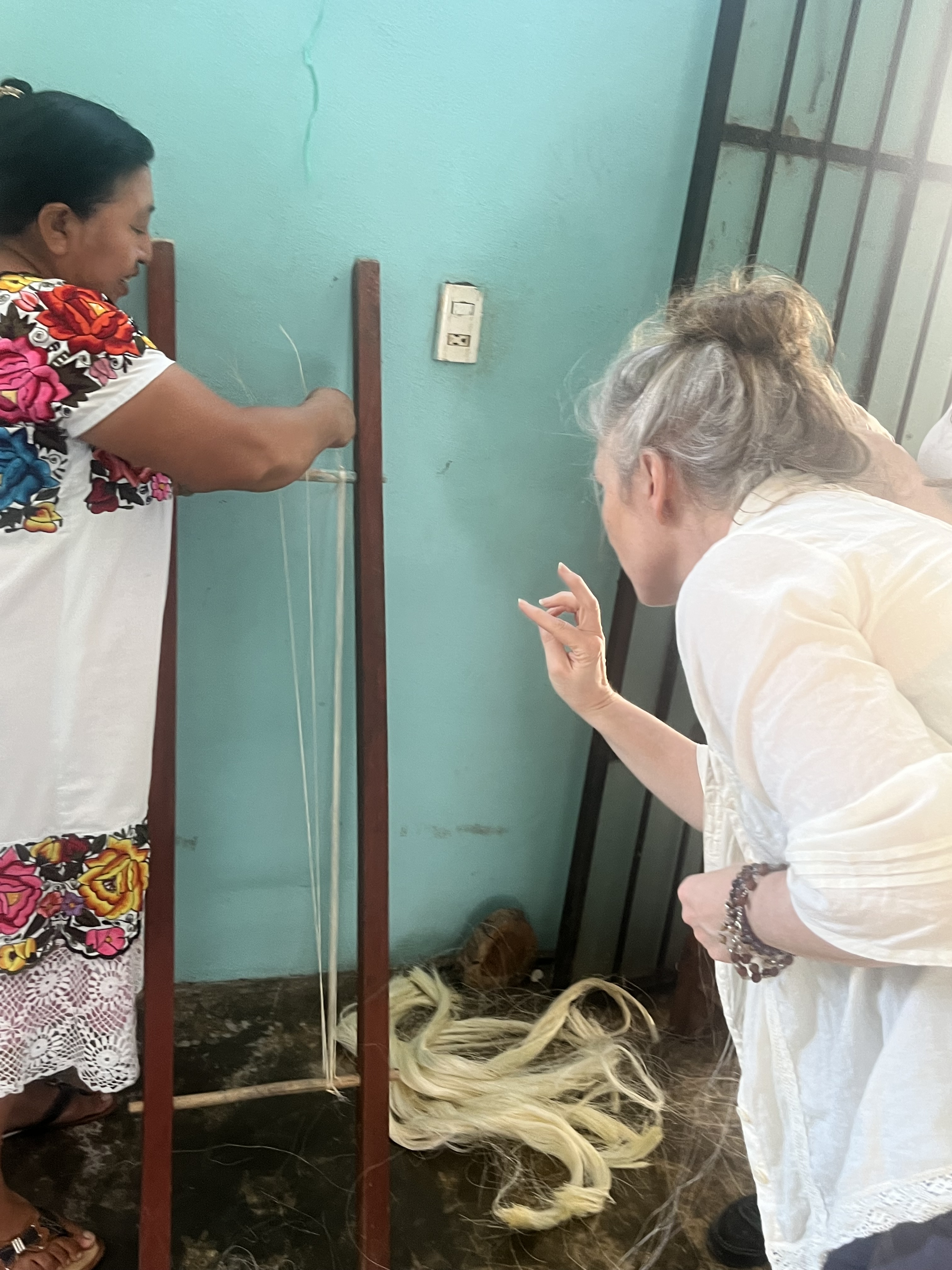
The purpose of our trip was to scout for artisans and opportunities in order to build a travel program for a group next year. We visited the Espadas family who are carrying forward ancient Maya pottery methods in Uayma, an embroider named Perla who is studying and practicing traditional stitching methods (she can be reached via Murem in Valladolid), a basket weaver named Mariano Chi in Ebtún, and a weaver, Dominga Cen, in Tixhualactún (she can also be reached via Murem). I’d also hoped to meet with Silvia of Bolsas Yaax Kiw who makes gorgeous bags out of henequen fibers, but due to my overshooting my relationship with habanero peppers and the consequences of that, plans shifted and time ran out. I really regret that, as her work is gorgeous. Silvia can be found here.
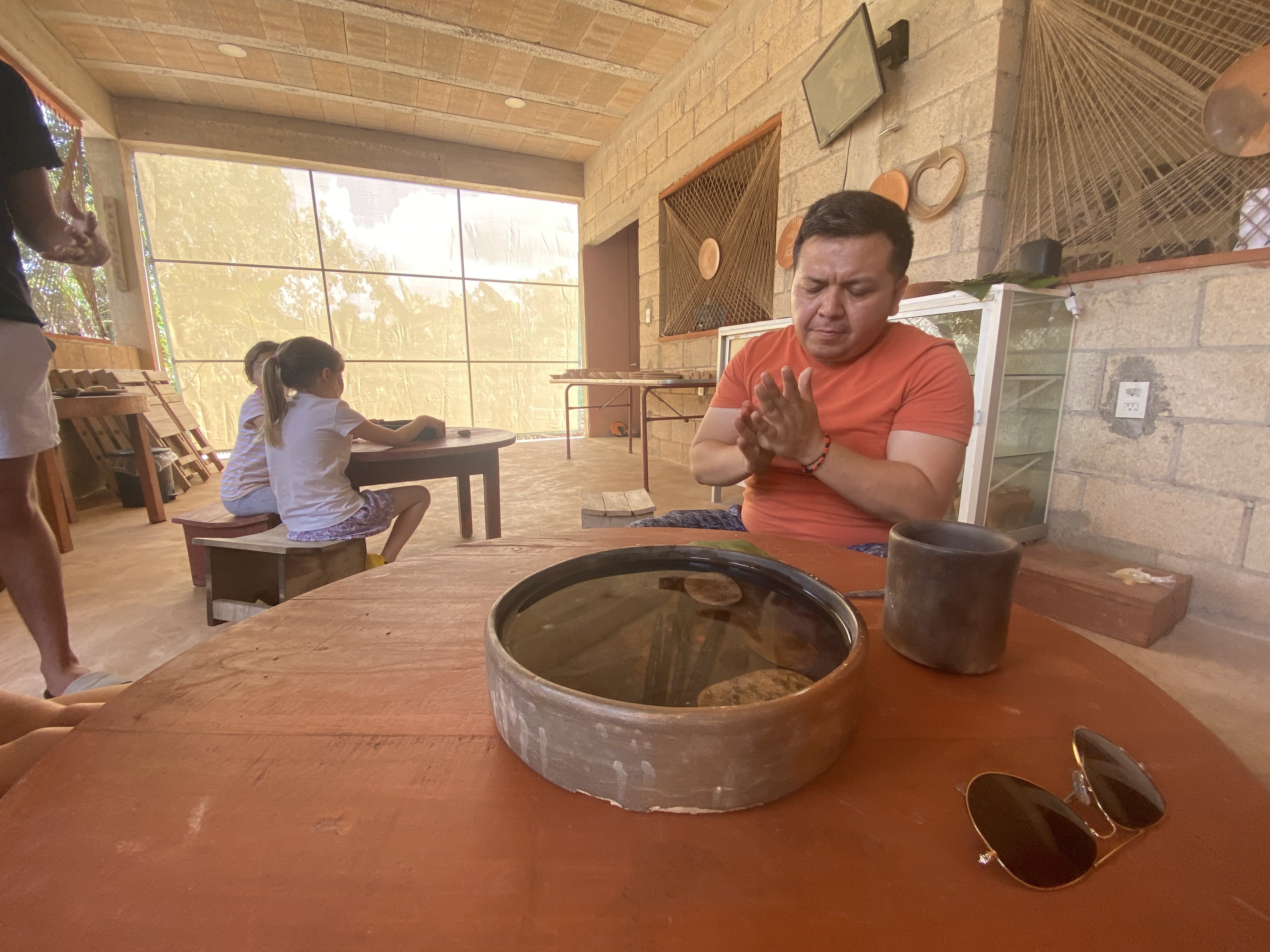
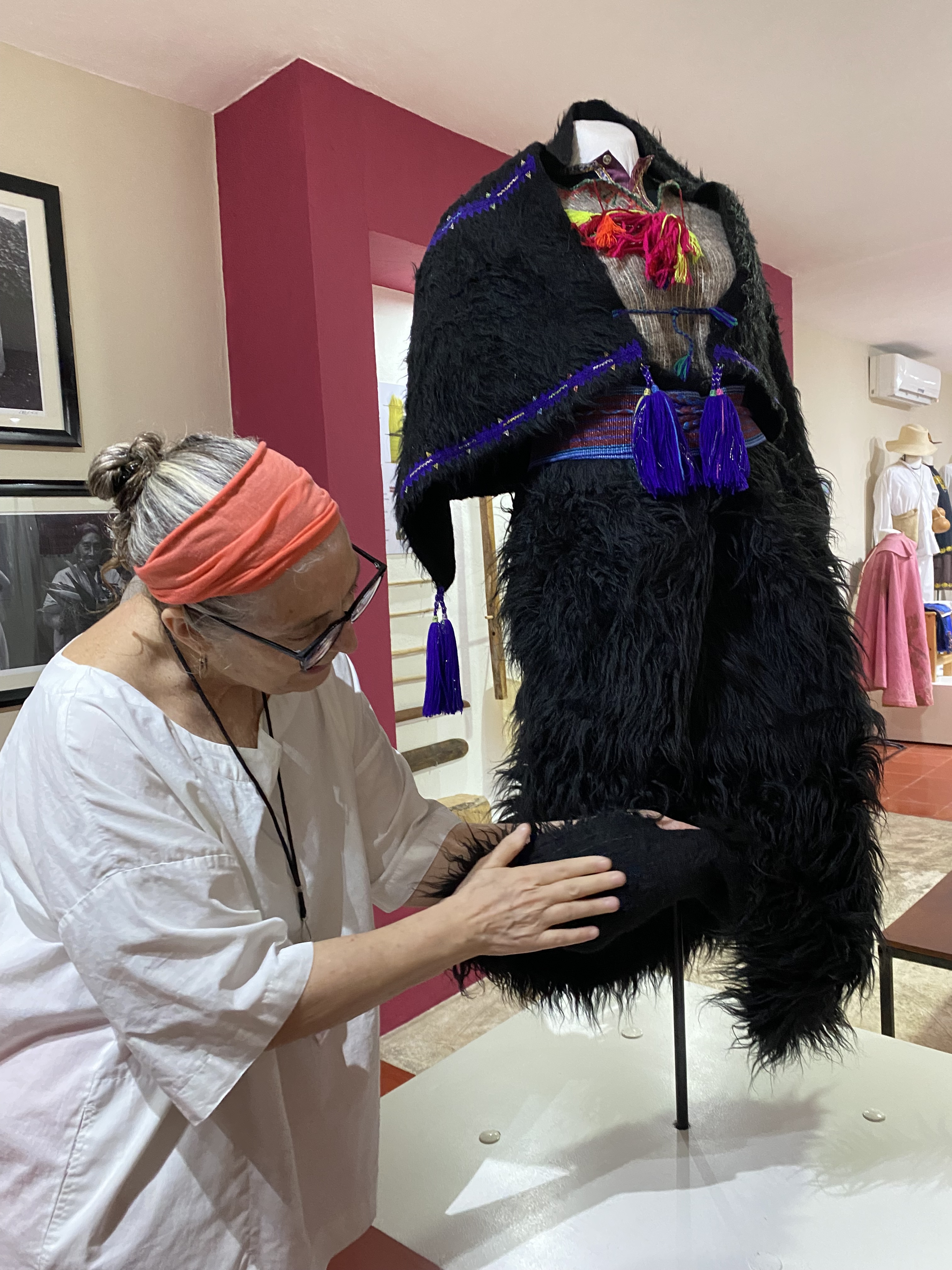
I was often overcome with emotion, in the presence of those sharing their art and craft with us, with so much generosity and care. I felt very lucky, and very much aware of the fact that I was experiencing something unusual and precious. If you are on Instagram and feel like seeing some of my posts on our trip, you can find them here.

Leading up to the trip, I’d been thinking about what brings people together and what separates them. I thought about the fact that I don’t speak Spanish and here I was, going to meet people to learn about their art. I was trusting that the artisans we were meeting with would be able to show us what they do, and if we were paying attention, we could learn without words, and ask for clarification through hand gestures and facial expressions.

We could express the question, “how did you do that?” and a bridge would be formed. Of that I was certain.

Tey Mariana Stiteler, who directs the beautiful  Murem – Museo de Ropa Etnica de Mexico in Valladolid was instrumental in linking us up with three of the four artisans we met with, and she translated for us the whole time! And in Uayma, we had this excellent translator and guide. Even still, there were countless moments when, just by watching, listening, and absorbing, we were learning and connecting and understanding each other even without translation.

“How did you do that?” became the bridge I’d imagined between people interested in each other.

It was beautiful. These experiences expanded my mind and stretched my heart.

For this month’s Summoning Creativity theme, we are looking at ways to dive into a “how did you do that?” mindset. There are no specific requirements that have to do with travel if that’s not in the cards. But look around. See if you notice anything that someone made that you think is cool, interesting, unique… whatever! If you can, ask that person how they made what they made! You don’t even have to do the thing itself if you don’t want to!

Just don’t stop with the observation of the thing. Take it step further and wonder at it, ask about it, and see what happens.

Maybe there is an artisan market in your area that highlights work from your region as well as places around the world. Check it out! Ask a question.

Maybe there’s a family member who makes a delicious dish that you only eat at their house. Ask them how they make it!

Maybe there’s a person nearby with a beautiful flower garden and you’ve admired something in it. Ask them what the plant is or how they go about a specific gardening task.

Maybe there’s someone who knit/crocheted/felted/or wove a piece of clothing. Ask them about the pattern or draft and see what they say.

You get the idea! When we notice what others are creating and making and we take an interest in those things, we are connecting in a way that is higher and freer than so many other things we are encumbered by these days.

I hope in this coming month, you get to experience that sparkly moment between yourself and another person, maybe someone you never would have met or talked to had you not noticed something they made. If you end up having a cool experience as a result of asking, “how did you do that?” please share it with me! I’ll love to hear the story!

Until next time,

Bradie

Leave a comment

Co-creating after death

My mom was a very talented artist. She had an eye for alluring shapes, luscious textures, intricate details that could easily be missed if one didn’t stop to look closely at whatever-it-was. In Florida, we lived on a bayou and the whole back of the tiny house on stilts opened to a view of it, tree and mangrove lined. The bird life there was epic. Alligators glided through the water, occasionally lumbering up the bank into our yard. Oh, do I have some stories about them.

Much of what my mom made included materials found in our yard or on the island. She had this uncanny ability to use the natural contours of something to house or nestle around little sculptures she’d make, usually faces. Once, when I went home for a visit after I’d moved to Vermont, one of the walls in the open space in the middle of our house was adorned with her pieces of art. I was breath-taken. They were exquisite. I went directly into agent-mode, wanting her to get her work into local galleries. I wanted everyone to see what I saw.

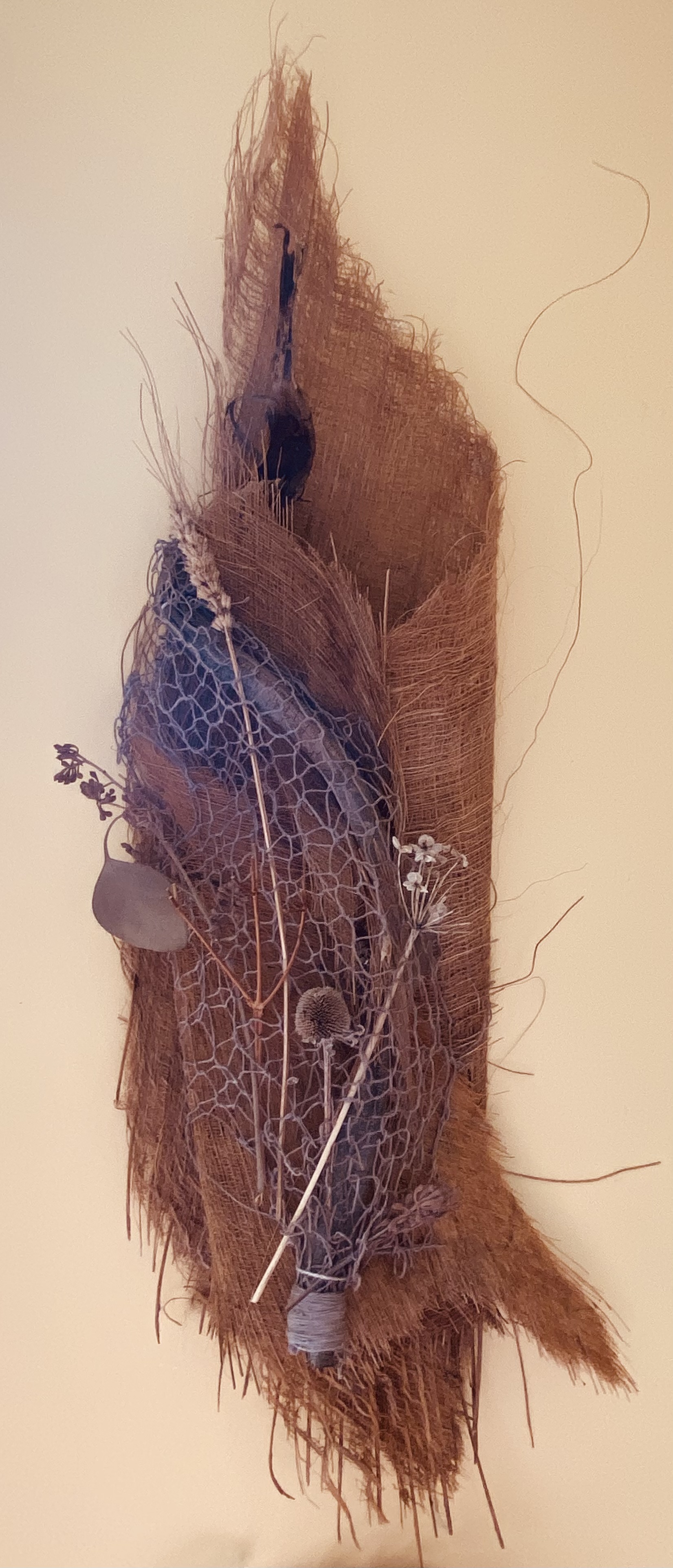
After my mom died, eight years ago now, many of the materials she used in her art ended up with me. One piece in particular has hung on the wall in my studio for a long time. It is a material that comes from palm trees and is like netting or burlap. It’s the most amazing material, woven by nature, strong, pliable, beautiful. I’ve wanted to make something with it for years but nothing was coming to me so I let it simply be itself.

Last week, I was in the midst of repurposing a piece I’d made about a year ago for an art exhibit. It was fabric of very fine grey linen, knitted loosely. I wanted it to be something else and was letting myself play. After treating it with a stiffening agent so it didn’t unravel in my hands, I moved it around and “asked” what it wanted to be and netting came to mind. As I sat at my table strewn with materials, I thought about my mom. Then, I invited her to play. What does that mean? I welcomed her to participate in what I was doing. I talked to her in my mind and imagined how she might have approached what I was doing. Then, I remembered the palm netting. It was at that moment when I felt, “oh cool, we’re making something together”. And then I got to it.

When people ask me how I use fiber art or handcrafting to process grief or life events, I know I answer the question, and I have a lot of things to show for my efforts. But in the moments I’m describing here, I got to observe myself while in the process of doing it, and I wanted to share some things that came clear to me. I believe anyone can do this, with whatever materials they have on hand, whether they or their loved ones were/are artistically inclined or not. And by the way, I truly believe all humans are creative beings. Creativity is not just for some people. It is an energy and a gift available to all of us because it resides in us.

Why am I sharing a personal moment like this in such a public way? Because I think about grief and love all the time, and help people process their own when I can. And I can tell you with absolute confidence, creating while in the mindset of connecting with a loved one* or processing grief does something. Many things. Here’s some details:

~ It creates a space in which you can think about and talk to your loved one.
~ It can be playful, which benefits our mental and physical health tremendously. You can read about that here.
~ It fosters the bond between you and the one you are grieving – read about continuing bonds as described by Dennis Klass here.
~ It’s a worthwhile effort, even when the relationship was painful or your grief is complex.
~ You make something meaningful to you. There’s no getting it right or wrong.
~ New thoughts, emotions, and understandings have a way of coming forth when you allow the time and space for them to emerge. When this happens in a creative zone that utilizes some form of action (art making, cooking, gardening, singing/playing music, writing), these shifts are metabolized through the body. All the thoughts and emotions are no longer only housed in the mind, but flow through the body, which can lead to greater peace.
~ You might be able to repurpose things that would otherwise be stuck in a drawer or thrown away.
~ You hang out with yourself, which is something I highly recommend. You are worth your own attention.

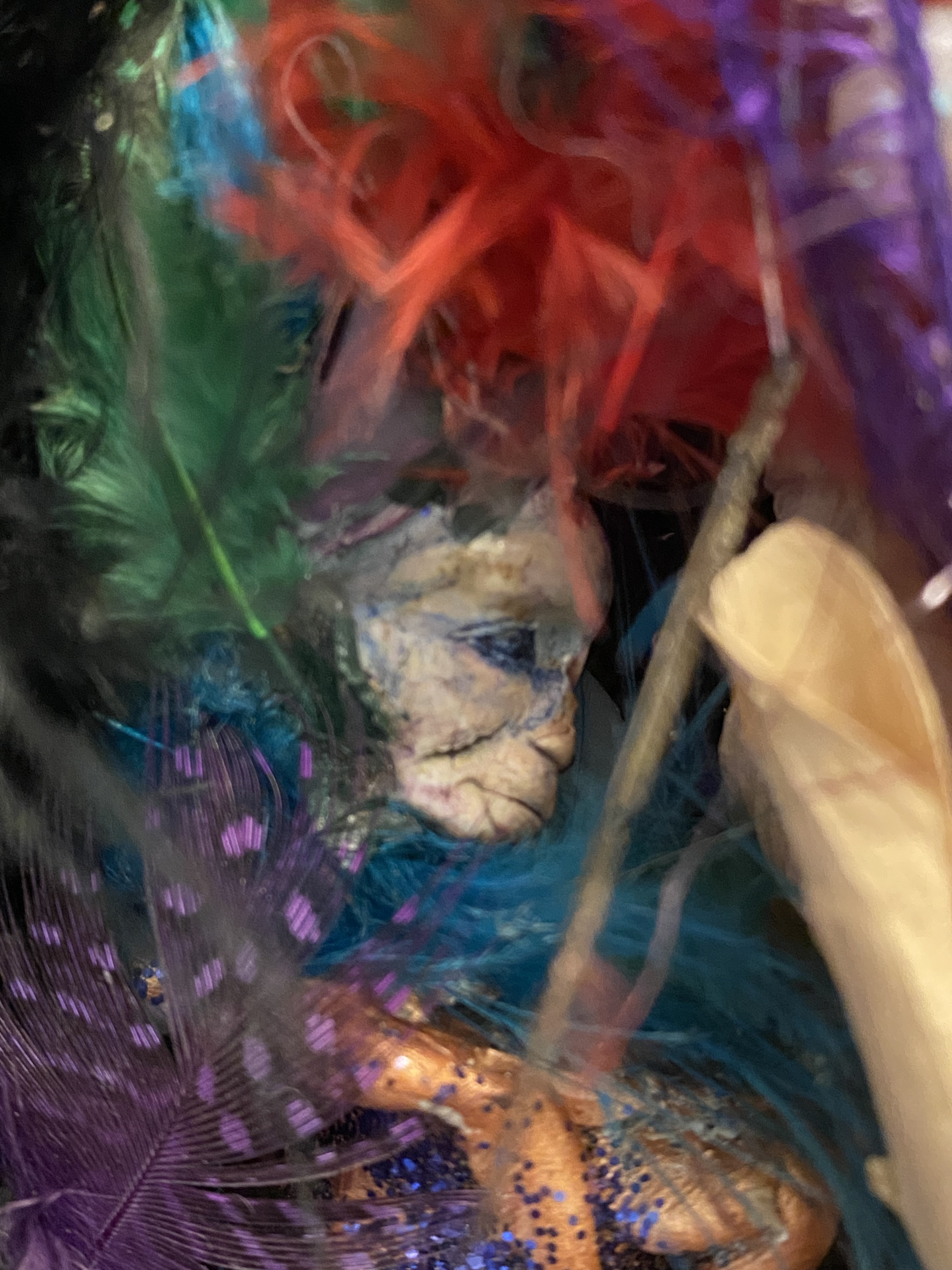
unfinished co-created piece by my mom and me

This new co-created piece between me and my mom is not finished yet. It’s hanging in my studio in a spot that is important to me and commands my attention. I find myself looking at it and feeling all of the textures and imagining what it will be when it is finished. There’s no rush to get it done and I suppose this is a chance for me to just be in my thoughts with and about my mom. It’s an ongoing invitation…

Until next time… ~ bradie

* I often use the term “loved one” to refer to the person we are grieving. This is not to imply that all has to wonderful and conflict-free in terms of the relationship one had with the deceased person. I should figure out a new way to refer to the person who has died that allows for imagining processing all loss creatively, not just the loss of someone we had a generally good relationship with. It is possible to do this, and is very valuable. Even if grief is complicated, there are ways to work it out through creative expression.