Hema in ancient Greek means blood. Thríno means lament or grief.
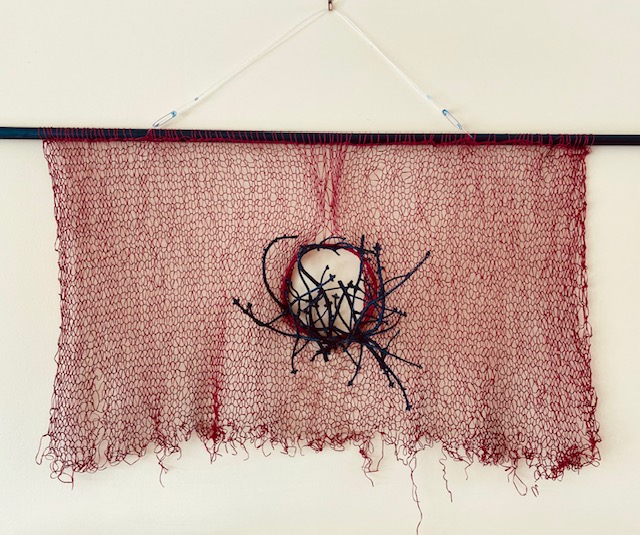
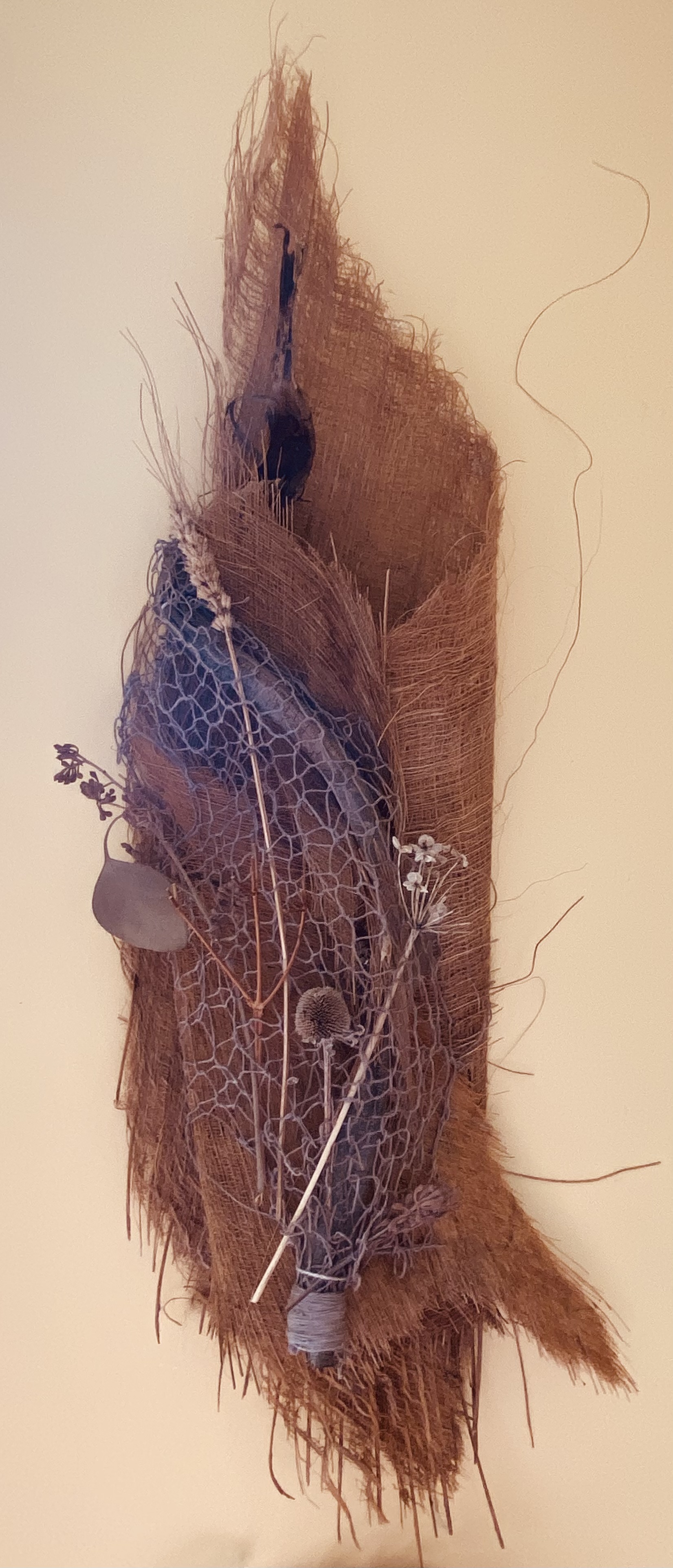
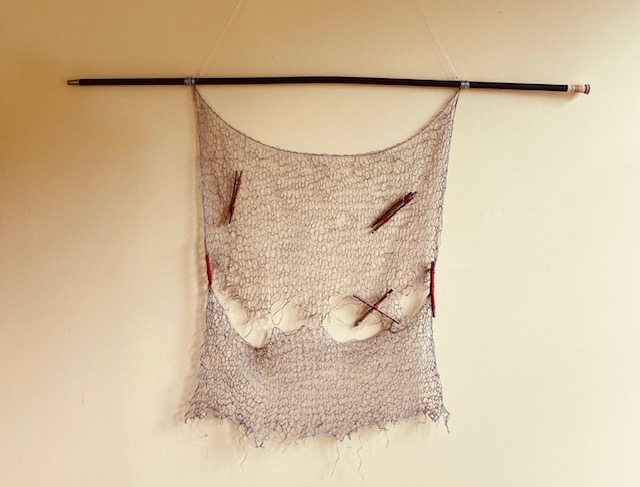
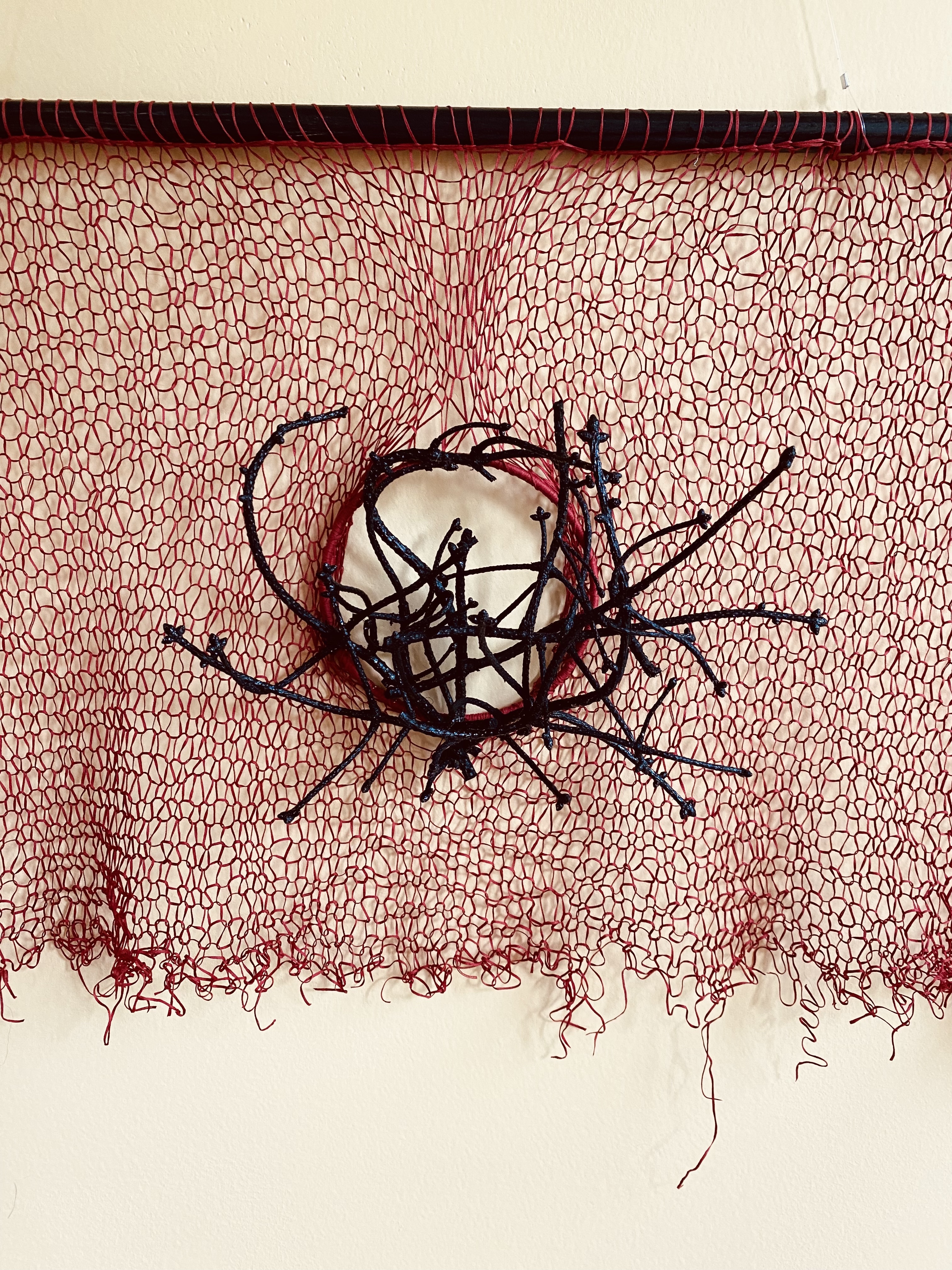
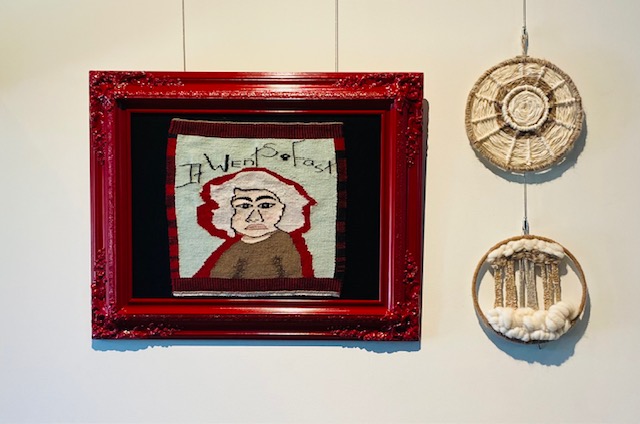
This piece is reimagined and adapted from the original Hema Thríno pictured below.
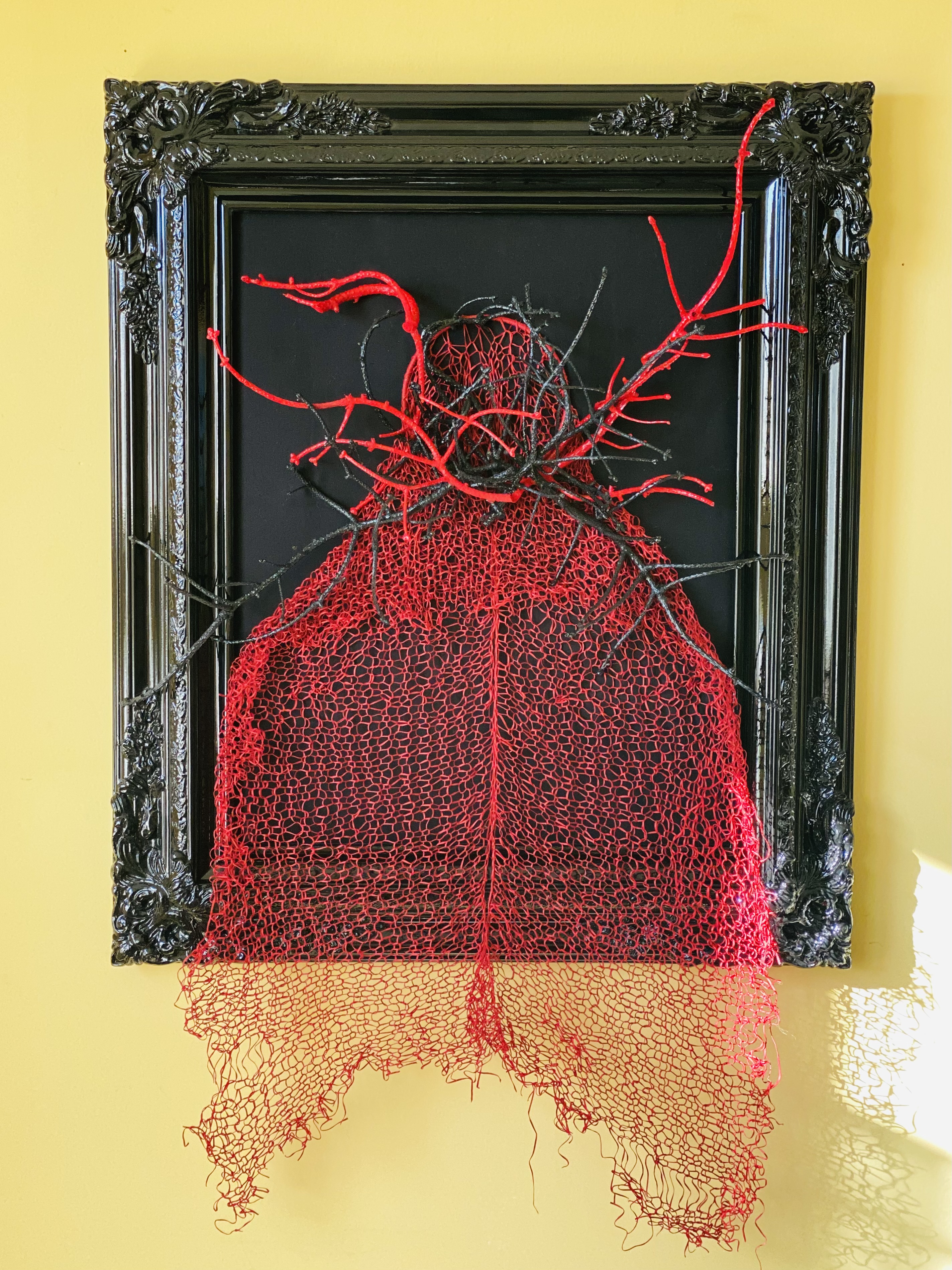
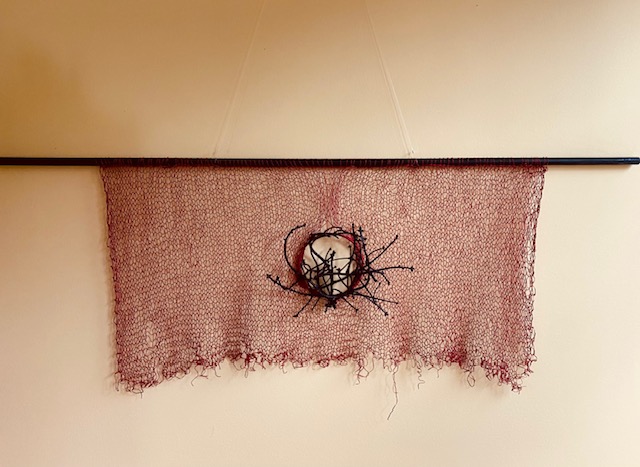
It might be clear that I was working some things out in the making of this knitted sculpture. Namely, a grief to do with the natural departure from one stage of life into the next, evidenced in part by the changing soul landscape bringing me towards menopause. Over time, I’ve learned that I do best when I wrestle with matters of the heart/mind/body through my hands. Maybe writing, maybe drawing or weaving… in this case, knitting with gorgeous deep red cotton thread, strong and soft at the same time, and engaging with a plant called Witches’ Broom, parasitic in nature, that you find on trees and bushes. Witches’ Broom is an abnormal growth of branches in the tree, usually signaling some kind of distress.
Evidence of distress mixed with beauty, resilience, and strength…
I’d been looking at the first iteration of Hema Thríno for some time in my studio and I began to see her in a different form~ less vulnerable, more in an assumption of power and clarity. So off the wall she came and we got to work together and brought her into fuller form. She has a countenance now. She is here more fully… calm… and powerful.
My mom was a very talented artist. She had an eye for alluring shapes, luscious textures, intricate details that could easily be missed if one didn’t stop to look closely at whatever-it-was. In Florida, we lived on a bayou and the whole back of the tiny house on stilts opened to a view of it, tree and mangrove lined. The bird life there was epic. Alligators glided through the water, occasionally lumbering up the bank into our yard. Oh, do I have some stories about them.
Much of what my mom made included materials found in our yard or on the island. She had this uncanny ability to use the natural contours of something to house or nestle around little sculptures she’d make, usually faces. Once, when I went home for a visit after I’d moved to Vermont, one of the walls in the open space in the middle of our house was adorned with her pieces of art. I was breath-taken. They were exquisite. I went directly into agent-mode, wanting her to get her work into local galleries. I wanted everyone to see what I saw.
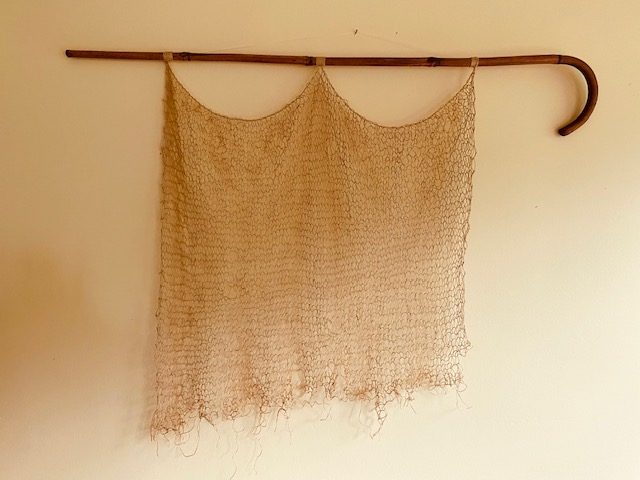
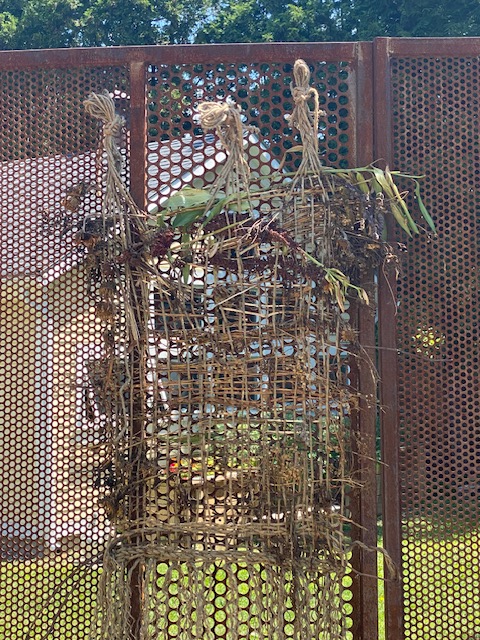
After my mom died, eight years ago now, many of the materials she used in her art ended up with me. One piece in particular has hung on the wall in my studio for a long time. It is a material that comes from palm trees and is like netting or burlap. It’s the most amazing material, woven by nature, strong, pliable, beautiful. I’ve wanted to make something with it for years but nothing was coming to me so I let it simply be itself.
Last week, I was in the midst of repurposing a piece I’d made about a year ago for an art exhibit. It was fabric of very fine grey linen, knitted loosely. I wanted it to be something else and was letting myself play. After treating it with a stiffening agent so it didn’t unravel in my hands, I moved it around and “asked” what it wanted to be and netting came to mind. As I sat at my table strewn with materials, I thought about my mom. Then, I invited her to play. What does that mean? I welcomed her to participate in what I was doing. I talked to her in my mind and imagined how she might have approached what I was doing. Then, I remembered the palm netting. It was at that moment when I felt, “oh cool, we’re making something together”. And then I got to it.
When people ask me how I use fiber art or handcrafting to process grief or life events, I know I answer the question, and I have a lot of things to show for my efforts. But in the moments I’m describing here, I got to observe myself while in the process of doing it, and I wanted to share some things that came clear to me. I believe anyone can do this, with whatever materials they have on hand, whether they or their loved ones were/are artistically inclined or not. And by the way, I truly believe all humans are creative beings. Creativity is not just for some people. It is an energy and a gift available to all of us because it resides in us.
Why am I sharing a personal moment like this in such a public way? Because I think about grief and love all the time, and help people process their own when I can. And I can tell you with absolute confidence, creating while in the mindset of connecting with a loved one* or processing grief does something. Many things. Here’s some details:
~ It creates a space in which you can think about and talk to your loved one. ~ It can be playful, which benefits our mental and physical health tremendously. You can read about that here. ~ It fosters the bond between you and the one you are grieving – read about continuing bonds as described by Dennis Klass here. ~ It’s a worthwhile effort, even when the relationship was painful or your grief is complex. ~ You make something meaningful to you. There’s no getting it right or wrong. ~ New thoughts, emotions, and understandings have a way of coming forth when you allow the time and space for them to emerge. When this happens in a creative zone that utilizes some form of action (art making, cooking, gardening, singing/playing music, writing), these shifts are metabolized through the body. All the thoughts and emotions are no longer only housed in the mind, but flow through the body, which can lead to greater peace. ~ You might be able to repurpose things that would otherwise be stuck in a drawer or thrown away. ~ You hang out with yourself, which is something I highly recommend. You are worth your own attention.
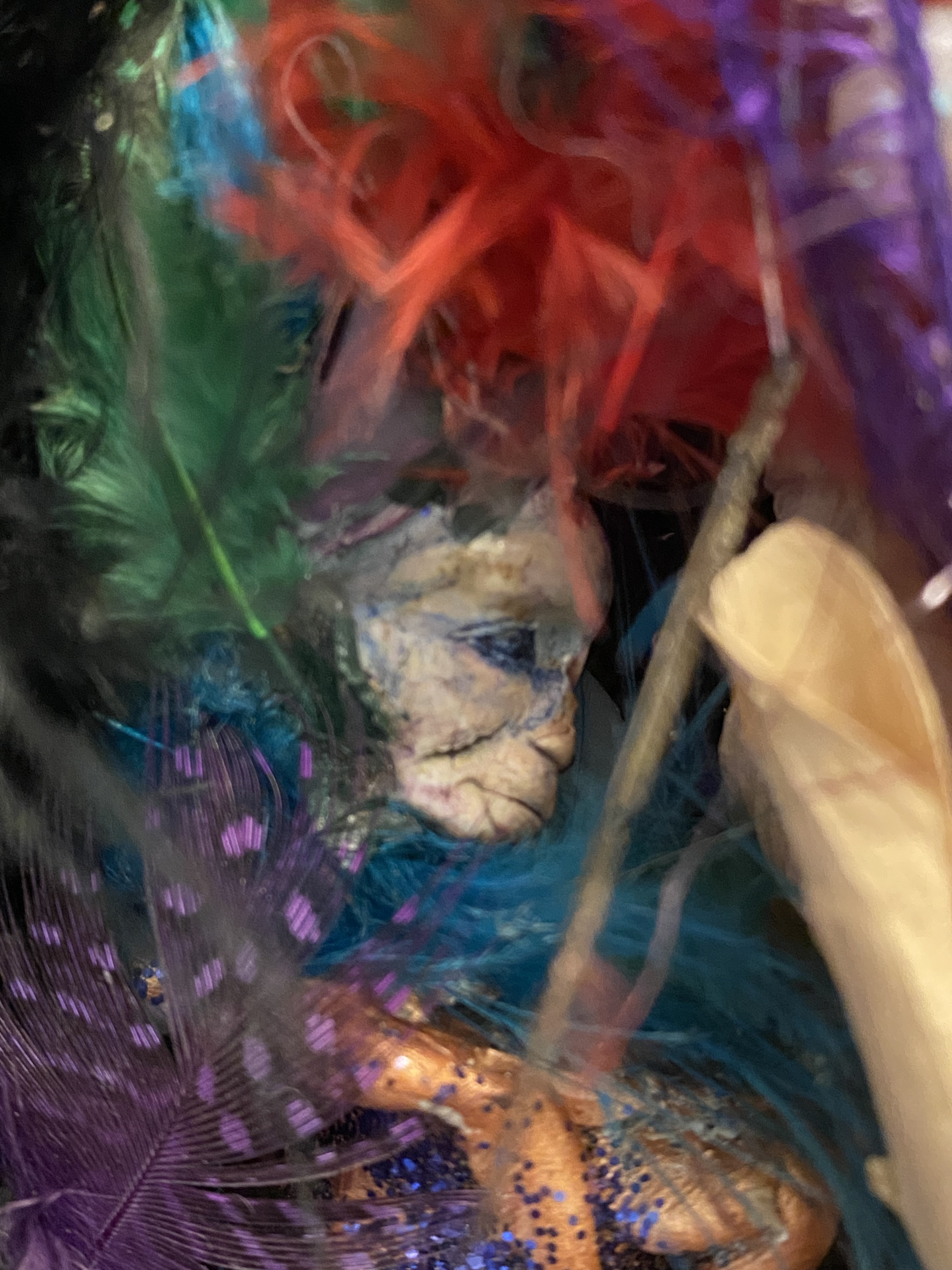
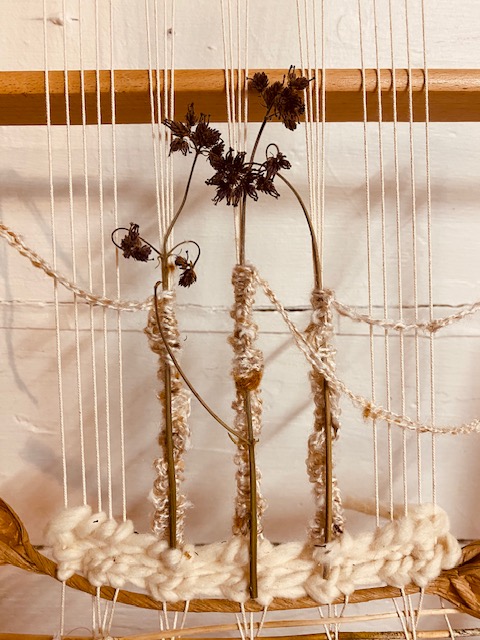
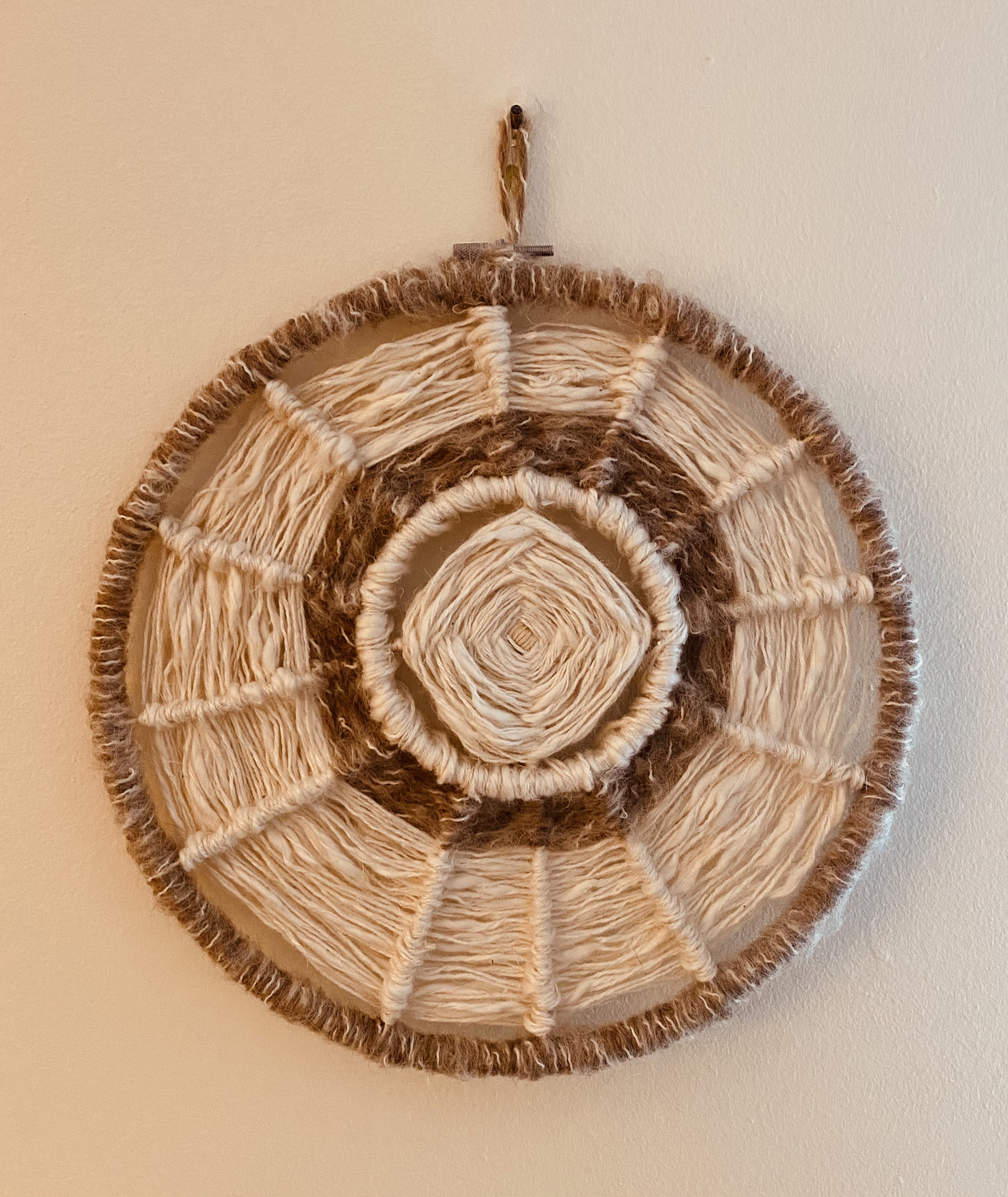
unfinished co-created piece by my mom and me
This new co-created piece between me and my mom is not finished yet. It’s hanging in my studio in a spot that is important to me and commands my attention. I find myself looking at it and feeling all of the textures and imagining what it will be when it is finished. There’s no rush to get it done and I suppose this is a chance for me to just be in my thoughts with and about my mom. It’s an ongoing invitation…
Until next time… ~ bradie
* I often use the term “loved one” to refer to the person we are grieving. This is not to imply that all has to wonderful and conflict-free in terms of the relationship one had with the deceased person. I should figure out a new way to refer to the person who has died that allows for imagining processing all loss creatively, not just the loss of someone we had a generally good relationship with. It is possible to do this, and is very valuable. Even if grief is complicated, there are ways to work it out through creative expression.
A friend of mine mentioned the other day that I hadn’t written here in a bit. She’s known me long enough to recognize a pattern of mine which is that I do a pretty full retreat from online things when there’s something I’m sorting out. I got to talk about the things that I’ve been chewing on, and she listened. She also said she missed seeing what I’m up to when it comes to making things. This was a beautiful nudge. Very well-rounded.
Grief, as you likely already know, takes its toll on people. As someone who’s written a lot about grief, a whole book in fact, you’d think maybe I’d know some tricks on how to navigate the experience with greater ease. But I’m here to tell you, there are no easy ways through the process. In all my writing, talking, supporting, and expressing, never once do I suggest there is a “get-through-grief-the-easy-way” option. It is simply something we must go through, feel, adapt to, and be chiseled by. Ultimately, we are charged with getting to know ourselves and others in our new form, as someone changed by what we’ve experienced.
I’ve noticed about myself that when I’m swimming in the grief waters, I need to take some steps back from those things that put me out there into the world. Certain aspects of grief make me feel like I’m a flipped over turtle, and the last thing I need in those circumstances is to feel more vulnerable during those times.
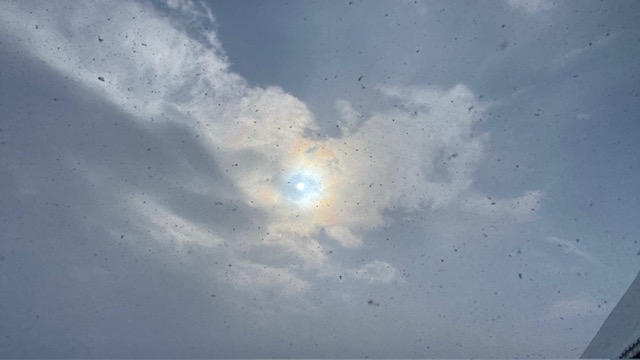
As we approach the year anniversary of when my dad died, we are also making our way through cold winter here in Vermont. In a few days, it will be February 1, Imbolc, which marks the halfway point between the Winter Solstice and the Spring Equinox. This is when, in the Northern Hemisphere, the light starts to shift and come back. Many are thinking about the seeds they’re going to start indoors in preparation for the spring plantings. The goddess Brigid is honored in her many forms. We are invited to clean our houses, set our intentions, and think about what we want to bring into fruition in the coming growing cycles.
sun snow…
I will be honoring both of these events. I feel ready for the light to come back after relishing resting in the dark.
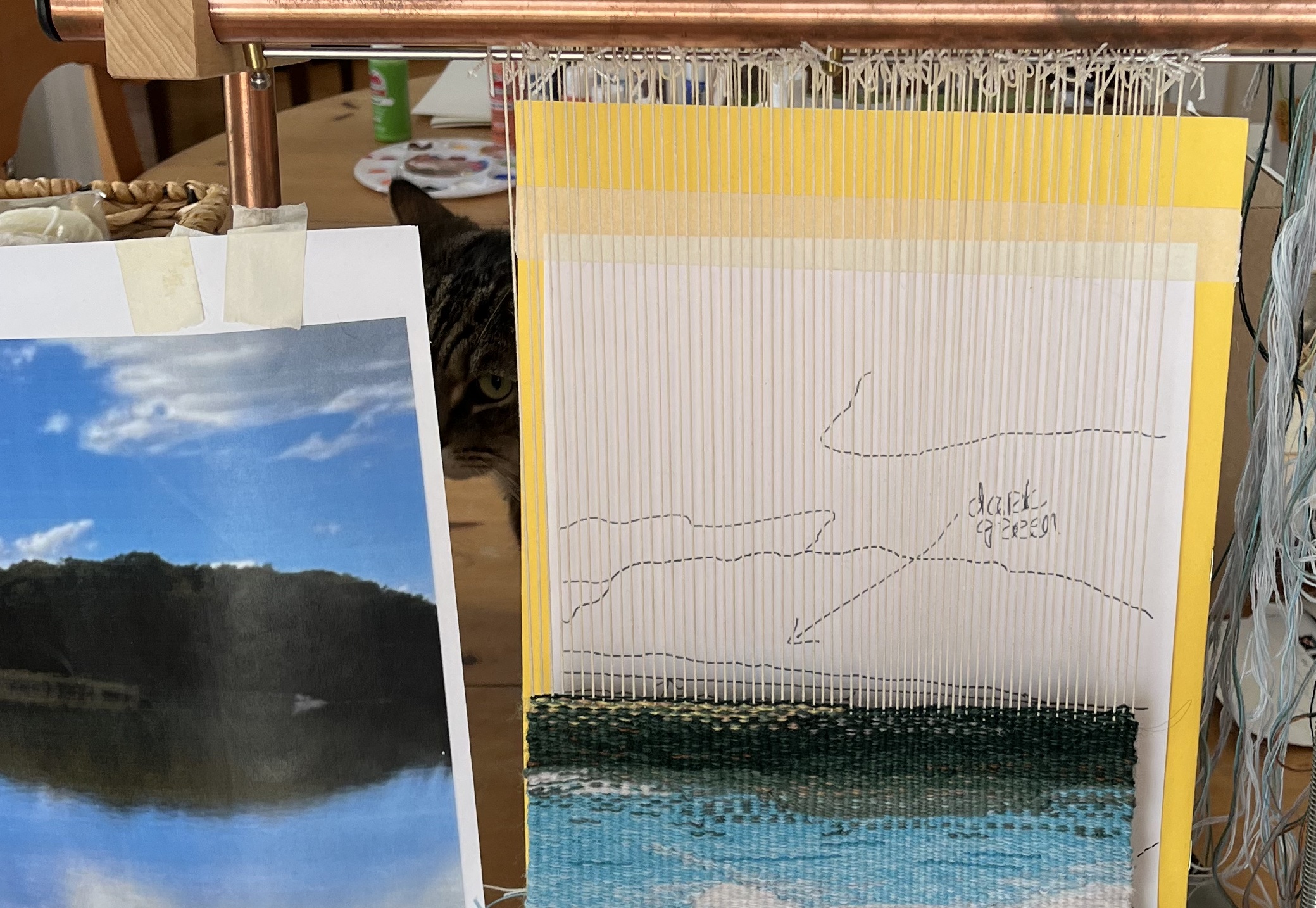
Creative life has been full all these months. I’ve been teaching at the Shelburne Craft School, a place that has truly become a home away from home. I also have spent time with folks in my studio, supporting their weaving journey. I’m taking a tapestry weaving class with Elizabeth Buckley, all about weaving water. I am learning so much!
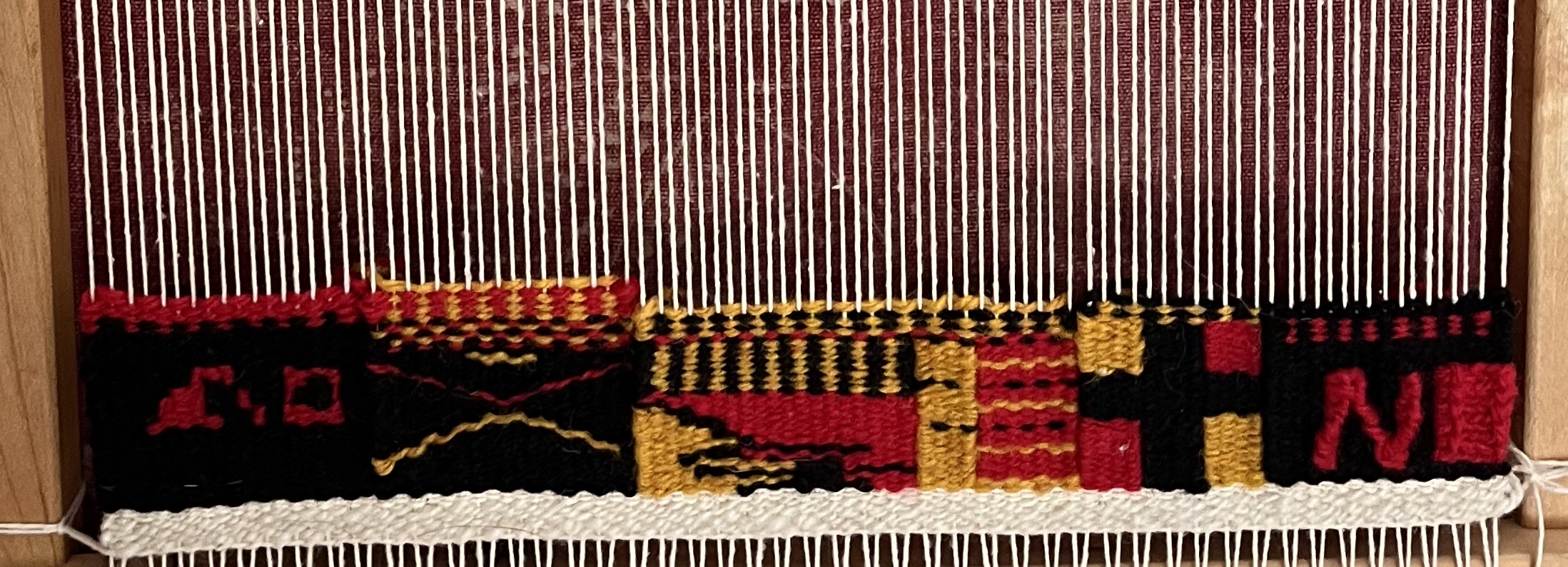
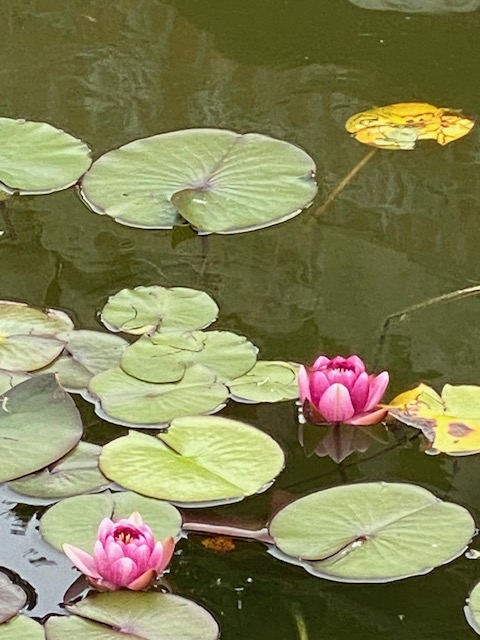
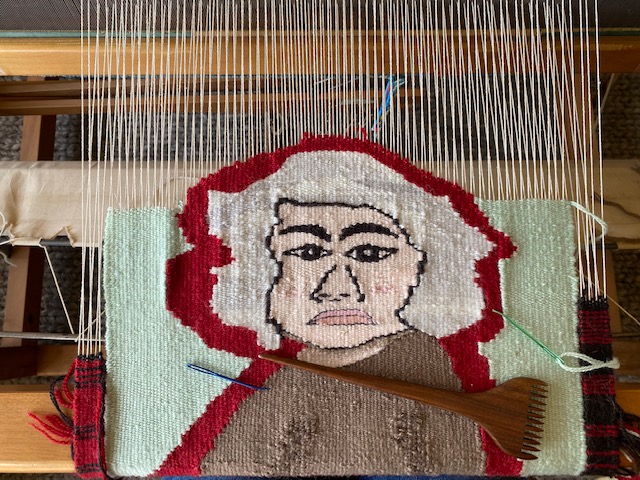
my first attempt to weave reflections in water… not easy, my friends. I have a ways to go, but I’m loving the class.
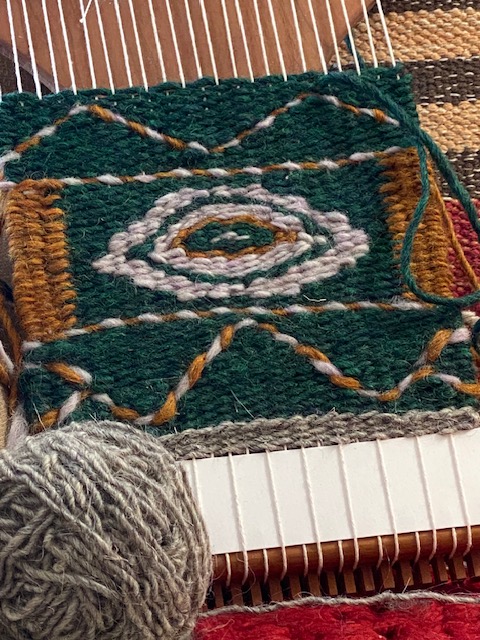
I have a lot of little projects going on as well, including a new daily weaving practice that has absolutely no plan, so we’ll see how it goes.
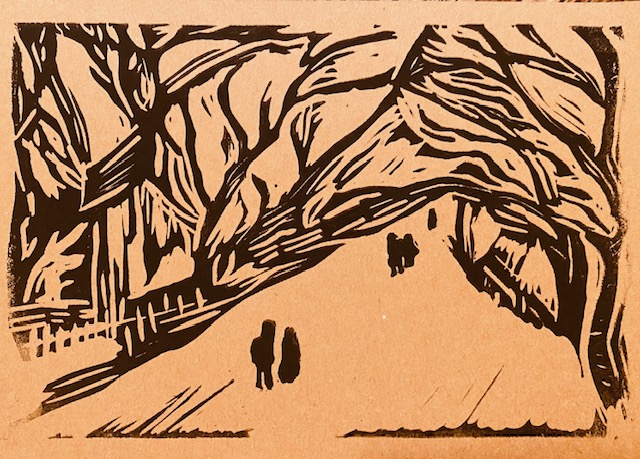
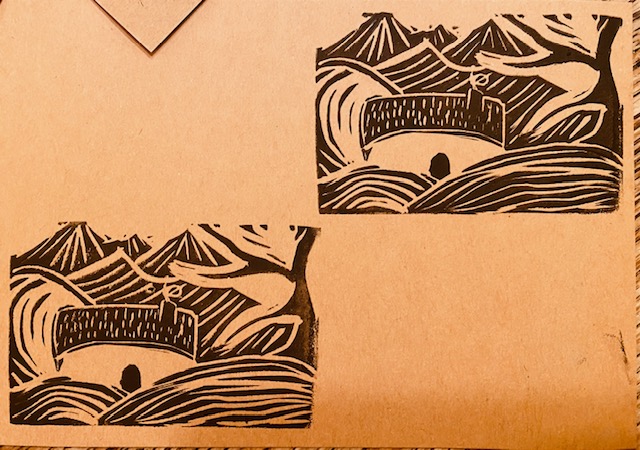
Oh, and I made some block prints…
I’m creating things for a new class I’ll be offering called Wild Weaving, where we get to blast out our creativity and impulses into the embrace of a waiting warp.
And, I’m developing an online class as part of our Weaving Your Story programming through the craft school. This is a curriculum I’ve been developing for a couple of years and has become a very important part of my life.
All amazing work to get to be doing!
I still need to finish weaving some towels so I can get started on a new installation idea that won’t let go of my imagination. That is a project I’ll be planting seeds for soon, in hopes that it will be born over the summer months. You heard it here first! It’s got ties to this piece that was in a show in South Burlington last year.
Creative energy builds when we learn how to rest in the ways we need.
That’s it for now. Thank you, dear friend, for asking for an update.
Balance means many things to people. I’ve found that at any given time in my life, my scales are always tipped in one direction or the other, but that sought-after feeling of just being still in equilibrium is fleeting. Especially when I’m tired, struggling, weary, afraid, or grieving.
Lately, my balance has been way off. A lot of push with not enough rest, quiet, or solitude. I know this pattern well in my life and it never fails that I get sick when I’ve not adjusted the scales with enough care.
I love the invitation of this day. In the northern hemisphere, we get to think about what we have sown in our lives that we can harvest and make use of, and what should be thrown into the compost bin. What can we put to bed as we head into the time of increasing dark?
Can we let ourselves rest?
Can we let go of things that don’t serve us?
Can we let go of things we wish we had or could do but with only so much time in a day, we must come to the aching realization that some things have to remain undone, unmade, unwritten? That hurts.
And in the southern hemisphere, as you head into increasing light, what will you sow? How will you prepare yourself for what you are hoping to bring into being?
In this nature-made time of reflection, what will you be tending to?
(This is reposted from The Long Grief Journey, a website dedicated to the book I wrote with Pamela Blair. I wanted to share it here because of how precious I feel the equinox is.)
Has it really been since March since I’ve written? I’ve been meaning to, but honestly, it’s really hard to extrovert (which in my mind includes putting parts of myself out into the world) when grieving. I’ve needed a lot of quiet, a lot of time alone, and not at all any “shoulds” where possible; just simply to have time to be in my own headspace, at least more than I typically am able. That all being said, I’ve missed writing here. I’ve come to look at this website/blog as the place that holds evidence of my thinking and ideas.
I’m grateful to you for tuning in.
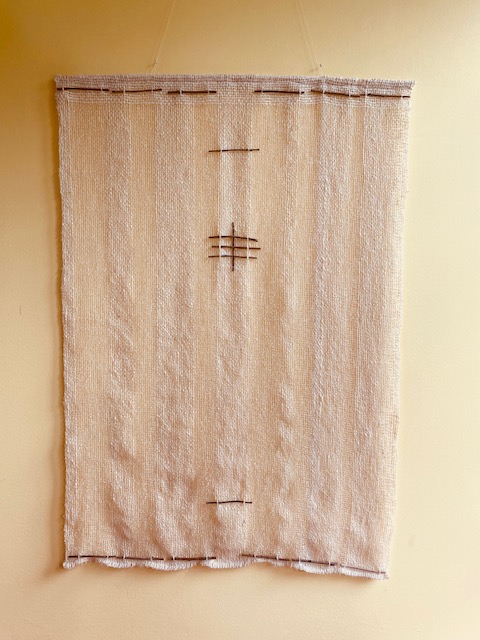
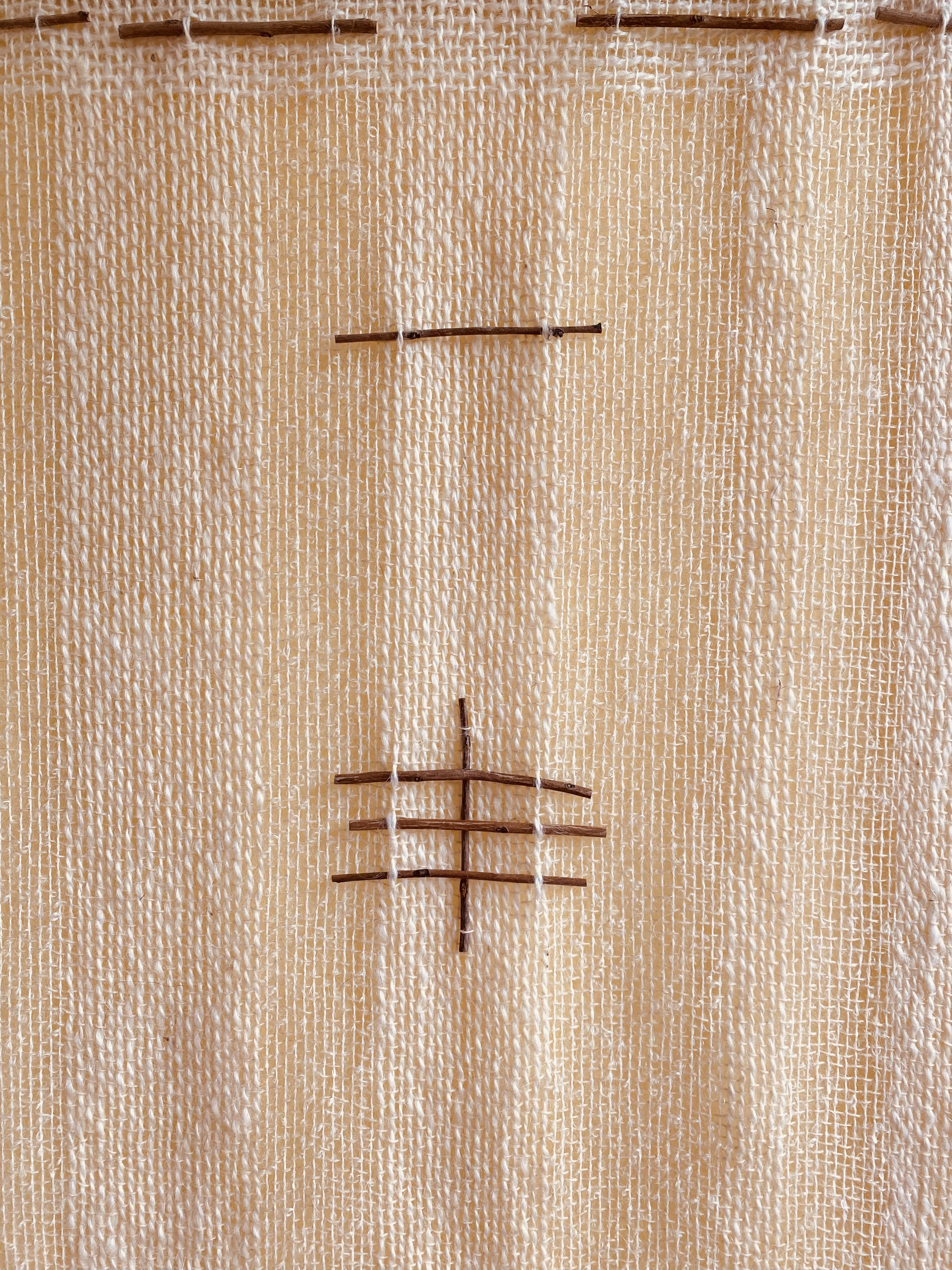
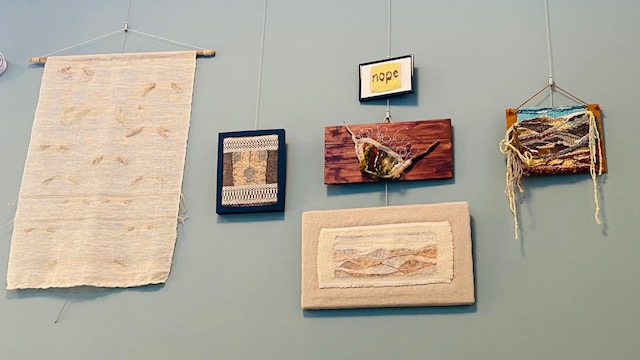
Some updates: I was asked to participate in a group art show entitled Interwoven at the South Burlington Public Art Gallery , and I wholeheartedly said yes. I’d been working on some projects and it was just the impetus I needed to really focus and bring them into being. Most everything I make has to do with something I’m working out in my psyche and the pieces I made for this are no exception. Three are hand knit and three are handwoven. I’ll love to share them with you. The show’s opening is on September 11. I’ll post more about that soon.
Evidence of Significant Repair
Wearing Away
Hema ThrínoRhythms
Winter of Our Discontent
Soil
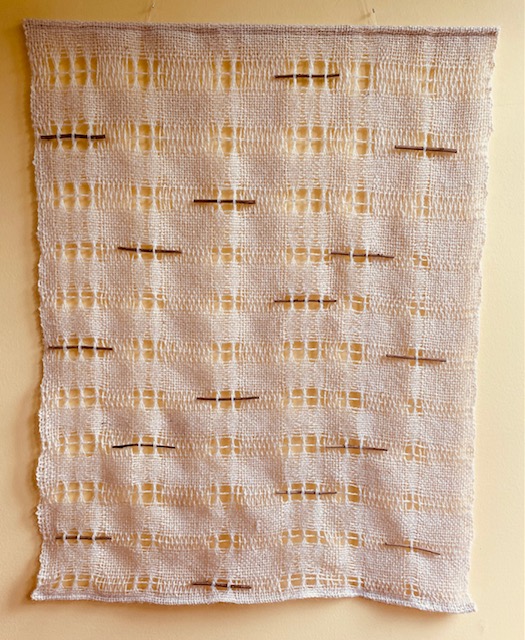
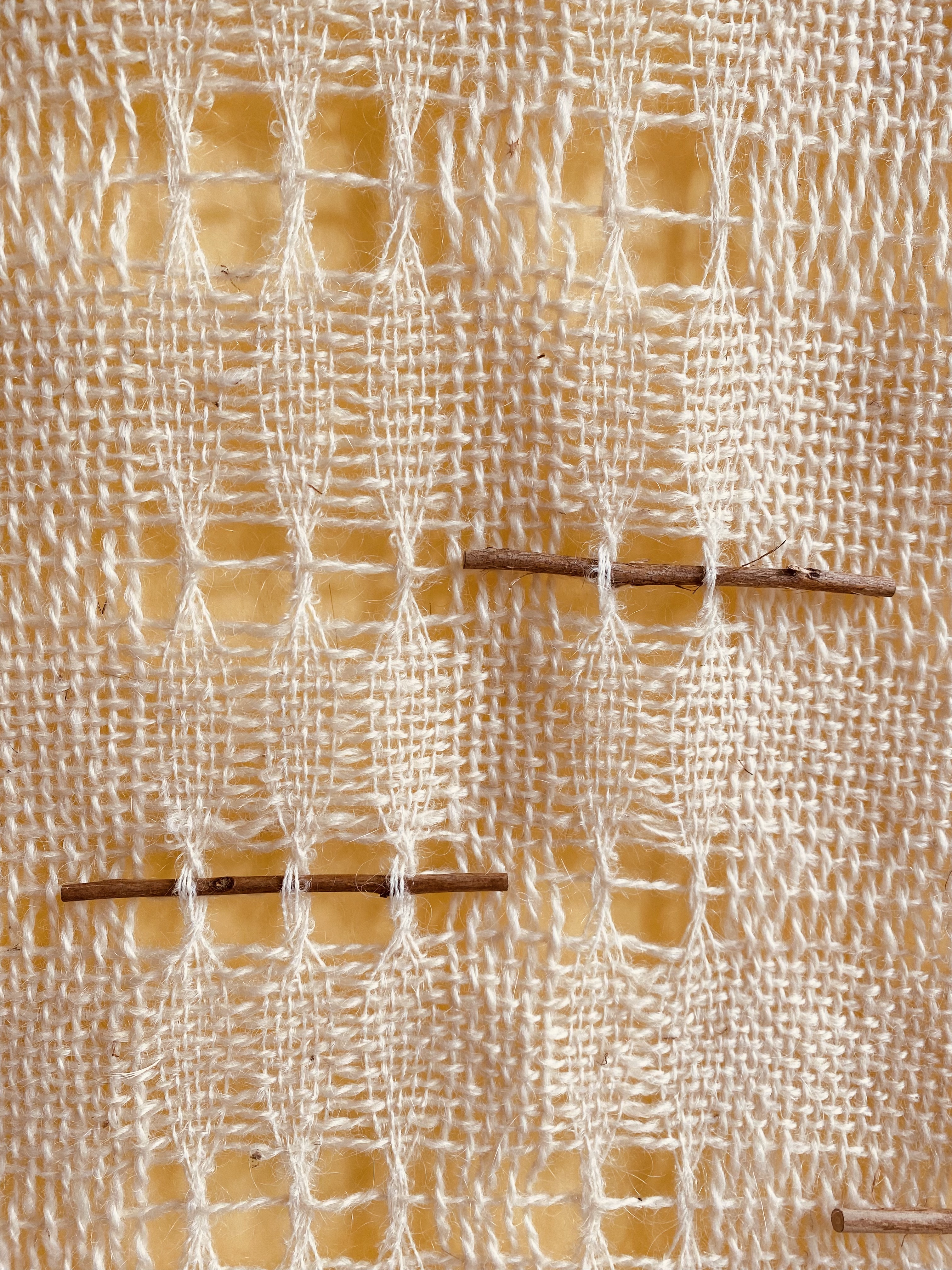
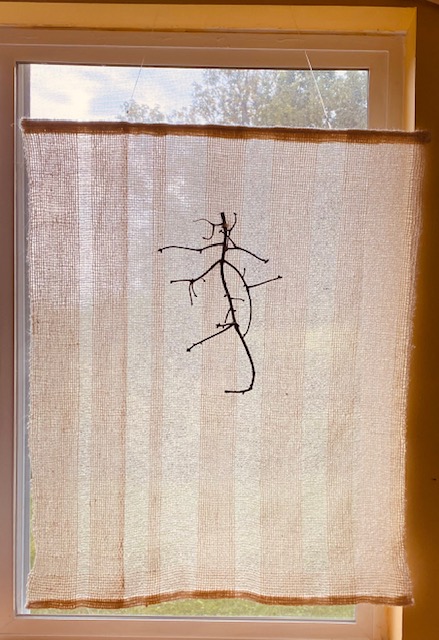
My wooly, woven pieces are actually curtains but could also be wall hangings. I love playing with the idea of warm and bold wool being woven in an airy, light-filled way. I was in my studio yesterday and the window was open, allowing Winter of Our Discontent to flow and move and I smiled, seeing it dance just the way I’d hoped. I’ll write separately about each piece to introduce them simply and properly in the next week or two.
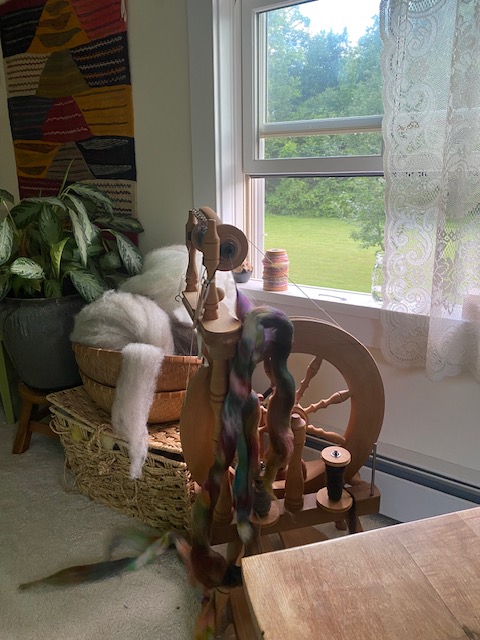
Also happening lately is the spinning of wool while listening to Clarissa Pinkola Estés’The Power of the Crone. I highly recommend listening to her wonderful stories. Pairing that with spinning is like eating dark chocolate while sipping a hot coffee. Perfection.
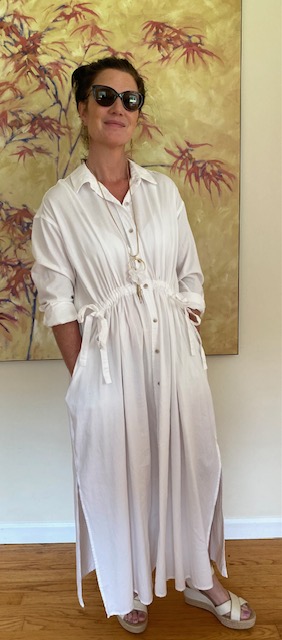
I got to dress up for a dear friend’s beautiful event thrown to raise money to develop a space that supports deep creativity and the arts…
And I got glasses- suddenly everything looks crisp and clear again… dang, that was a slow motion slippery slope…
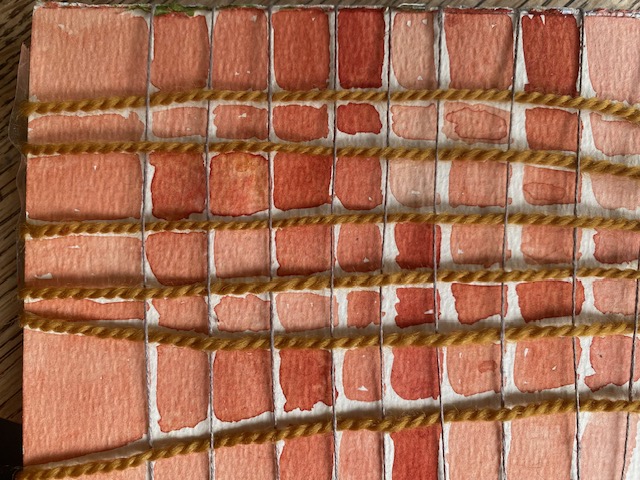
I played with paint and yarn…
And had a lot of my work hung at the Pierson Library in Shelburne…
And did all kinds of fibery things with the Shelburne Craft School, my home away from home…
So, now that we’re all caught up (is that ever really possible?), I’ll love to know what you’ve been working on, thinking about, gearing up to do.
This year is off to a very raucous and rather painful start. I know I am not alone in feeling this way, but I wanted to share with you what has been happening because it is so relevant to the topic of this site, which is in a word, grief.
Just over three weeks ago, my father died. Six weeks to the day prior to his death, my grandmother died. In a matter of six weeks, my family lost two elders, and the reality of this is continuing to seep into my mind, heart, and bones.
Several people have asked me if the book I wrote with Pamela Blair has helped me deal with my grief. It’s been an interesting thing to think about. Going through the process of losing my dad with my family, I often thought to myself, “my god, I cannot believe how much this hurts.” There were times in the hospital as well as at my dad’s wake when I didn’t feel my feet on the ground. There were times sobs erupted from my body without warning. There was a lot of sleeplessness and anxiety. What I realized was that knowing about grief doesn’t alter the pain of grief. But what it has done for me is to normalize my experience of it and not judge myself for anything. Steeping myself in research on grief and talking with so many people about their experience of it, I see that when we go through grief, we know it. When we listen to people who are suffering without trying to rush them to feel better, we absorb and open our hearts to humanity. We become part of the fabric of our shared experience, and it is textured, layered, real.
Our “culture” is often accused of not doing death and grief right. Collectively, we don’t talk about it enough, we keep it away from us and fear it. We try to outlive death and deny its existence. There is evidence of all of that, for sure. But I can say that going through these last couple of months, I’ve witnessed far more people getting grief than not. At my father’s wake, tons of people came and not one person said anything that made me bristle or think, “wow, they just don’t get it.” Mine and my family’s pain was held, responded to tenderly, and with deep interest and compassion. I wasn’t able to attend my grandmother’s services due to having COVID-19 but I feel sure the same energy was present for my family then.
What I do see in our culture is that capitalism and our bowing at the altar of work is a huge problem. One family member of mine had two unpaid days of bereavement for the death of a close family member. Two unpaid days. What? Is that a joke? Several others’ jobs had policies that were a little better than that and their management was very accommodating given the unbelievable losses affecting our family. But it’s important to know this: federal law does not require organizations or companies to include bereavement leave in their benefits packages. As of April 2023, only five states in the US had bereavement leave laws; three additional states had bereavement legislation efforts in the works. “As the Family and Medical Leave Act stands, bereavement is not an acceptable condition for taking unpaid leave from work.” Time minimums for bereavement leave as well as payment structures vary from state to state (or those five states that have actual bereavement laws). citation
For the rest of the country, it is up to the company or organization to determine their own bereavement policies including whether to have them at all. The typical scenario is three- to five-days leave. Sometimes these days are paid, sometimes not, sometimes a hybrid of the two. The size and financial constraints of companies obviously affect this to some degree. Also important to note, only 56% of the population works for places that even have benefit packages. What do hourly workers or those that are self-employed do when they suffer a loss or a family tragedy?
With this kind of pressure to get back to work, there is an underlying communication which is basically, “get yourself together enough to get back out there”, which for many people following the death of a loved one requires faking it. Big time. Feeling distracted, depressed, exhausted, confused, and vulnerable are very common emotional experiences following a loved one’s death, and having to fake it can make things more difficult for people. In fact, for some this is an added layer of trauma that complicates grief in the years to come.
I feel incredibly fortunate to have been in a position where I could take the time I needed to gather myself back into a place that was fit for work. I continue to be in a place where I can do what I need to do to take care of myself. But I am aware that this is not the case for many people, and that is unacceptable. I think this cultural problem of not “doing grief right” is less a human problem and more a political and economic problem.
In sharing these thoughts with you, I am channeling the energy of my dad. He had strong opinions about politics and policy. I loved talking to him about these kinds of things and often called him to get his opinion on something or his long-view perspective on issues I didn’t fully understand. I’ve gone to call him numerous times in the last couple of weeks, looking to catch up and shoot-the-breeze. I’ll miss doing that so much but hopefully he knows (and I believe he does) that I’ll keep at it and continue to advocate for what I believe in.
And if you’re reading this because you are grieving, you are not alone. I hope you are taking all the chances you can to be tender to yourself and that you hold yourself with all the compassion you would afford another person. ~ Bradie
It’s a rainy Friday – rain in January? In Vermont?
It’s been too long since I’ve recorded here my progress and process in weaving, and there’s so many reasons for that of late. Let’s just say 2023 went out with an epic attitude problem and 2024 picked up the baton and leveled some more painful life experiences.
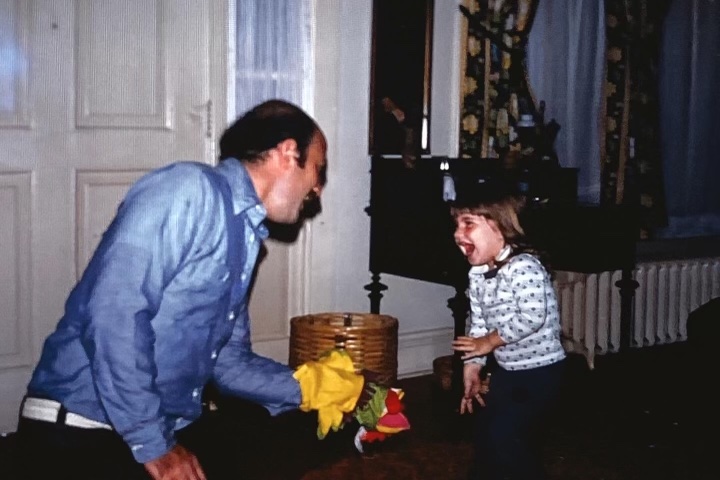
I’d like to acknowledge here that the person who taught me to knit, my step-grandmother who has been in my life since I was 9, passed away on January 7. Her name is Marion Bogdanski (née Trio). I remember vividly when Nanny started teaching me to knit. She was so patient and encouraging, always urging me to relax my hands and loosen my stitches so I wouldn’t have to force the knitting needle into the fabric for every new stitch. Nanny’s mother, Nana, lived with her for time. Nana was from Sicily, and I remember thinking she was amazing- little and delicate and lovely. She would sit and knit, too, me at her feet. I’d hear behind me the click, click, click of the knitting needles going so fast. I remember thinking that one day I’ll be able to knit like that. Still hasn’t happened, but those memories of learning from Nanny and Nana are precious to me and I suspect have a lot to do with how I ended up loving fiber art and craft so much. Also, I must mention that Nanny made the best pancakes ever and I will make homemade pizza and fried dough every New Year’s Eve in her memory. Doing that with Nanny on NYE are some of my favorite memories with her, as well as watching old movies, listening to her stories, playing cards, and getting cooking tips. So many times when I’d need to make something good, I’d call Nanny and ask, how do you do this or that, and she’d take the time and explain every step to me and tell me exactly what to get at the store. That’s so generous. I hope she is dancing and singing with her wonderful Henry and all of her family and friends who left before her. Isn’t she so beautiful?
Another event that has happened in this new year that is especially relevant to the point of this blog is to do with arthritis, believe it or not. This is a topic that I hope to pick up in some depth in the coming months or years. Arthritis doesn’t go away, after all, but more is something to tend to, know about, live in accordance with, and adapt to. In short, I have osteoarthritis which often invites statements like, “well, you’re getting older, and aches and pains are part of it” or “that’s just normal aging”, even from doctors. I have to say I’ve found this entirely unsatisfying. I’ve noticed over the last few years a significant shift in how osteoarthritis in my fingers and hands is affecting my ability to do things that are important to me, namely weaving and teaching weaving.
The way arthritis has been affecting me for the last couple of years is in pain, bending of fingers, and the development of cysts that are doing their best to respond to the impacts of bone spurs that are doing their best to deal with the fact that there’s nothing in between certain of my finger joints. These cysts can often be ignored but one of mine went rogue and became an ongoing issue in September, resulting in the need to have them surgically removed. I had this minor surgery just over two weeks ago and am continuing to heal. Today I was able to tie my shoes using my healing fingers, which felt like a big deal.
What’s the point of sharing all this? Well, I know there are a lot of artists and crafters out there who have arthritis. And I am learning very deeply what it is like to have a physical condition that affects what you can do, how you feel about yourself and your future, and that simply hurts sometimes. As I climb out of feeling really bogged down by the discomfort of post-surgical healing, I realize that I want to move into this space of learning more deeply. I want to know how to better care for myself so that I can keep doing things that I love. I also want to learn more about how to help others do the same, no matter what condition they are dealing with.
I didn’t realize how much I loved weaving until I couldn’t weave. I didn’t realize how much I loved teaching until I thought I might not be able to. I didn’t realize how many people were out there, wanting to make, create, express, and share their light with the world who for one reason or another can’t or don’t know how to modify things in a way that allows them to keep at it. To put it simply, going through all this has cracked my heart open even more. Just like grief has.
Soon I’ll write about some projects I was able to finish before the surgery and talk about some other things I’m working on and thinking about. Until then, I’d love to hear from you if you are managing a condition that has affected or affects how you create and express yourself. Who knows- maybe a larger conversation can start where others can find support and new ideas when they are struggling.
p.s. I found this website about arthritis really helpful.
Thursday is Children’s Grief Awareness Day. You can read about the origins of this important day here. If you have a child in your family, classroom, sports team, extracurriculars, or community that you know is grieving the loss of a loved one, you can find wonderful information on the Highmark Caring Place website about how to support them.
Definitely check out their Facts and Stats page for some insights into the breadth and depth of grieving children and the long-term flow of grief so many of them experience.
Below I’ve shared an excerpt from The Long Grief Journey in hopes of contributing to this very important conversation. There have been many times over the years where I’ve worked with children who appeared to be struggling with learning or behavioral issues who also had lost a loved one. Sometimes it was long enough before I became involved for educators and other important adults in their lives to not be aware of the child’s loss. Sometimes too, the assumption was made that so much time had passed between the child’s loss and whatever was happening at the moment that the two issues (or more) weren’t related. What we found, time and again, was that with tender care and raised awareness, support of children was more full-bodied, relevant, and empathetic when the picture of the child’s life was viewed as a whole, grief included.
I hope that if you are supporting a grieving child, you find this useful.
The Long Grief Journey, excerpt from Chapter 15:
Helping Children Cope with Long-term Grief While Tending to Yourself
It can be tough to help kids deal with grief when you’re grieving as well. It’s important to take care of yourself…
Amy Morin, LCSW, psychotherapist
A life built around a core sense of absence is its own type of grief and for many is difficult to describe in words. The journey begins early if your child lost a significant loved one at an age where they don’t hold any memories of them. If you’re helping your child grow up with the absence of a precious loved one, you already know you have a crucial role to play. It’s important to keep their deceased loved one in consciousness, by name and by image, to tell stories about them, saying their name in fluid, non-whispered ways. Consider also this truth: children will grieve and will process their grief in some way, no matter what we do. The more open we are, and the more space we can hold for them, the more fluidly their experience will go.
SPOTTING LONG-TERM GRIEF IN CHILDREN
When a child loses a parent…that child grows up feeling different and alone. A story is written in a secret place in that child’s mind—a story of loss and pain and the triumph over that pain.
Maxine Harris, PhD, author The Loss That is Forever: The Lifelong Impact of the Death of a Mother or Father
As much as we’d like to insulate ourselves from untimely loss, it’s proven to be impossible. Some people lose a loved one when they’re infants, and others after a long life lived together. There is no official roadmap detailing how loss will impact a life, but some themes emerge worth considering.
Here, we write as though you are a parent or caregiver to a child who has lost a significant loved one, but if you are reading this section with yourself in mind, hold a space for remembrance of your age and your thinking and needs from that time. So often as children go through their own grieving process, they are supported by people who are also grieving and who have varying levels of knowledge about developmental ages and stages and the needs associated with them. Those who are in the acute stage of grieving don’t generally have a lot of extra energy to spare.
Let’s begin with what unifies us all in the experience of long- term grief, regardless of the age you are at the time of loss. In the beginning, common feelings and reactions include anger, ambivalence, longing, and the persistent striving to recover the person lost. Age is what tends to dictate how these emotional reactions appear and are understood or expressed. As a rule, adults have more life experience than children and have more reference points for identifying feelings and for asking for what they need. Children are often confused about what their feelings are about and may even struggle with naming them. Anger can feel more like an urge. Persistent longing might be expressed through obsessive ritual and magical thinking. When young children lose a parent, sibling, or other precious loved one, the effects can last for years, especially if they are not supported by the important adults in their lives in a way that allows all of the feelings and fears to be expressed and processed. Michael described how his granddaughter continues to process the death of her father who passed away five years ago.
My granddaughter has hundreds of cuddly toys. So many around her bed that she can’t get in it! She fixates on keeping them all in the same order. She is ten now and she doesn’t look to be abandoning her teddy bears any time soon. We just accept it.
It’s so important for caregivers, teachers, and other adults to know that even years after a child loses a dear loved one, especially a parent or sibling, issues can arise which look like anxiety, depression, attention deficit disorder, autism, obsessive-compulsive disorder, and academic delays. In a child’s life, loss changes the shape, texture, flow, and rhythm of most everything. It doesn’t mean they can’t go on to live wonderful enriching lives, but it does mean the relevant and important adults in their lives need to keep an open ear to underlying issues as they express themselves.
Older children and adults understand time and finality, whereas infants, toddlers, and young children do not. Forever can be both an impossible concept to understand as well as terrifying when applied to the deceased loved one. It’s easy to see how immediate grief reactions can evolve and morph into long-term and unresolved grief as the child learns to have a relationship with someone who isn’t there. Even years later, people of all ages report “seeing” their loved ones in passing cars or in groups of people. Pam swears she saw her father sitting in a diner eighteen months after his death. “I saw him sitting in the window from the parking lot wearing his favorite baseball hat, and I almost approached him!” This kind of seeking behavior is found in people of all ages.
No matter the age a child is when they lose an important loved one, they are likely to regress to behaviors from a younger developmental stage, at least for a while. Children who were potty-trained may bed wet again for a time. Teenagers may want to sleep in their parent’s room or may not feel comfortable going out. Moreover, adults may wish for someone else to manage the nuts and bolts of life, responsibility feeling too burdensome and stressful. Herein lies the potential for a complicated battle of the needs. It’s easy to imagine that if an adult is feeling the pains of grief for a long time and needs a release of pressure, it might be doubly hard to care for children who suddenly are not only grieving but are also doing things that are unexpected, appear immature, or even are annoying. The way children’s caregivers respond to these regressions has a lot to do with the way grief is metabolized in the long run. That’s why getting support and gaining increased under- standing of how children express is so very important.
A LIFE REDEFINED
Ian was twelve when he lost his father. When he was twenty, he asked, “I wonder what kind of man I would have been if I’d had my father all this time.” Now he’s forty-one and told us, “I still miss him every day.”
Pam
Another thing to remember is that at every developmental stage or milestone, life is redefined. Graduations, new jobs, greater independence, a committed relationship, parenthood—all these things that come to pass in a life stand out as one more life event a parent didn’t witness, and one more moment to grieve. Over a lifetime, metabolizing this loss and incorporating it into one’s identity is the goal.
Those who lost a loved one at a young age might not feel free to talk about them. Some feel as though bringing up their name or names will make others uncomfortable. Some suffer from feelings of sadness and jealousy when they witness others having close and bonded relationships. There is a sense of difference, of otherness that marks a person’s life and can make special moments at best bittersweet, at worst, emotionally intolerable. It seems there is a value placed on the recency of loss. The further back one’s loss goes, the less room it gets to take up in conversation. Meanwhile, the person who lost someone at an early age may feel like this fact of their life is the first part of them that enters a room, the rest shaped by this loss.
Whether we’re healing our inner child, tending to our adult wounds, or helping another person on their long journey, it helps us to be oriented to where a person was in life when they sustained their profound loss. It can also help us serve ourselves from a tender and compassionate point of view.
~~~~~~~~~~~~~~~
A Book Recommendation: a dear friend of mine whose family has been impacted greatly by loss recommends the book The Invisible String, by Patrice Karst. She said this book was invaluable to her family when they were supporting her grandchild through grief. There are other books in the series that are all wonderful and deeply supportive of children and those who care for them.
Do you have books you recommend for grieving children?
I spend a lot of time thinking about and talking about grief. It’s part of my job as a therapist. I co-wrote a book about it. And I incorporate working through grief into certain of my weaving classes, both with groups and individuals. It’s a subject that is always relevant because all of us, at some point in our lives, barring few exceptions, lose loved ones or experience losses of other kinds, like endings of relationships, job loss, or significant life changes due to chronic illness, bankruptcy, natural disaster, war. The list is long. The news of late has been devastating and heart crushing when viewing what is happening in the Palestinian Territories and Israel. So many of us are grieving locally as well as globally. So many of us have been doing this for a long time.
There’s nothing to say about it that can take away the reality of the pain, anguish, trauma, and truth of the matter, which is that human beings can be so utterly monstrous to each other. It’s shocking, and then we must think on the reality that we have choices to make every day about how we are going to be in the world. And sometimes even the most peaceful of us disappoint ourselves. I guess that’s where the truth is, too. It’s always a choice, and always it is true that how we are to others impacts our experience of our lives and our relationships.
I’ve noticed a few things lately that might seem obvious, but that have been moving me and making me look above and beyond the chatter. These observations help me connect with my choices in a way that mitigates feelings of helplessness and despair. I’ll share them with you here.
~ There’s a lot of dialogue about how much our culture gets grief wrong and how there is this pressure on people to “get over” grief quickly. I don’t disagree with that, but I have been noticing how many individuals and organizations are out there, all over the world, talking about how grief really is, and how much it changes a person and a life. As I’ve looked more deeply into remembrance and awareness days to do with grief, I’ve seen a lot of realistic information about what grief is really like as well as how we can support others when they are struggling. I’ll write soon about an upcoming awareness day to do with grieving children. I wonder what is getting in the way of the honest messages to do with grief from landing and changing the experiences people have when they are suffering. How can we release the pressure we put on ourselves to stay the same, no matter what?
~ Giving people the space and respect they deserve and are entitled to when processing life events and grief is a wonderful thing to do. When we can get out of the mindset of having to make someone “feel better” and instead hold space for them to simply be where they are, a sort of alchemy takes place. A bridge of trust grows, and often it looks like recognition. Almost like a version of namaste, it is as though the spirit says, the grief in me sees the grief in you.
~ As I talk with and listen to people, something is becoming crystal clear: long-term grief is not always solely about the loved one lost, but sometimes is a result of the anguish of trying to get back to normal too fast, whether this is a self-imposed pressure or felt as pressure from others. As a result of that anguish, there are multiple layers of complexity piled on and on and on. As people try to find their balance and figure out a new normal after any kind of grief, part of that often entails facing the pain of how their grief was received and responded to. This is tough stuff, but it seems important to me.
~ There is something incredible that happens when people let themselves process life events through the practice of making. We do so much thinking about so many things. And I’m a fan of thinking! Thinking helps us make choices that are less reactive, more informed, and ideally lead to better outcomes than when we fly by the seat of our emotions. But… sometimes we get lost in the weeds of words and self-analyzing. Creating spaces where people can translate lived experience into artistic form works, and what we get from that is insight and healing from angles that might not have been approached if the senses weren’t involved.
~ Listening… the most wonderful kind of listening… is medicine. The kind where you’re not waiting to say the next thing, or thinking about your words as the other person is still talking. Slowing down and absorbing what someone is saying and letting it affect you or work on you in some way- this is true relating. And it doesn’t require hours, or even many minutes. It just requires deciding that the person you are engaged with is worth your time and attention. Can you imagine if we all treated everyone like that? And were treated like that all the time?
What helps us meet the people around us where they are, not where we want them to be? How do we maintain compassion, patience, love, and curiosity? The first thing that comes to mind and is the only one I want to focus on at the moment is self-compassion. Sometimes it’s just the truth that our cups will not be full before we give to others, and we can sustain that for a while. Sometimes we are tired and grieving ourselves, when we are at the same time showing up for others. And sometimes, we can’t give in the ways others want us to give or we wish we could, and we need to pull back and refocus that energy. That’s okay. It helps to remember and keep remembering that it’s not anyone’s job to take grief away from others or somehow fix the pain of it. And sometimes energy needs to go back into the self for a while before it can go out again. It’s just the way it is, and there’s nothing selfish about it. It’s okay to think about how you can show up for people at any given time, and be honest about.
How do you tend to yourself and nourish yourself as you go about life and relationships? Do you have ways you tune in and respond to your heart and body? Do you take the importance of this as seriously as you do your love for and support of others? And, when you can’t be there in the way you always have and feel worried about that, or stressed or resentful, do you have ideas about alternatives? Can you imagine communicating them?
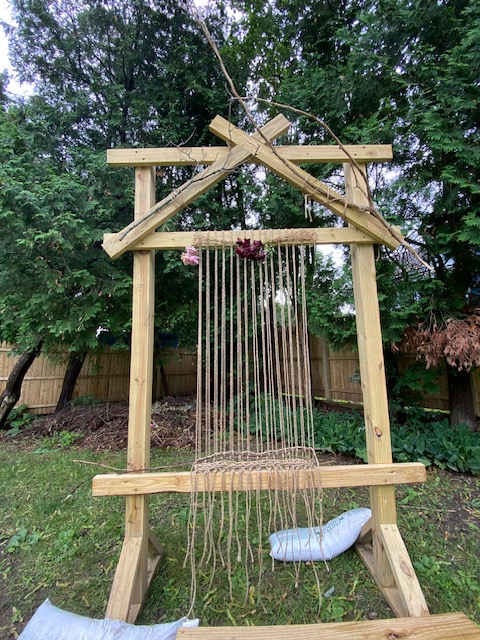
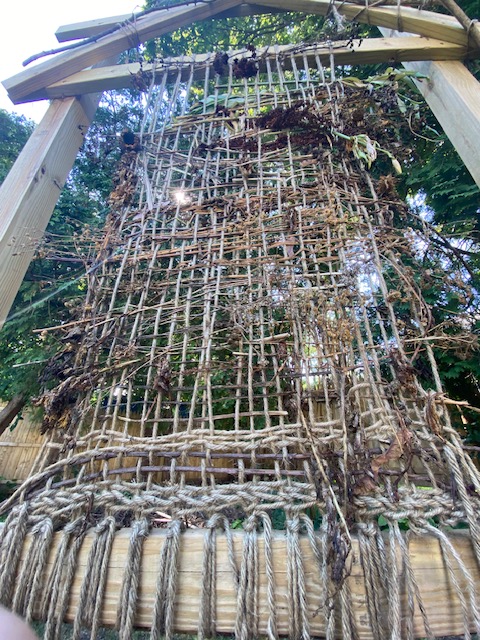
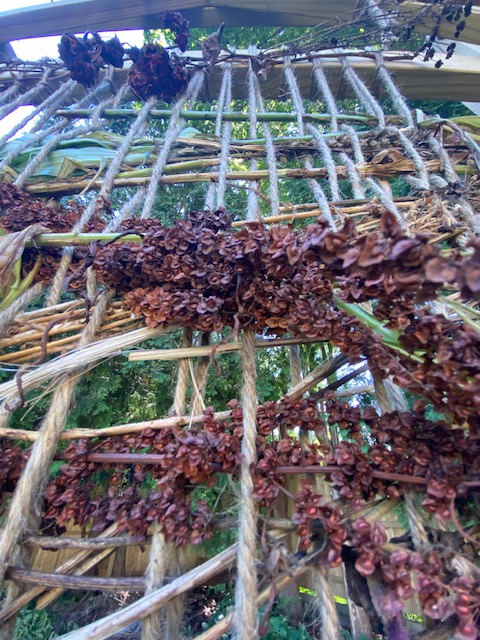
There is something alchemical about handweaving. It connects us with ourselves, with others, and with our ancestors, recent and distant. Weaving is part of our ancestral DNA and when we allow our fingers to interlace thread with thread, we create connection and foundation. Weaving does not have to be expensive, and weaving should be accessible to all people. If we can apply resistance to threads and create a taut warp, we can weave.
I love the long arc of weaving and the incredible potential it affords. One can sit with a simple frame loom and weave wild art pieces as well as work on a multi-harness floor loom and create wondrous and complex fabric. There are so many types of weaving and looms. Multi-shaft, tapestry, backstrap, pin, circular, inkle, Rinny Tin-Tin. Over the last decade, I’ve been teaching fiber art and craft in schools and more recently at the Shelburne Craft School, and there are some thought jewels that I’ve gathered along the way that fuel me, inspire me and make me want to keep learning and expanding. I’ve shared some of them here as a way of inviting anyone who has an inkling, to try out weaving, or any art or craft you’ve longed to try but keep putting off.
People Meet Themselves When They Weave
On many occasions, I’ve had the good pleasure of hearing people say things like, “I’m usually __________ (fill in the blank), but I’m playing with being __________ (fill in the blank) as I weave this” … or “I’ve never played with so much color before and I LOVE it!” …, or “I never realized how much tension I hold in my hands” …, or “the process of weaving while I reflect on my loved one is bringing up thoughts and feelings I’ve not held space for in so long, if ever.”
When we let ourselves just be with our hands, our eyes, and our breath as we make, our spirit has a chance to catch up and settle into the space between our lungs and in all the chambers of our heart. We can hear our own breathing again. We can let our eyes linger where they want to, and then notice where that is. We can meet our inner judge and talk it down from fear. We can usher ourselves into new territory and have woven fabric to show for the journey.
People Benefit from Having Access to Colors and Textures and the Opportunity to Experiment
This may sound so obvious it’s laughable, but hear me out. Have you ever had the experience of being invited to make something, and are given a certain set of materials that everyone else has, and a series of instructions that everyone else has, and you make something at the end that looks like a weird, kind of close but disturbingly not-close version of the thing you were supposed to make? Or is that just my life? In my experience, nothing botches up creativity more than when we are in a circumstance that doesn’t let us feel and see our way through materials we want to touch and witness. I’ve been blessed with a bunch of students who “go rogue” on the regular. It’s hilarious, and it’s shown me that people have their own ideas and their own version of learning that needs to be honored and allowed for as much as possible. Yes, sometimes technical truths need to be thrown in the mix to ensure that people can weave the thing they want to weave, but I’ve learned that creative drive is strong and shouldn’t be stamped out by rigidity.
People of All Ages Need to Play
I think we all know this intuitively, but what I’ve found is that people of all ages need access to opportunities where they can experiment, follow their noses, see what happens, try this and that, on low-stake projects. As we age, many of us become concerned with how much things cost, how much “time is worth”, how useful something is, and whether there is value to whatever it is we are doing. It puts so much pressure on the creative part of ourselves that just needs a freakin’ minute to look at things, try things out, observe what happens when certain materials interact with others, and take notice of how we feel about what we are seeing and experiencing. We need the chance to just be and drop in to our flow. When teaching elementary aged people as well as folks in their senior years, I’ve heard many exclaim, “Oh wow, I get to use this?” and, “I can’t believe I can weave with all of this! It’s so much fun!”
That makes my day.
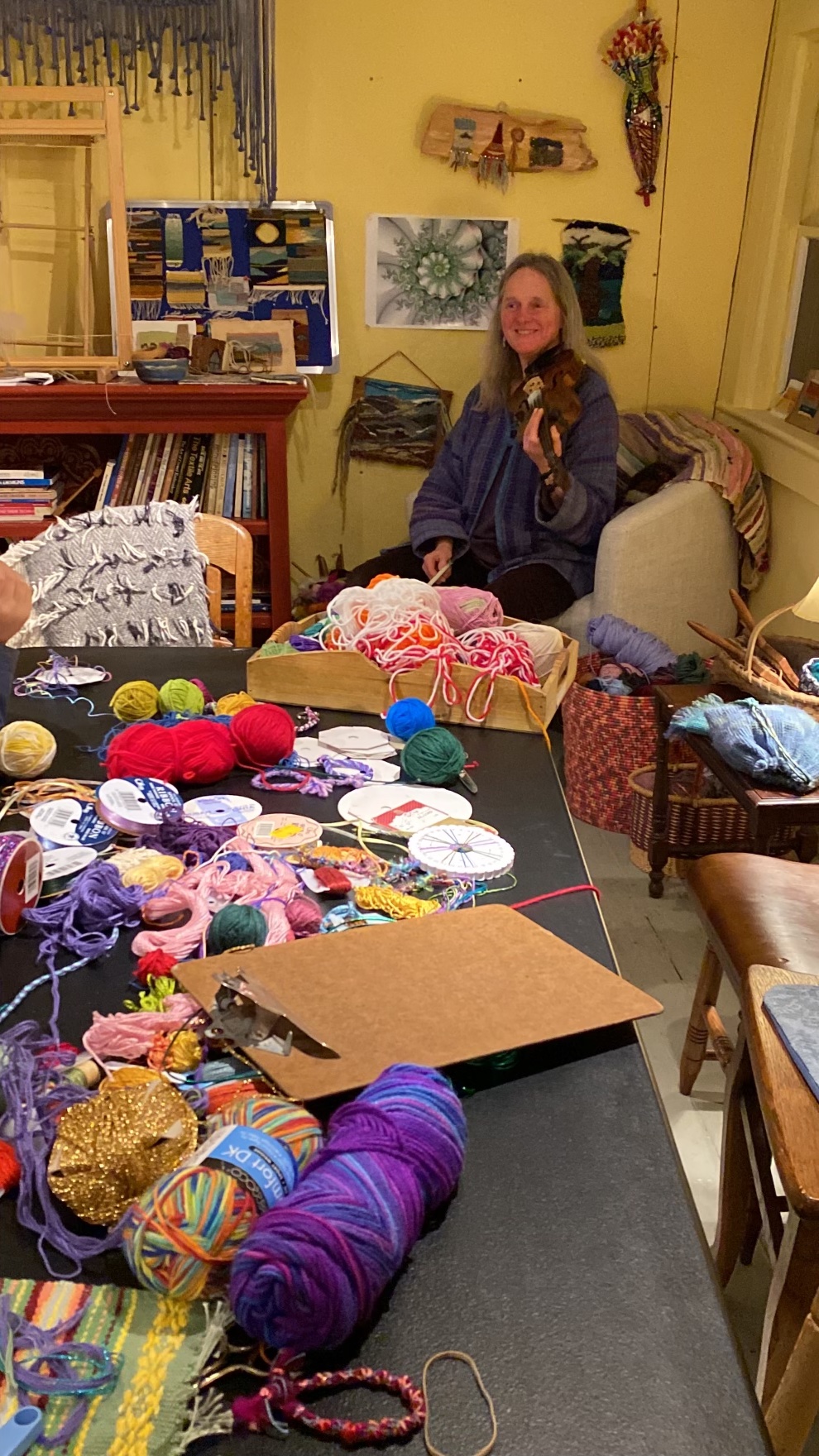
My friend and weaving teacher, Lausanne Allen, playing the fiddle while guests learned to braid using the Kumihimo method during an event at the Shelburne Craft School.
Weaving Can Be Very Simple and Very Complex
I’m hitting home runs here with obvious statements, but it’s worth saying that weaving is, at its most basic, the process of moving one material over and under and over and under another material. That’s it. Simple as that. From that foundation, we can weave the most complex and wondrous images and textiles imaginable. But it all starts with interlacing whatever it is we are weaving with. Isn’t that marvelous? Weaving is for everyone. It can be taught to people as young as nursery school age, and there is no age limit. In fact, weaving can help those dealing with the effects of stroke, dementia, and Alzheimer’s disease, as it has been shown to strengthen and encourage neuroplasticity in the brain.
When We Get to Do Things We Love, We Are Living the Universal Dream
Disclaimer: This is my view based on a whole lot of things. Feel free to take it or leave it.
If we are doing what we love at least sometimes, we can experience ourselves and share with the world our inherent gifts. There are no losers in this set-up. (Of course, I’m assuming that doing what we love doesn’t include hurting other people or living in a way that disregards others’ autonomy and integrity.) When we share what we love with others who are interested, we are giving from the place of our truest selves, because what we love is connected to who we are; the spark connected to our creativity is born from energy itself, and it interlaces with others’ creativity, like a cosmic dance. It’s amazing!
Whether it’s weaving, dancing, sculpting or singing, writing, building or baking (the list goes on and on), if we love what we are doing and sharing it with others in some way, we are putting some good energy into the world. And my friends, the world needs that big time.
Doing what we love = good medicine.
I hope whatever you are doing today includes you sharing the spark you have with the world in whatever way feels great to you. Until next time.







 Healing Handcrafting