Healing Handcrafting


2 Comments

Summoning Creativity #7~ Slow Growth, Slow Healing

My post is late this month because I’ve hurt my back something wicked and it’s really had me down for the count. Life has been very full and I’ve not been terribly good at following the advice that is the title of this post. This month’s Summoning Creativity effort is offered to me as much as it is to you.

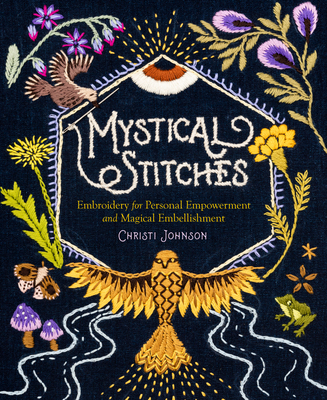
I came across a quote recently that is in this marvelous book called Mystical Stitches: Embroidery for Personal Empowerment and Magical Embellishment by Christi Johnson.

Christi wrote,

Until recent history, the slow growth reflected in the natural world and in the required crafts of daily living was all there was. Our bodies and minds evolved thanks to, and in support of, slow growth. Today, we live in a culture that not only makes it possible to force growth but often expects it. While we don’t have to eschew technological or human progress, we must weave the appreciation for slow growth back into the tapestry of our lives if we hope to move toward a more harmonious relationship with the natural environment that surrounds us.

This writing made me nod and exclaim out loud, “yes, thank you for this reminder”. I read it a few days before I hurt my back, and I find myself going back to it now when just sitting to weave or stitch or even read is somewhat challenging because there is no comfortable position I can be in for very long.

Applying these words to my own healing is a learning edge to me. Over the last several years, I’ve had several injuries and physical realities that have forced me to reckon with the impatience I have with my own body. While I relish slow growth, slow healing is a whole other matter. I’ve got a lot of work to do there.

And once again, I have the opportunity to reckon with this issue of mine.

How will I do it?

My current thinking is to relate to the pain I’m feeling in a visual way. I want to look at images of the muscles, nerves and vertebrae that are communicating with me. Maybe I’ll draw them, or stitch them, or at some point, weave them. I will add color and texture to impatience, to my tendency to force healing on myself (which never works), and I will try to relate to the parts of me that have some slow growing to do, namely patience with and compassion for… me.

So, here we go.

Do you have health issues that impact your making? How do you reckon with these themes?

Until next time,
~ bradie


Leave a comment

Circular Weaving Adornments

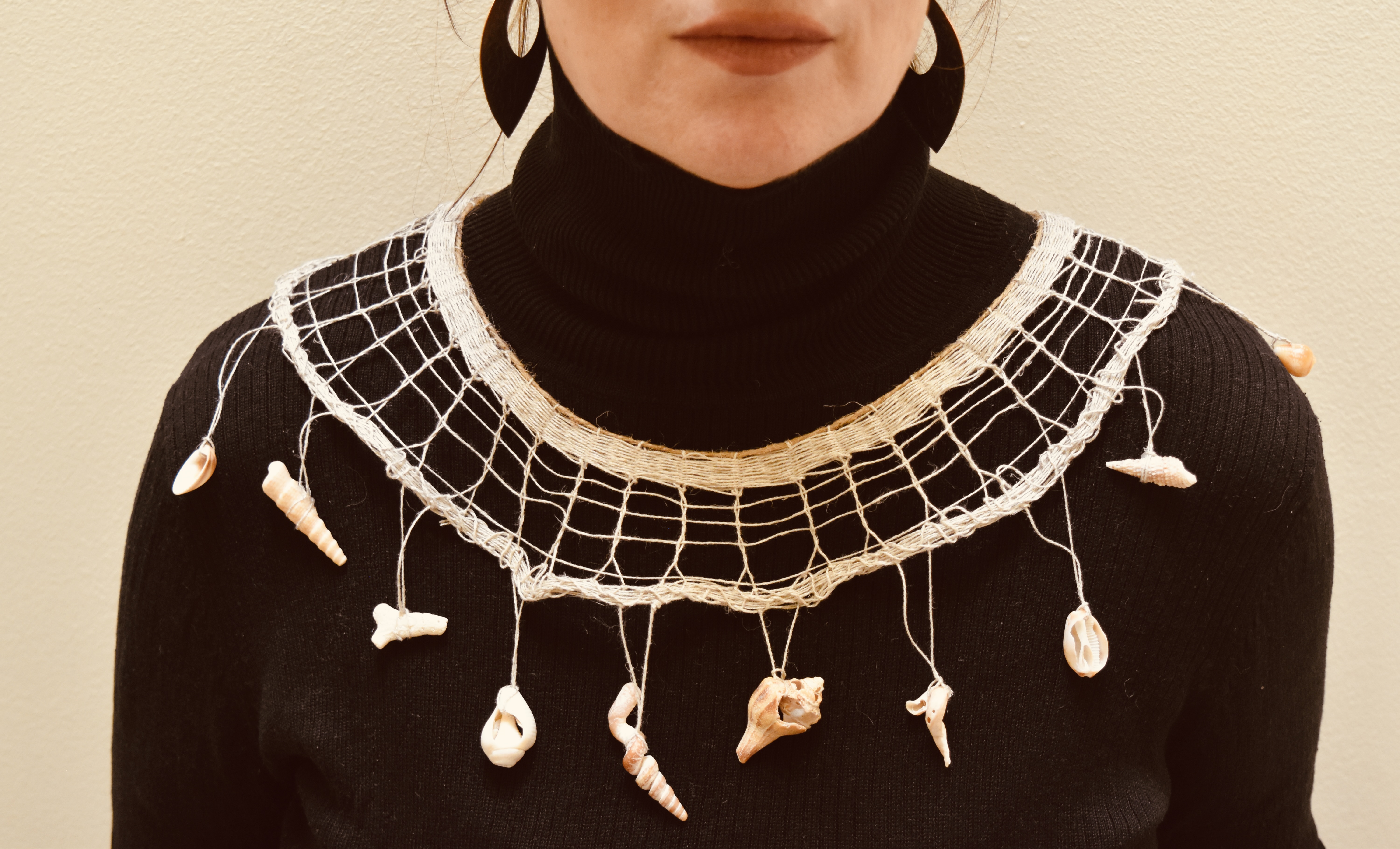
Circular weaving is a wonderful way to play with yarn, experiment, and make beautiful things, with or without a plan. I recently warped my Majacraft circular loom; it is no longer made but sometimes you can find them for sale through other vendors. If you can get your hands on one, don’t hesitate- these looms are by far my favorite circular looms to date. I set it up in a way that keeps the center open/unwoven. When you weave this way, you can make home decor and sculpture, as well as shawls and necklaces, depending on how big the space is in the middle and how big your loom is.

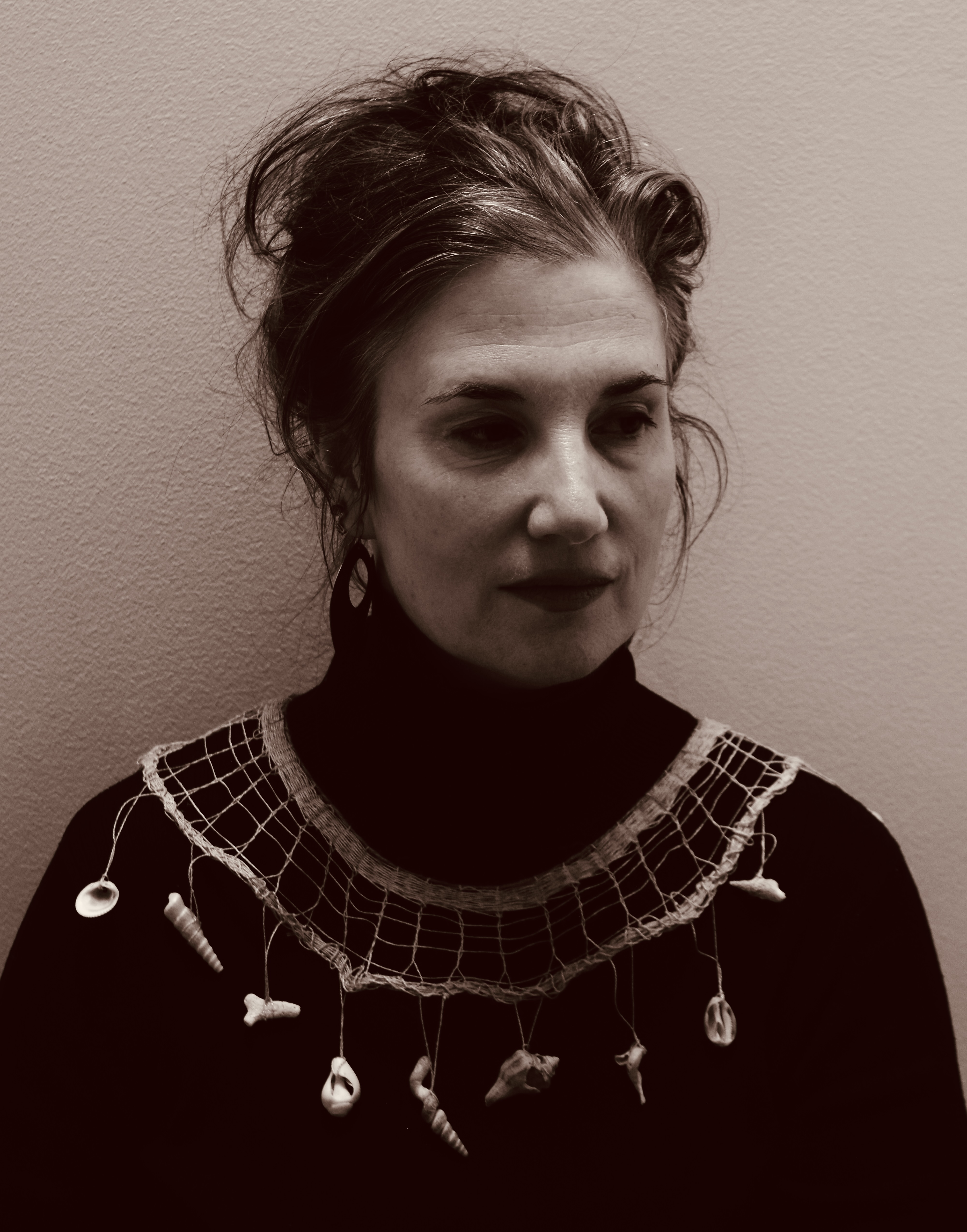
I’ve wanted to weave a necklace for a long time and I finally decided to play and make one that is dedicated to Thalassa, primordial goddess of the ocean, who I’ve become very attached to. This first piece is woven with linen, very thin and strong, like netting and sea grass. I included sea shells from Sanibel Island, a place where I used to live that takes up a lot of space in my psyche. The necklace rests gently on my shoulders and the shells move but don’t clank or tangle. It lays in such a way that I want to stand straight and move with intention when I’m wearing it.

I knew ahead of time how the shells would be attached to the weaving, but the weaving itself came organically and peacefully. I wanted it open, airy, loose. The sea interacts with air and netting with water and its inhabitants.

I am delighted with this first outcome! And you know… I’ve got another project ready to go! This one will be woven down to the end of the warp and will have a totally different vibe… stay tuned!

Thalassa, daughter of Aether and Hemera,
mother of Aigaion, the Telkhines, Halia, Aprhodite, and the fishes.
Thalassa is the sea.


Leave a comment

Things that made me smile today…

I wish I had pictures of all of these things but I was driving when I saw some of them, or it just would have been weird to bust out my camera…

  • handmade signs asking drivers to slow down because of geese in the road
  • the kind and lovely person who helped me understand my new progressive lenses
  • asking this wonderful man what he’s up to and him saying something like, “6’3, no good, and logging”
  • a joke that flowed off a dear person’s tongue as seamlessly as water over a smooth rock
  • signs indicating that in a family barn, you’d find coffee, snacks, art, and vintage stuff… I love Vermont so much
  • the Green Mountains
  • hearing how excited someone I was talking to is about an upcoming trip she’s going on with her family
  • listening to the birds around my studio- I think a couple of pigeons were yelling at each other
  • thinking about this fantastic play I saw last night that my friend is in
  • seeing signs all over the place that suggest that love, compassion, and a welcoming attitude are preferred by many
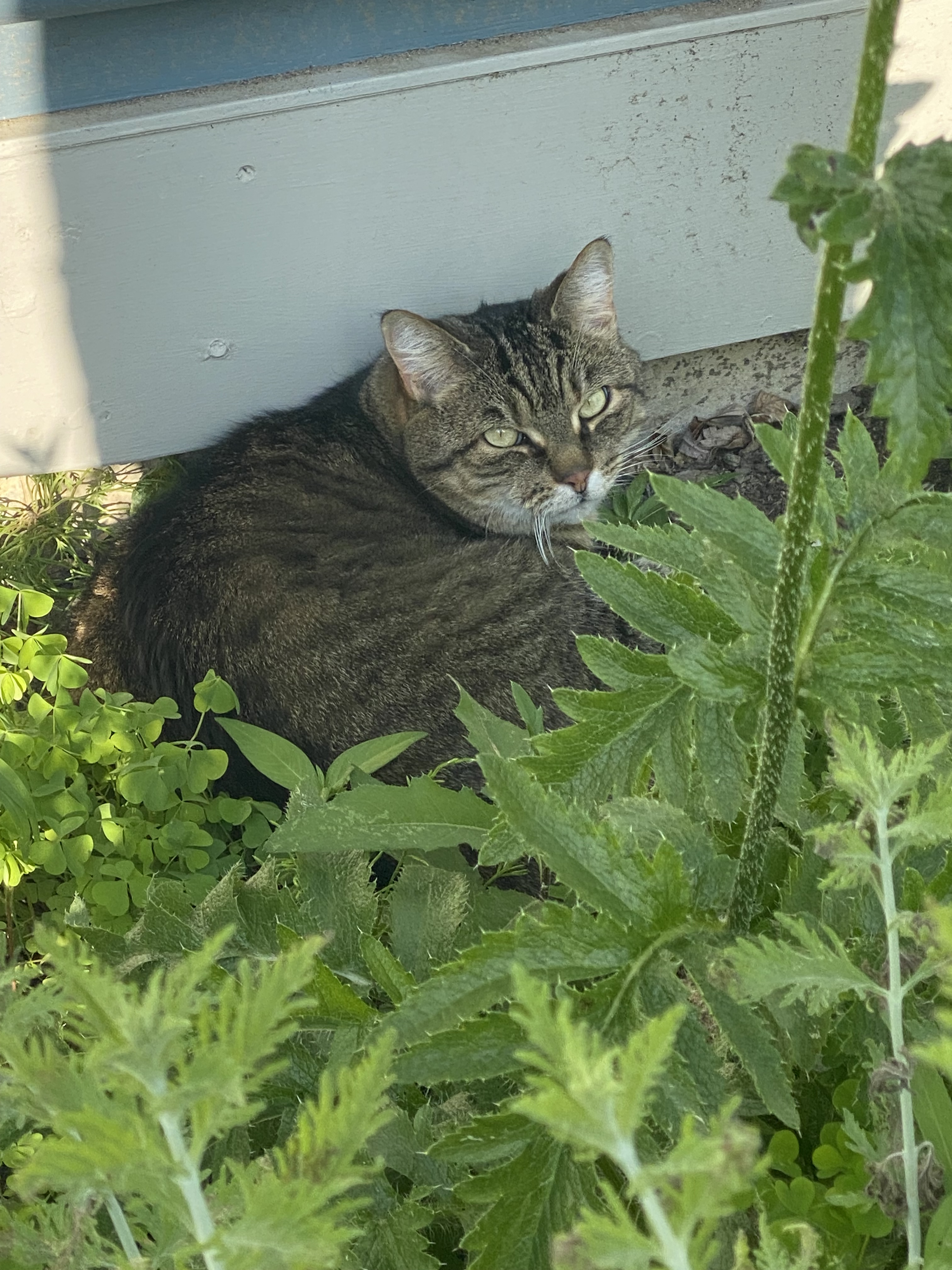
  • my cat resting in the garden
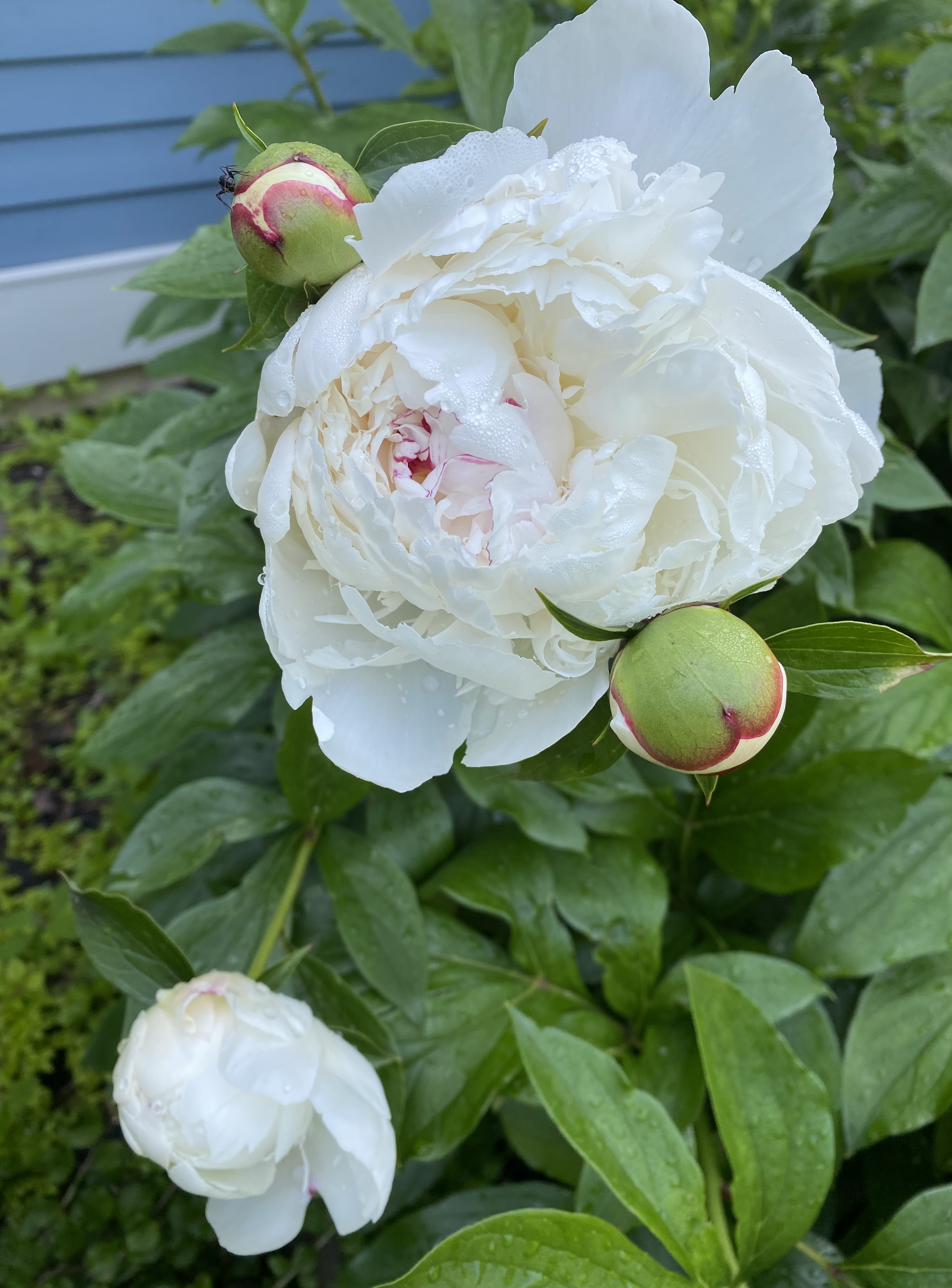
  • the smell of peonies
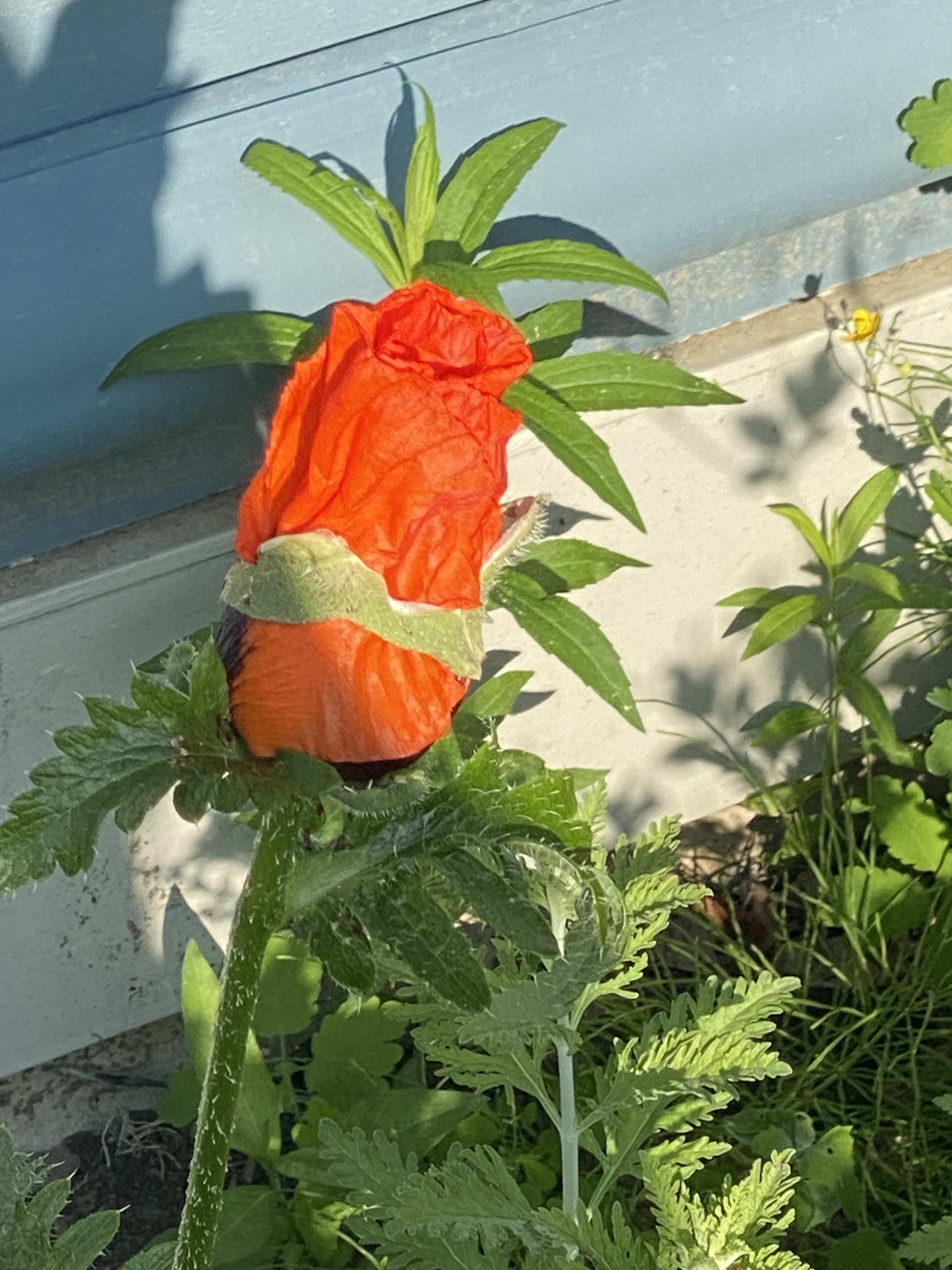
  • an about-to-bloom poppy
  • the sounds and sights of bees doing their thing
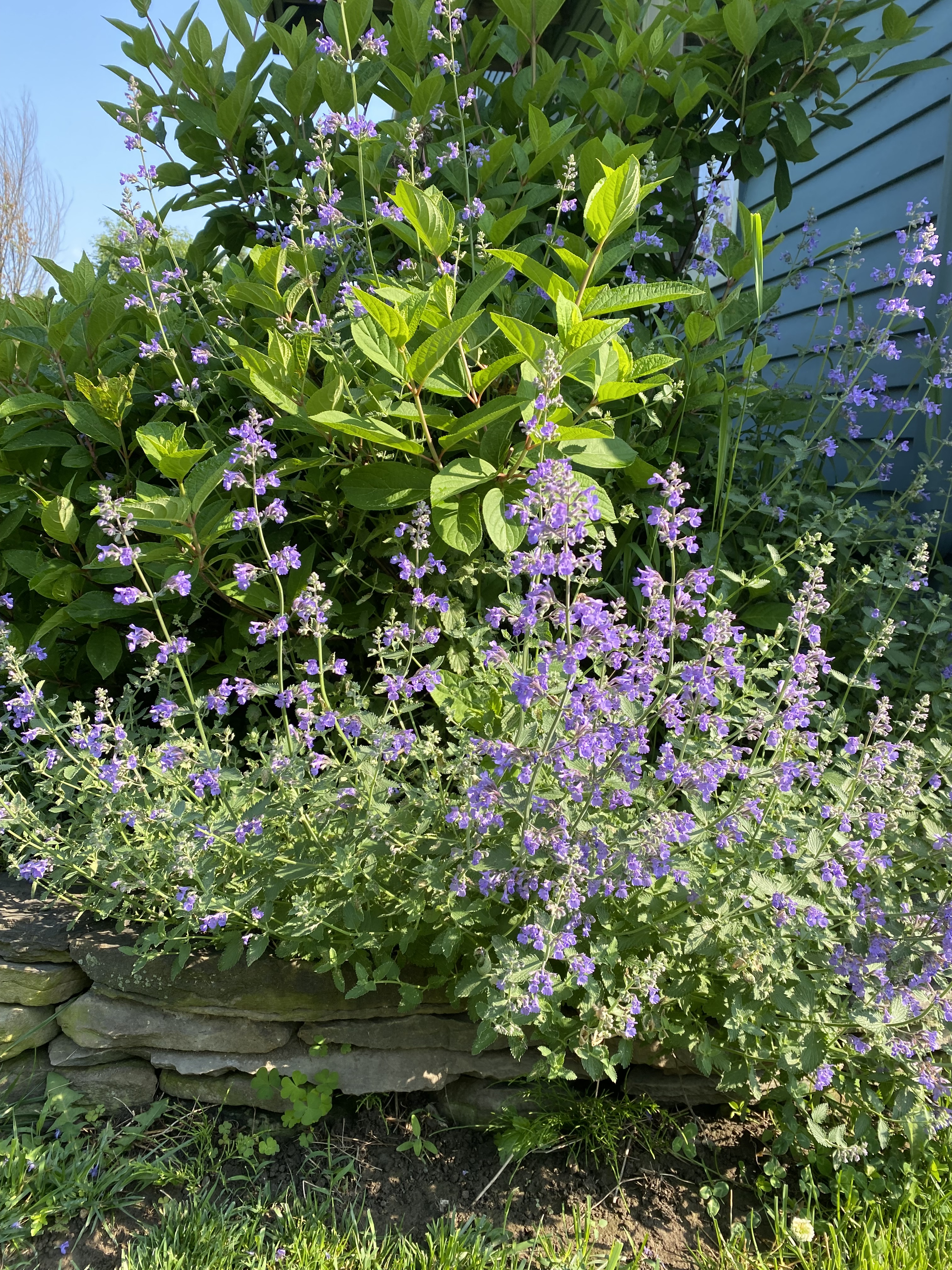
  • the smell of catmint

we need to notice the things that make us smile,
call to our hearts,
help us feel connected to other people, even if we don’t know them,
and to ourselves, even when we’re tired, sad, scared, or sick

Until next time,

bradie


Leave a comment

Co-creating after death

My mom was a very talented artist. She had an eye for alluring shapes, luscious textures, intricate details that could easily be missed if one didn’t stop to look closely at whatever-it-was. In Florida, we lived on a bayou and the whole back of the tiny house on stilts opened to a view of it, tree and mangrove lined. The bird life there was epic. Alligators glided through the water, occasionally lumbering up the bank into our yard. Oh, do I have some stories about them.

Much of what my mom made included materials found in our yard or on the island. She had this uncanny ability to use the natural contours of something to house or nestle around little sculptures she’d make, usually faces. Once, when I went home for a visit after I’d moved to Vermont, one of the walls in the open space in the middle of our house was adorned with her pieces of art. I was breath-taken. They were exquisite. I went directly into agent-mode, wanting her to get her work into local galleries. I wanted everyone to see what I saw.

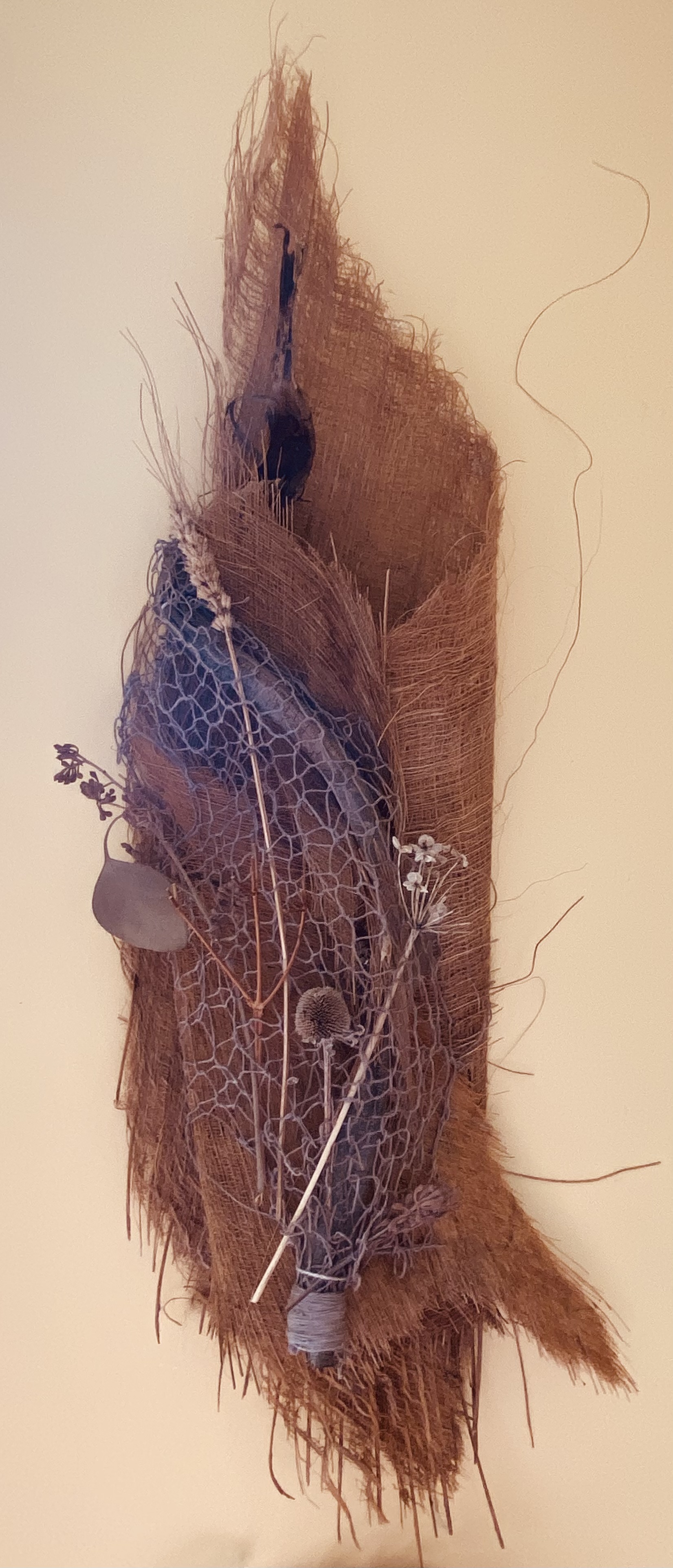
After my mom died, eight years ago now, many of the materials she used in her art ended up with me. One piece in particular has hung on the wall in my studio for a long time. It is a material that comes from palm trees and is like netting or burlap. It’s the most amazing material, woven by nature, strong, pliable, beautiful. I’ve wanted to make something with it for years but nothing was coming to me so I let it simply be itself.

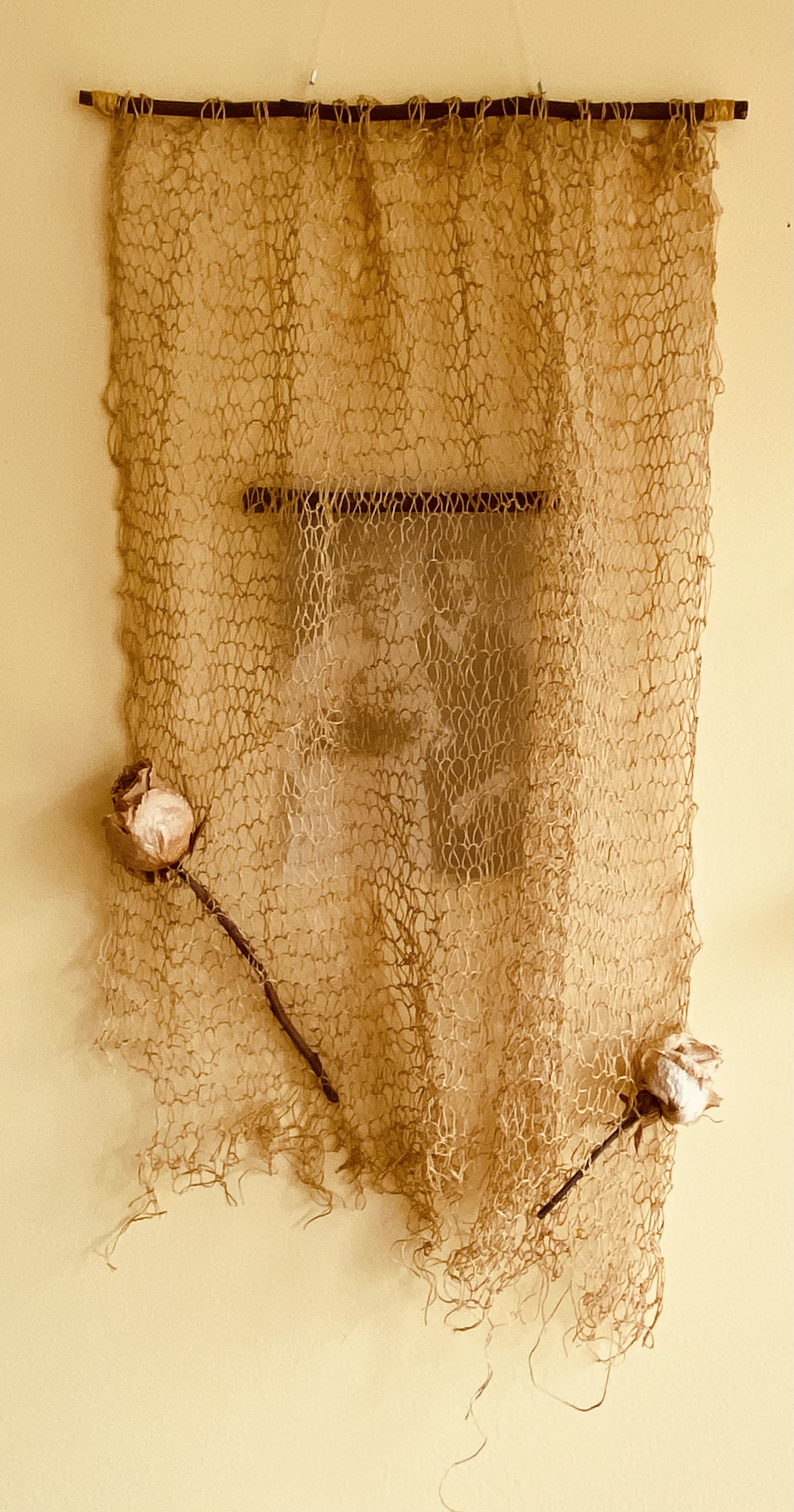
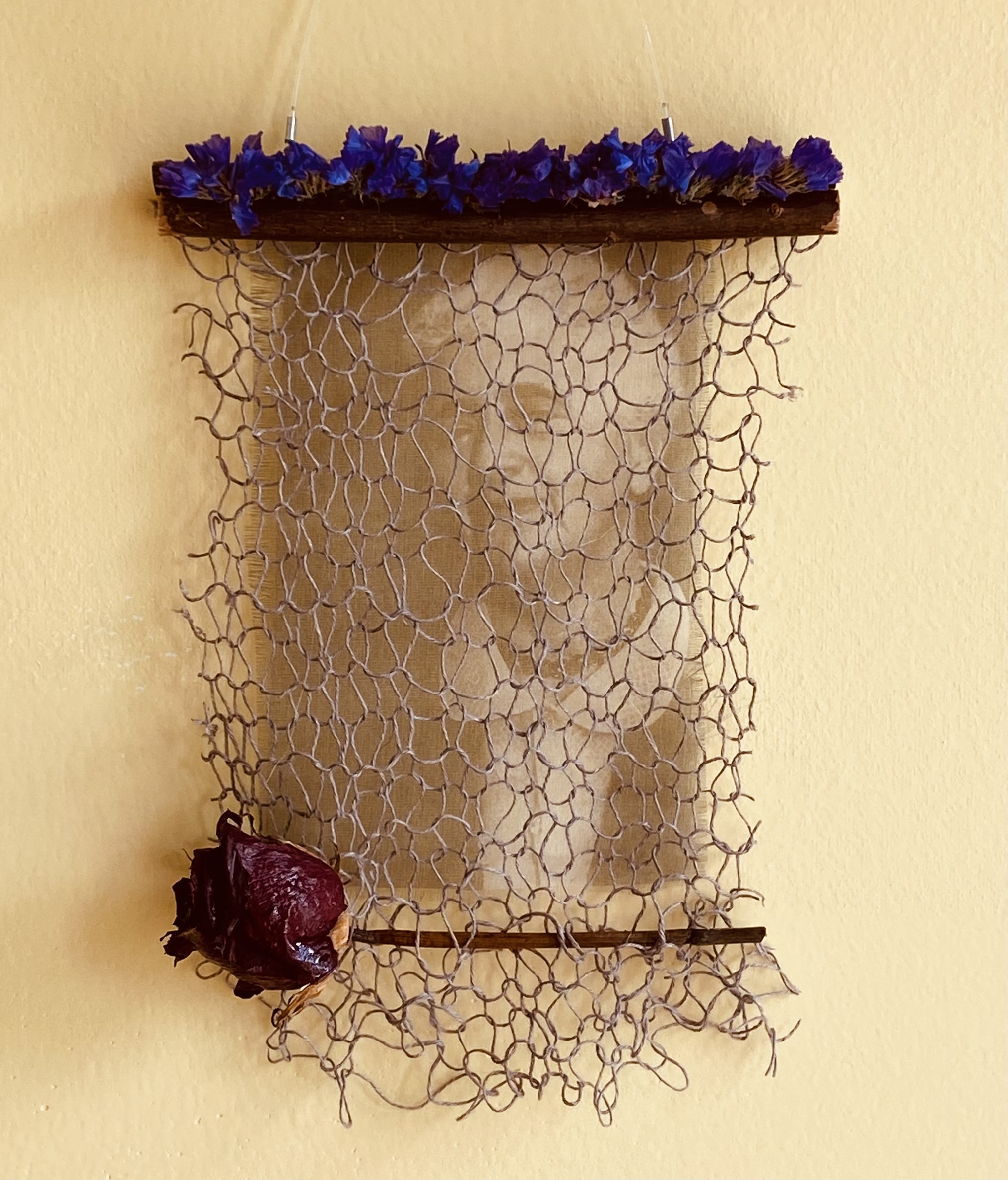
Last week, I was in the midst of repurposing a piece I’d made about a year ago for an art exhibit. It was fabric of very fine grey linen, knitted loosely. I wanted it to be something else and was letting myself play. After treating it with a stiffening agent so it didn’t unravel in my hands, I moved it around and “asked” what it wanted to be and netting came to mind. As I sat at my table strewn with materials, I thought about my mom. Then, I invited her to play. What does that mean? I welcomed her to participate in what I was doing. I talked to her in my mind and imagined how she might have approached what I was doing. Then, I remembered the palm netting. It was at that moment when I felt, “oh cool, we’re making something together”. And then I got to it.

When people ask me how I use fiber art or handcrafting to process grief or life events, I know I answer the question, and I have a lot of things to show for my efforts. But in the moments I’m describing here, I got to observe myself while in the process of doing it, and I wanted to share some things that came clear to me. I believe anyone can do this, with whatever materials they have on hand, whether they or their loved ones were/are artistically inclined or not. And by the way, I truly believe all humans are creative beings. Creativity is not just for some people. It is an energy and a gift available to all of us because it resides in us.

Why am I sharing a personal moment like this in such a public way? Because I think about grief and love all the time, and help people process their own when I can. And I can tell you with absolute confidence, creating while in the mindset of connecting with a loved one* or processing grief does something. Many things. Here’s some details:

~ It creates a space in which you can think about and talk to your loved one.
~ It can be playful, which benefits our mental and physical health tremendously. You can read about that here.
~ It fosters the bond between you and the one you are grieving – read about continuing bonds as described by Dennis Klass here.
~ It’s a worthwhile effort, even when the relationship was painful or your grief is complex.
~ You make something meaningful to you. There’s no getting it right or wrong.
~ New thoughts, emotions, and understandings have a way of coming forth when you allow the time and space for them to emerge. When this happens in a creative zone that utilizes some form of action (art making, cooking, gardening, singing/playing music, writing), these shifts are metabolized through the body. All the thoughts and emotions are no longer only housed in the mind, but flow through the body, which can lead to greater peace.
~ You might be able to repurpose things that would otherwise be stuck in a drawer or thrown away.
~ You hang out with yourself, which is something I highly recommend. You are worth your own attention.

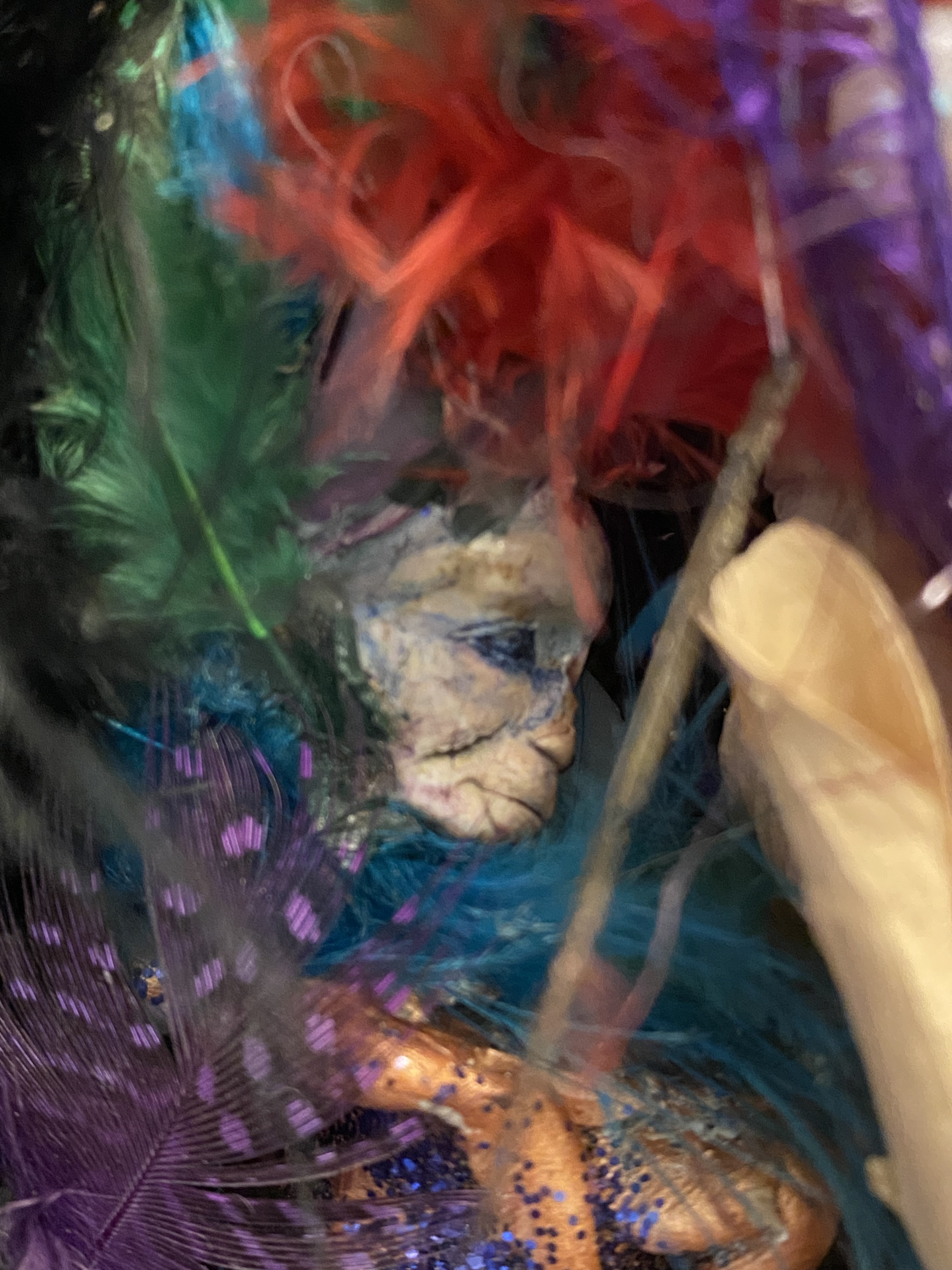
unfinished co-created piece by my mom and me

This new co-created piece between me and my mom is not finished yet. It’s hanging in my studio in a spot that is important to me and commands my attention. I find myself looking at it and feeling all of the textures and imagining what it will be when it is finished. There’s no rush to get it done and I suppose this is a chance for me to just be in my thoughts with and about my mom. It’s an ongoing invitation…

Until next time… ~ bradie

* I often use the term “loved one” to refer to the person we are grieving. This is not to imply that all has to wonderful and conflict-free in terms of the relationship one had with the deceased person. I should figure out a new way to refer to the person who has died that allows for imagining processing all loss creatively, not just the loss of someone we had a generally good relationship with. It is possible to do this, and is very valuable. Even if grief is complicated, there are ways to work it out through creative expression.


Leave a comment

Playing with my Ancestors

In my space
circling around materials and ideas
I found my great-grandparents
Not all but some,
And then it started.
Do you like this color?
Did you have this flower in your garden
That was in the back of your little house
Where you made my brother and me
The most delicious hamburgers
In a frying pan, with butter and salt?
I remember you and your dear love.
Mom told me you held hands when you slept at night.
And you, great-grandmother I never met,
Whose teacups I have but am not graceful enough to use.
Maybe you know I’d slug the coffee that could fit in that dainty piece of porcelain in one gulp,
Apologies.
I feel loved by you and can feel you through the veil.
I’m glad we got to play.


Leave a comment

Monday’s Musings: Neck Pain & Looms

I haven’t been able to weave lately because of a back/neck injury I sustained one month ago tomorrow. As I’ve worked to get back in touch with my body and what it’s communicating to me (if only I’d listen!), I’ve been thinking a lot my looms and which one will be my entryway back into weaving.

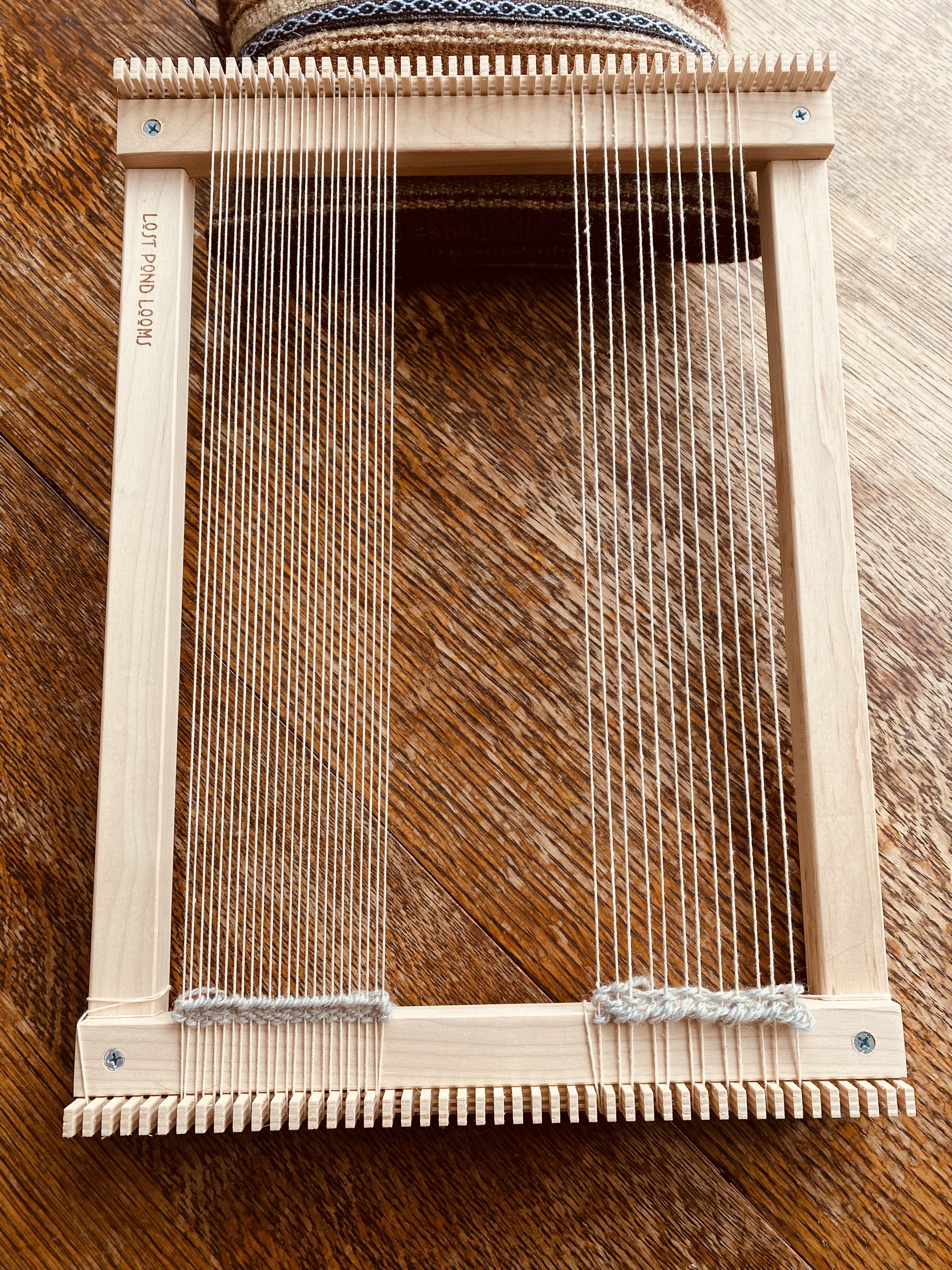
I think for the sake of my back, I’ll start weaving again on this wonderful one from Lost Pond Looms. I am planning on using this loom in both my Introduction to Tapestry Weaving Classes and Wild Weaving classes, as we phase out the ones we have been using. I like this loom because it is super strong and allows for different warp spacing. I also love that we are buying it directly from the person who makes them, and he’s from the next state over in NY.

So, taking it slow, and learning ever more to listen to the language of my body and woven form itself. And in the meantime, I’m circling my weaving tools, thinking about what they will hold soon, and looking forward to picking up my yarn again.

Here’s another Lost Pond Loom as well as a shed stick from Threads Thru Time and an itty bitty loom from Stephen Willette.


Leave a comment

2024 Came Out Swinging

It’s a rainy Friday – rain in January? In Vermont?

It’s been too long since I’ve recorded here my progress and process in weaving, and there’s so many reasons for that of late. Let’s just say 2023 went out with an epic attitude problem and 2024 picked up the baton and leveled some more painful life experiences.

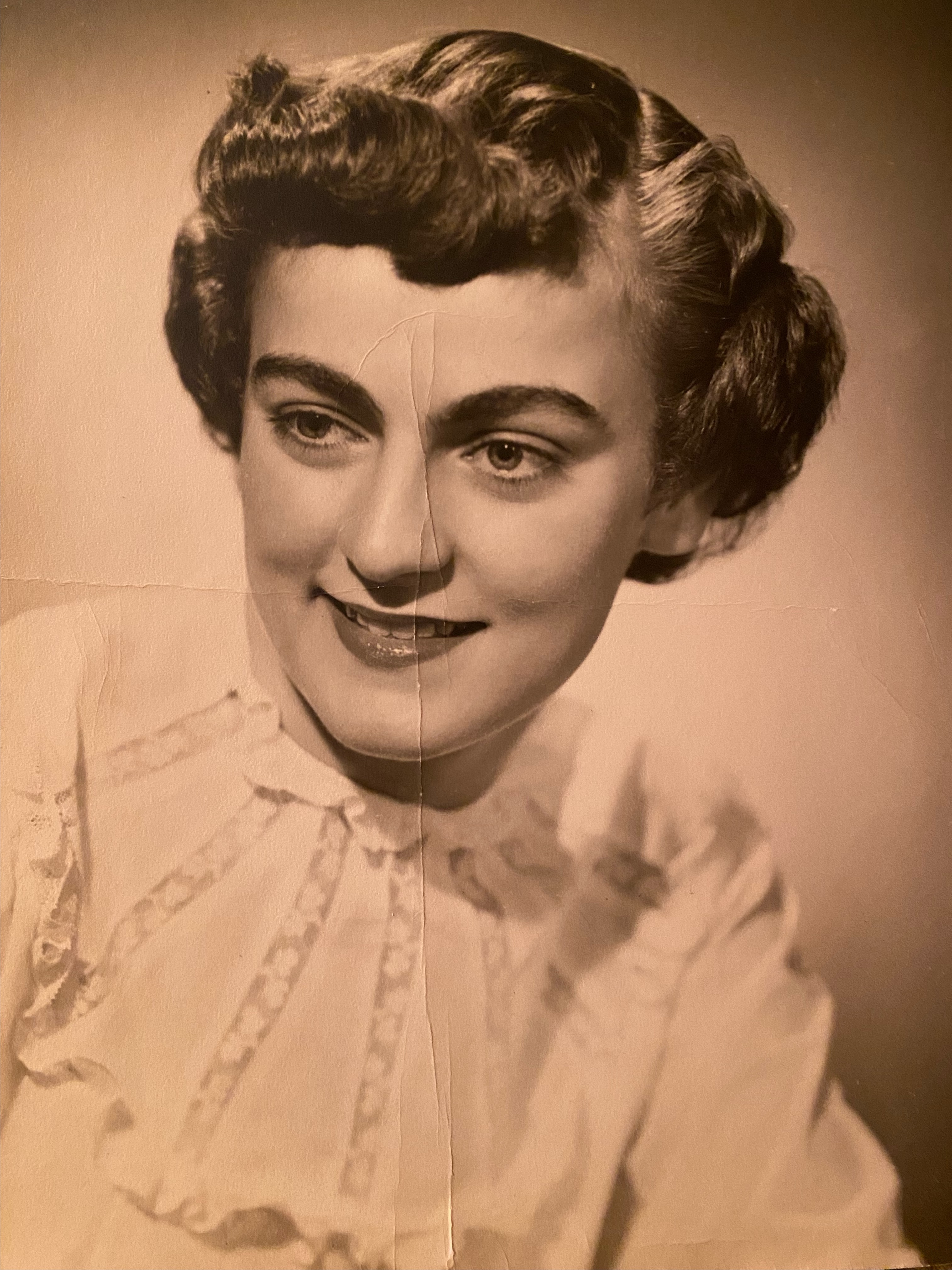
I’d like to acknowledge here that the person who taught me to knit, my step-grandmother who has been in my life since I was 9, passed away on January 7. Her name is Marion Bogdanski (née Trio). I remember vividly when Nanny started teaching me to knit. She was so patient and encouraging, always urging me to relax my hands and loosen my stitches so I wouldn’t have to force the knitting needle into the fabric for every new stitch. Nanny’s mother, Nana, lived with her for time. Nana was from Sicily, and I remember thinking she was amazing- little and delicate and lovely. She would sit and knit, too, me at her feet. I’d hear behind me the click, click, click of the knitting needles going so fast. I remember thinking that one day I’ll be able to knit like that. Still hasn’t happened, but those memories of learning from Nanny and Nana are precious to me and I suspect have a lot to do with how I ended up loving fiber art and craft so much. Also, I must mention that Nanny made the best pancakes ever and I will make homemade pizza and fried dough every New Year’s Eve in her memory. Doing that with Nanny on NYE are some of my favorite memories with her, as well as watching old movies, listening to her stories, playing cards, and getting cooking tips. So many times when I’d need to make something good, I’d call Nanny and ask, how do you do this or that, and she’d take the time and explain every step to me and tell me exactly what to get at the store. That’s so generous. I hope she is dancing and singing with her wonderful Henry and all of her family and friends who left before her. Isn’t she so beautiful?

Another event that has happened in this new year that is especially relevant to the point of this blog is to do with arthritis, believe it or not. This is a topic that I hope to pick up in some depth in the coming months or years. Arthritis doesn’t go away, after all, but more is something to tend to, know about, live in accordance with, and adapt to. In short, I have osteoarthritis which often invites statements like, “well, you’re getting older, and aches and pains are part of it” or “that’s just normal aging”, even from doctors. I have to say I’ve found this entirely unsatisfying. I’ve noticed over the last few years a significant shift in how osteoarthritis in my fingers and hands is affecting my ability to do things that are important to me, namely weaving and teaching weaving.

The way arthritis has been affecting me for the last couple of years is in pain, bending of fingers, and the development of cysts that are doing their best to respond to the impacts of bone spurs that are doing their best to deal with the fact that there’s nothing in between certain of my finger joints. These cysts can often be ignored but one of mine went rogue and became an ongoing issue in September, resulting in the need to have them surgically removed. I had this minor surgery just over two weeks ago and am continuing to heal. Today I was able to tie my shoes using my healing fingers, which felt like a big deal.

What’s the point of sharing all this? Well, I know there are a lot of artists and crafters out there who have arthritis. And I am learning very deeply what it is like to have a physical condition that affects what you can do, how you feel about yourself and your future, and that simply hurts sometimes. As I climb out of feeling really bogged down by the discomfort of post-surgical healing, I realize that I want to move into this space of learning more deeply. I want to know how to better care for myself so that I can keep doing things that I love. I also want to learn more about how to help others do the same, no matter what condition they are dealing with.

I didn’t realize how much I loved weaving until I couldn’t weave. I didn’t realize how much I loved teaching until I thought I might not be able to. I didn’t realize how many people were out there, wanting to make, create, express, and share their light with the world who for one reason or another can’t or don’t know how to modify things in a way that allows them to keep at it. To put it simply, going through all this has cracked my heart open even more. Just like grief has.

Soon I’ll write about some projects I was able to finish before the surgery and talk about some other things I’m working on and thinking about. Until then, I’d love to hear from you if you are managing a condition that has affected or affects how you create and express yourself. Who knows- maybe a larger conversation can start where others can find support and new ideas when they are struggling.

p.s. I found this website about arthritis really helpful.


Leave a comment

Thoughts On Grief

I spend a lot of time thinking about and talking about grief. It’s part of my job as a therapist. I co-wrote a book about it. And I incorporate working through grief into certain of my weaving classes, both with groups and individuals. It’s a subject that is always relevant because all of us, at some point in our lives, barring few exceptions, lose loved ones or experience losses of other kinds, like endings of relationships, job loss, or significant life changes due to chronic illness, bankruptcy, natural disaster, war. The list is long. The news of late has been devastating and heart crushing when viewing what is happening in the Palestinian Territories and Israel. So many of us are grieving locally as well as globally. So many of us have been doing this for a long time.

There’s nothing to say about it that can take away the reality of the pain, anguish, trauma, and truth of the matter, which is that human beings can be so utterly monstrous to each other. It’s shocking, and then we must think on the reality that we have choices to make every day about how we are going to be in the world. And sometimes even the most peaceful of us disappoint ourselves. I guess that’s where the truth is, too. It’s always a choice, and always it is true that how we are to others impacts our experience of our lives and our relationships.

I’ve noticed a few things lately that might seem obvious, but that have been moving me and making me look above and beyond the chatter. These observations help me connect with my choices in a way that mitigates feelings of helplessness and despair. I’ll share them with you here.

~ There’s a lot of dialogue about how much our culture gets grief wrong and how there is this pressure on people to “get over” grief quickly. I don’t disagree with that, but I have been noticing how many individuals and organizations are out there, all over the world, talking about how grief really is, and how much it changes a person and a life. As I’ve looked more deeply into remembrance and awareness days to do with grief, I’ve seen a lot of realistic information about what grief is really like as well as how we can support others when they are struggling. I’ll write soon about an upcoming awareness day to do with grieving children. I wonder what is getting in the way of the honest messages to do with grief from landing and changing the experiences people have when they are suffering. How can we release the pressure we put on ourselves to stay the same, no matter what?

~ Giving people the space and respect they deserve and are entitled to when processing life events and grief is a wonderful thing to do. When we can get out of the mindset of having to make someone “feel better” and instead hold space for them to simply be where they are, a sort of alchemy takes place. A bridge of trust grows, and often it looks like recognition. Almost like a version of namaste, it is as though the spirit says, the grief in me sees the grief in you.

~ As I talk with and listen to people, something is becoming crystal clear: long-term grief is not always solely about the loved one lost, but sometimes is a result of the anguish of trying to get back to normal too fast, whether this is a self-imposed pressure or felt as pressure from others. As a result of that anguish, there are multiple layers of complexity piled on and on and on. As people try to find their balance and figure out a new normal after any kind of grief, part of that often entails facing the pain of how their grief was received and responded to. This is tough stuff, but it seems important to me.

~ There is something incredible that happens when people let themselves process life events through the practice of making. We do so much thinking about so many things. And I’m a fan of thinking! Thinking helps us make choices that are less reactive, more informed, and ideally lead to better outcomes than when we fly by the seat of our emotions. But… sometimes we get lost in the weeds of words and self-analyzing. Creating spaces where people can translate lived experience into artistic form works, and what we get from that is insight and healing from angles that might not have been approached if the senses weren’t involved.

~ Listening… the most wonderful kind of listening… is medicine. The kind where you’re not waiting to say the next thing, or thinking about your words as the other person is still talking. Slowing down and absorbing what someone is saying and letting it affect you or work on you in some way- this is true relating. And it doesn’t require hours, or even many minutes. It just requires deciding that the person you are engaged with is worth your time and attention. Can you imagine if we all treated everyone like that? And were treated like that all the time?

What helps us meet the people around us where they are, not where we want them to be? How do we maintain compassion, patience, love, and curiosity? The first thing that comes to mind and is the only one I want to focus on at the moment is self-compassion. Sometimes it’s just the truth that our cups will not be full before we give to others, and we can sustain that for a while. Sometimes we are tired and grieving ourselves, when we are at the same time showing up for others. And sometimes, we can’t give in the ways others want us to give or we wish we could, and we need to pull back and refocus that energy. That’s okay. It helps to remember and keep remembering that it’s not anyone’s job to take grief away from others or somehow fix the pain of it. And sometimes energy needs to go back into the self for a while before it can go out again. It’s just the way it is, and there’s nothing selfish about it. It’s okay to think about how you can show up for people at any given time, and be honest about.

How do you tend to yourself and nourish yourself as you go about life and relationships? Do you have ways you tune in and respond to your heart and body? Do you take the importance of this as seriously as you do your love for and support of others? And, when you can’t be there in the way you always have and feel worried about that, or stressed or resentful, do you have ideas about alternatives? Can you imagine communicating them?

Until next time,

Bradie

Leave a comment

Letting Go of Normal

“I just want things to go back to normal.”

How often have you heard this refrain, or uttered it yourself when you’ve just wanted to put a pause on having new information or issues to respond to? I’ve been thinking about our relationship with normal. It’s like a thick, strong, orienting rope that runs through a life and culture, and where we are in relation to it is always up for evaluation. We talk about physical health in terms of normal. Behavior, psychological functioning, intelligence, too. And then there’s the social norms that dictate so much of how our school years and work and social lives go. Oh, and then there’s what many pay attention to as parents when kids are going through developmental milestones. Music, weather, animal behavior, family functioning are all up for grabs in the context of normal comparisons. Really, is there any part of life that is not subject to an almost immediate assessment of how it does or does not relate to normal?

Such a bland word that elicits a broad range of reactions from people packs quite a punch and I think it’s worth looking into a little bit.

From Merriam-Webster, normal means: “conforming to a type, standard, or regular pattern characterized by that which is considered usual, typical, or routine; according with, constituting, or not deviating from a norm, rule, procedure, or principle; approximating the statistical average or norm occurring naturally; generally free from physical or mental impairment or dysfunction exhibiting or marked by healthy or sound functioning; not exhibiting defect or irregularity; within a range considered safe, healthy, or optimal.”

Like any concept, it’s the case that normal is not all one thing. It is not all good, and it’s not all bad. What’s good about normal? Why do we need it and rely on it so much? Seems to me like the opposite of normal is chaos, and chaos is, taken in extreme form, the primordial ooze from which all things began. It’s unpredictable, unstable, volatile and confused. It’s the seat of creation and true creativity. It erupts and changes things. It can be exciting. It can be terrifying. It’s necessary and feared.

Chaos knocks things into a new trajectory, but then guess what? An ordering principal takes over and helps the effects of chaos fall into a pattern. Patterns are stable and predictable. They can be known and understood, unlike their birth mother, Chaos. This must happen. I suppose that normal lives in patterns and normal dies in chaos. Chaos and Normal dance and work together to keep things moving. They are both necessary.

In life, people can deviate from the mean of normal in either direction. Further away from this mean is when we start to experience some things that are different from what everyone hanging out in the middle are experiencing. Bowing at the altar of normal can stifle the emergence of any new or unexpected material in an evolving system. This leads to the death or oppression of anything that is novel, creative, and life giving. Yet, diving full-bore into the waters of chaos and staying there for too long can mean that nothing is able to materialize into creative expression. It takes discipline to make creative energy bear fruit, and discipline does not live in chaos.

You can see the tension here. This is some dynamic stuff.

But here’s the rub as I see it: We do a miserable job as a culture allowing ourselves and others to be changed by what happens to us. Let’s take the pandemic. Rest assured, the amount of times I’ve longed for things to go back to normal cannot be counted. But even with less restrictions and people getting back to life as it was before, it’s not “back to normal”. We are changed and we will never be, as a whole, like we were before. The pandemic was a long-term, slow motion perturbation to our system which created chaos and confusion. We are still experiencing the natural inclination of a system finding its new orbit around this new reality, yet I see more and more a distancing from viewing it this way. I am longing for a greater dialogue about how we are changed and what that means not from the point of view that we have to get back to where we were, but more that we need to understand more fully where we are.

Where are we? I’m not the same. Are you?

I think the urge to get back to normal when the landscape that existed before doesn’t exist anymore causes tremendous pain and anxiety. We can’t go back to something that doesn’t exist anymore. But we can try to more fully understand where we are.

This is true after someone we love dies.

This is true after having a baby.

This is true after falling in love or breaking up.

This true when childrens’ parents separate.

This is true after losing a job or relocating to a new place for a job.

This is true after receiving a life changing diagnosis.

This is true after war, natural disasters, or exposure to and experience of violence.

This is true after experiencing a spiritual awakening.

Can we let ourselves be changed without judging it, hiding it, or stunting it? Can we let ourselves just be with what is true and talk about it all, and let others talk without pulling the “normal” card out of our back pocket? Life systems naturally organize themselves into new, mostly stable patterns. We can trust that this will happen, so we can relax and be more gentle on ourselves and each other and not force the issue. It’s okay if your best friend seems different now and doesn’t want to do the same things they did before. Be curious about it instead of judging it. It’s okay if you look different after grief. Look at yourself and be curious and loving and notice the hard earned scars of living a life that is filled with so many things. It’s okay if something big or little shifts in your psyche and you find a new and unexpected road to walk down. Check it out and see what’s there. It became visible because something changed.

Take the pressure of “getting back to normal” off yourself because, that normal? It’s gone. There’s a new normal to explore and it’s got a whole lot of new terrain for us to get to know.

That’s interesting, isn’t it?


Leave a comment

All of it is Always Happening

I’m having a moment of just sitting for a bit and wanted to document here in this special place to me all of what is happening in my own little sliver of life that is housed in the much bigger picture. But first, I have to send out a deepest call of love to all of those in Turkey and Syria whose world literally just opened up beneath them, creating chasms of pain, fissures of searing heartache, and images of the most incredible grief, courage, love, determination, and exhaustion one can see. Nothing seems all that relevant in the face of that except love. It’s really the only thing that matters at the end of the day.

Actually, I think I’ll just leave it at that.