The light is retreating where I live, noticeably. I’m into it this year, my psyche begging for a bit of slow- down. Just a moment, please, to be quiet, to process, to metabolize, and to get clear on some thinking. Something, or likely many things, have made these last couple of months feel frenetic and off-pace. I feel it, and I feel like it’s visible.
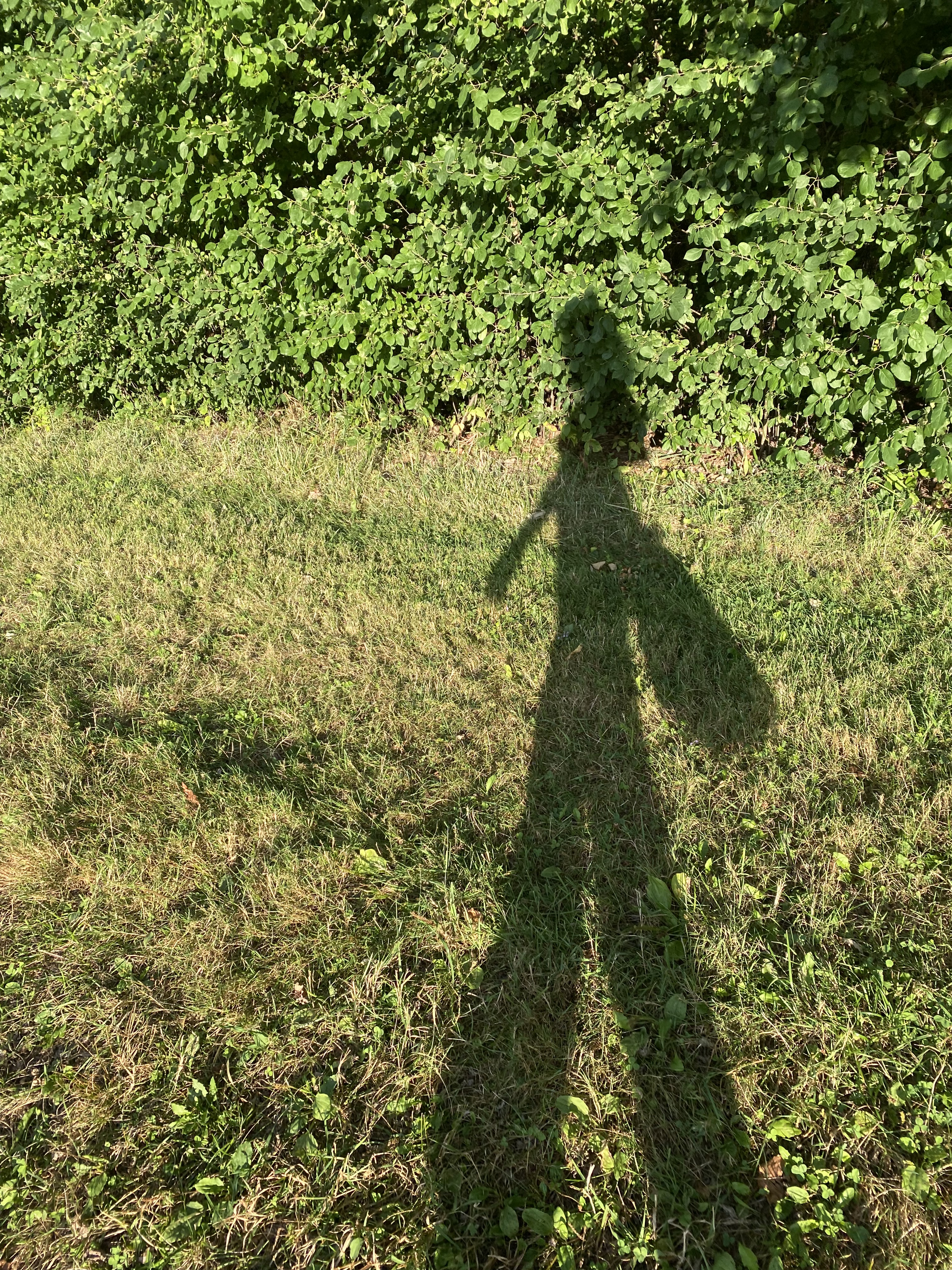
I thought I’d invite those of you who are engaged with this monthly creativity exploration to do something “easy”~ to play with your shadow. What does that mean? Well, you’d get one answer from a Jungian, and and another from a young grade schooler… maybe their ideas would meet up somewhere and skip around in tandem for a while before going off in various directions.
So, I’ll leave it at that~ Play With Your Shadow, in whatever way makes sense to you. There can be no directions for this!
But for some fun, I’ll share this classic poem.
My Shadow
I have a little shadow that goes in and out with me, And what can be the use of him is more than I can see. He is very, very like me from the heels up to the head; And I see him jump before me, when I jump into my bed.
The funniest thing about him is the way he likes to grow— Not at all like proper children, which is always very slow; For he sometimes shoots up taller like an india-rubber ball, And he sometimes gets so little that there’s none of him at all.
He hasn’t got a notion of how children ought to play, And can only make a fool of me in every sort of way. He stays so close beside me, he’s a coward you can see; I’d think shame to stick to nursie as that shadow sticks to me!
One morning, very early, before the sun was up, I rose and found the shining dew on every buttercup; But my lazy little shadow, like an arrant sleepy-head, Had stayed at home behind me and was fast asleep in bed.
I think it was around fifteen years ago now that I re-found my love of making things. That energy had been in some kind of limbo state, emerging at times through writing, experiments, and gardening. For these last fifteen years, though, I’ve been in a steady state of learning about all sorts of fiber craft and art. A main passion has emerged, and that has to do with weaving.
The interlacement of all things is an idea, or a reality, that just grabs me. It’s simple and obvious. But it’s also profound and true. I recently wrote this in an instagram post:
One of the things I love about weaving is that is invites our minds to work with our bodies. We can be with humble tools and materials and through the simple act of interlacements, something beautiful can emerge.
To interlace materials is to simply join them in an over and under rhythm. Suddenly, elements are joined when they were otherwise separate. Weaving for me has been a way to be with myself and my thoughts. I follow the directions of the materials and let myself flow with the process, rather than try to control the process from start to finish.
This has been true of my experiences with grief. The more I tried to control grief, the more I suffered. As I have learned to move with grief and let the waves of it interlace with all of the other truths about me and my life, the more I’ve been able to grow with it.
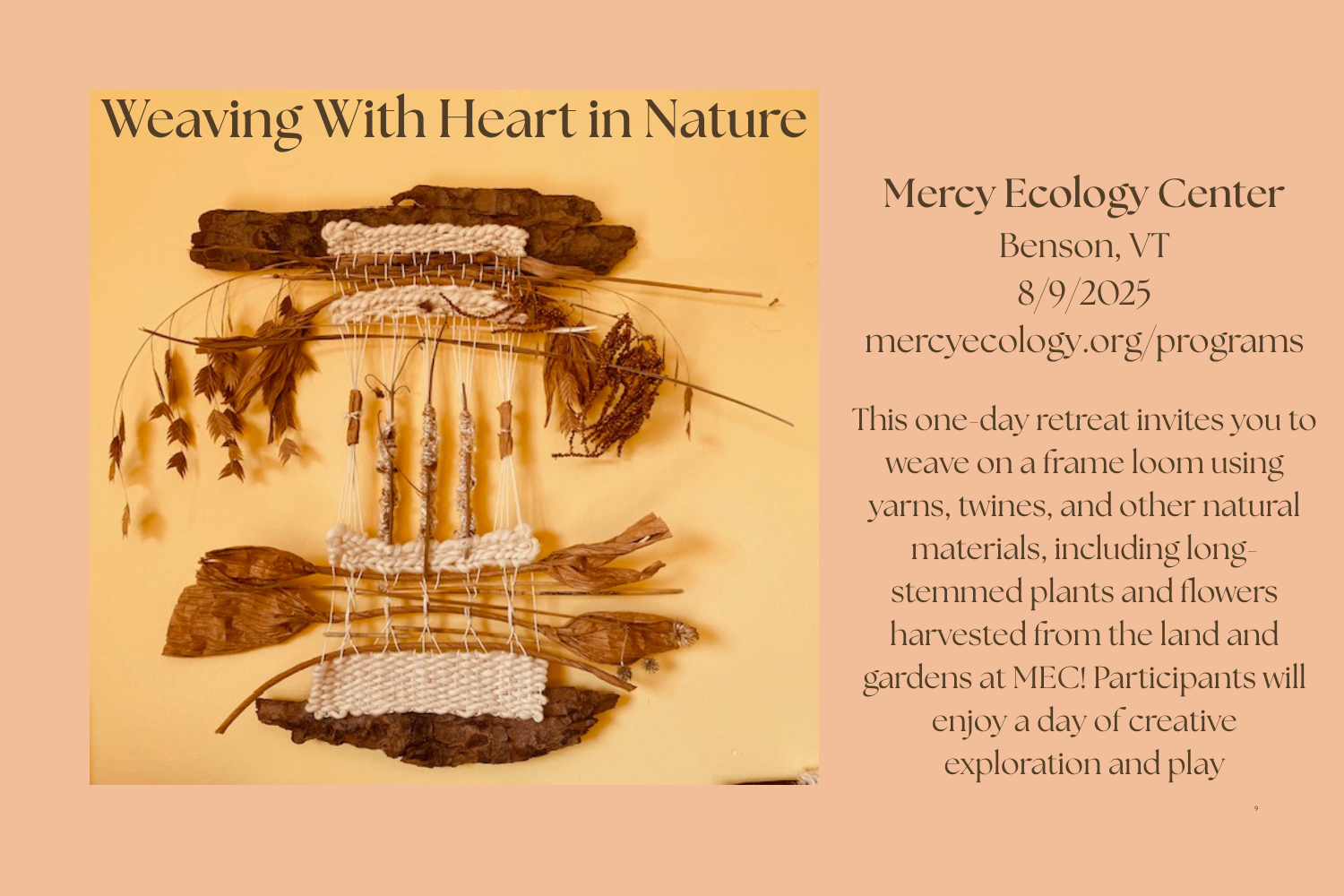
If you told me fifteen years ago that I’d be invited to lead a weaving workshop at such a wonderful place as Mercy Ecospirituality Center, I’d have looked behind me, assuming you were talking to someone else. If you are within a reasonable drive to Benson, VT, and feel like spending a day playing with interlacements, please come! I promise, you will end up with something that you didn’t expect, and that it will mean something to you.
Recently I was talking to someone in my studio about a theme he noticed in my work~ I had an image expressed several ways and he wondered at the significance of the image to me. This got me thinking about how this happens in my work sometimes and the best way I can put it is, I let my psyche guide me in what images, symbols or themes I want to follow, and then… I do.
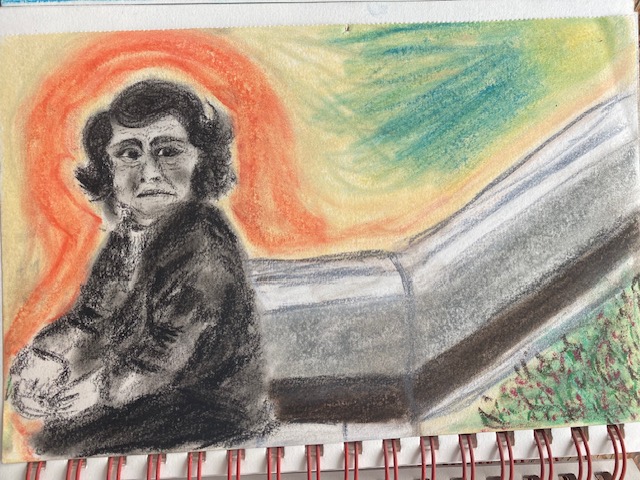
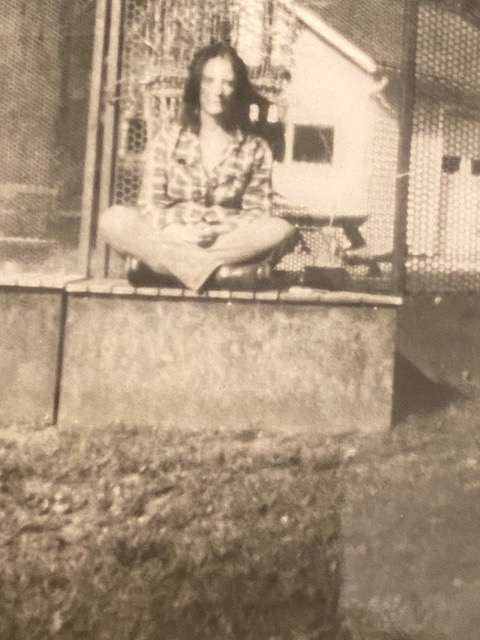
For example, several years ago, I was looking at a picture in a book I have of an image of an elderly woman sitting on a granite sort of bench that was really maybe a retaining wall for a city garden bed, her hands resting on her pocketbook. I loved her face and found myself looking at her and going back to look at her some more. I had all kinds of feelings when I took in her details and conjured stories that might explain her look of sadness.
Then, I decided to try to draw her. (I know I didn’t get her image exactly as she looked in the picture. For one, I don’t know how to draw, but the point of all of what I’m saying here has nothing to do with perfection, and only to do with engaging.)
Then I found myself looking at the face of the woman I drew. And I kept going back and looking at her some more and I remember thinking, who are you?
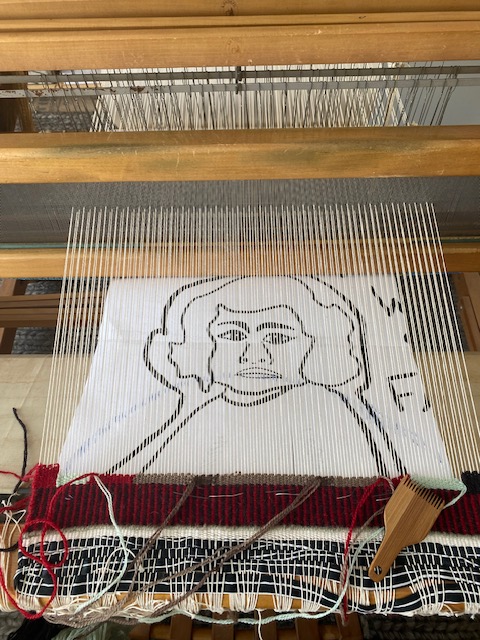
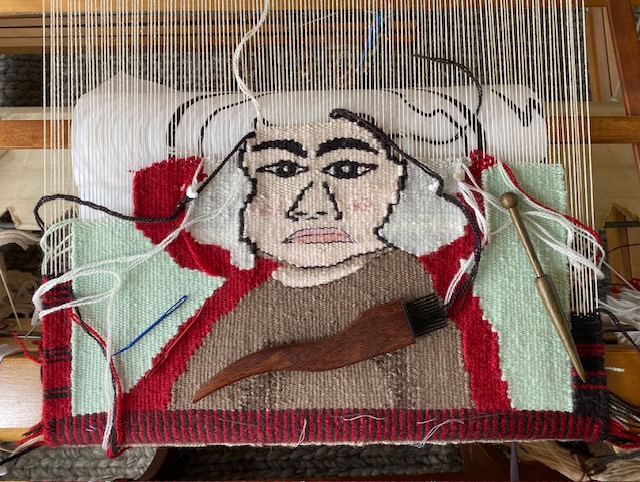
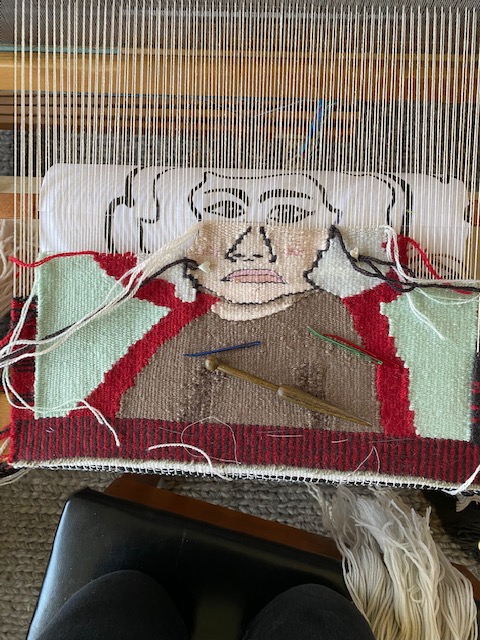
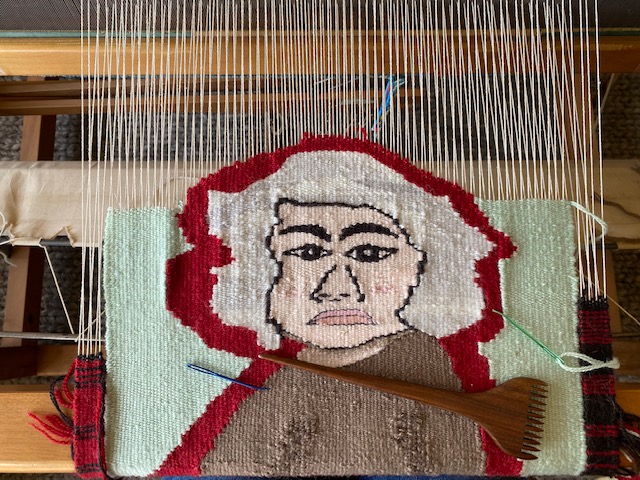
A year or two after drawing her, I took a tapestry weaving class with Rebecca Mezoff, which I highly recommend. We were tasked with designing a cartoon for a weaving project, and I chose my lady. I knew I wanted to learn how to weave faces, and I wanted to spend more time with her. So, I dove into that and made the cartoon, and then I started weaving her…
And I wove her…
And kept weaving her…
And then I was like, “no really, who ARE you?!” She became ever more important to me. I started to see in her face regret, which is another theme I’ve been following, studying, and writing about for many years. That was interesting. This thread I was following was actually one I’d been engaged with in a more intellectual way for a long time. The theme suddenly dove into new, creative terrain.
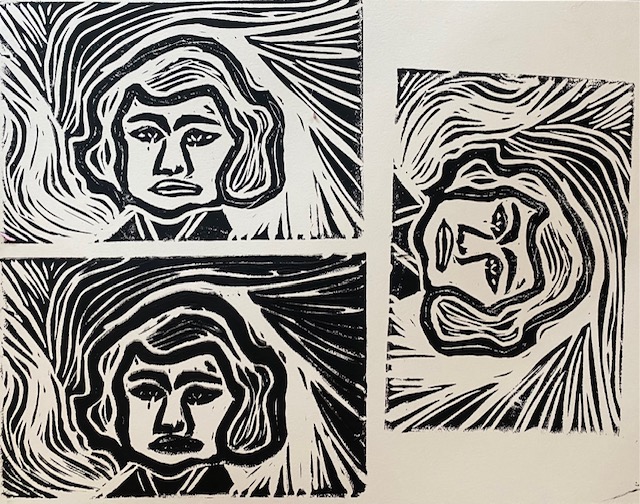
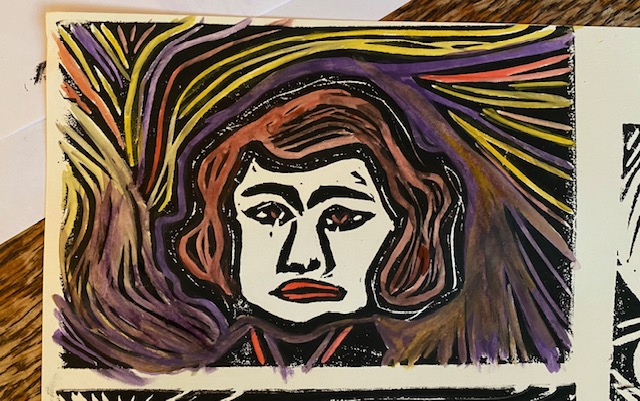
Then, I was done with the weaving, but I wasn’t done with the image, so I did a block print of her.
And then, I was done.
So you see… there was an initial spark, and then an idea and another idea and another idea… I couldn’t have planned this all. I just followed the image and let it keep working on me over the course of a few years. There need not be any rush or pressure. There’s no time limit. There’s only an invitation.
Following threads of themes, symbols and images is a really fun and meaningful way to get into something and experiment with different mediums. Fun because you’re literally playing with an idea and letting it work on you. Meaningful because the threads come from your own psyche. No one is assigning them to you.
So, how does one do this?
Start with these questions: ~ What’s on your mind these days? ~ What are you drawn to? Is it a song? A color? A taste? A smell? An image? ~ This thing you are drawn to, how might you engage with it creatively? Can you draw it? Cook it? Paint it? Weave it? Sculpt it? ~ Can you start there? And see where it leads? ~ Can you write about it? What draws you to it or captures your attention?
For example… maybe the color green is really grabbing you or you know it’s your favorite color. You can:
take out some water colors play with greens; you can blend, use solid colors, or make them so subtle you can barely see them, or pair the greens with complementary colors…
you can take pictures of all the greens you see in your immediate landscape or your home
you can wear green
you can knit/crochet/weave a green-inspired project
you can read about the color green and see what themes/symbols/stories/myths are associated with it
you can follow an idea because what might happen is, with all of this attention to green, an image of a way to work with it will occur to you- listen to that and follow it.
the more you do this, the more you’ll do it – wow, that was deep.
I love seeing how people do this~ please write and share if you are so inclined! And, if you want to keep up on this monthly Creativity Summoning, sign up to receive updates to the site! We’ll keep it going as long as I have something say.
I’m delighted to share that an article I was invited to work on with the director of the Shelburne Craft School, Heather Moore, has been published in the IMAG #18 periodical from InSEA publications. It’s called, “Who Cares How it Comes Out? Pinhole Camera as Teacher and Muse”. You can find it here! It was a marvelous process, working on such an important-to-me project. The more I think about creativity, the more I think it is an essential and critical part of being human and that it ought never be treated as an afterthought. We’ve, as a species, been articulating our ideas and inspirations for millennia. To be able to think and write about how the creative process fosters community, empathy, enthusiasm, and engagement was a real pleasure. I hope you like it!
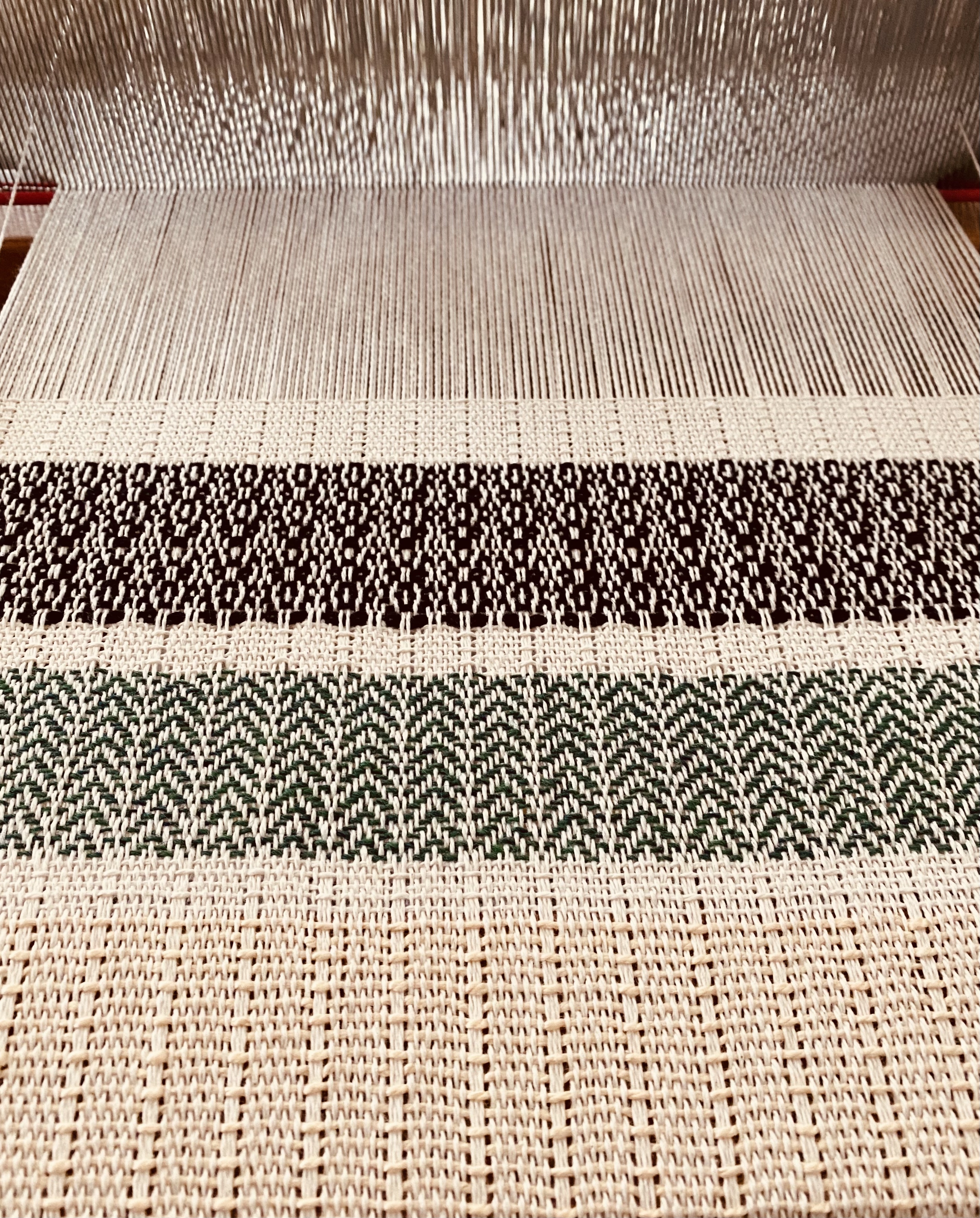
There is something alchemical about handweaving. It connects us with ourselves, with others, and with our ancestors, recent and distant. Weaving is part of our ancestral DNA and when we allow our fingers to interlace thread with thread, we create connection and foundation. Weaving does not have to be expensive, and weaving should be accessible to all people. If we can apply resistance to threads and create a taut warp, we can weave.
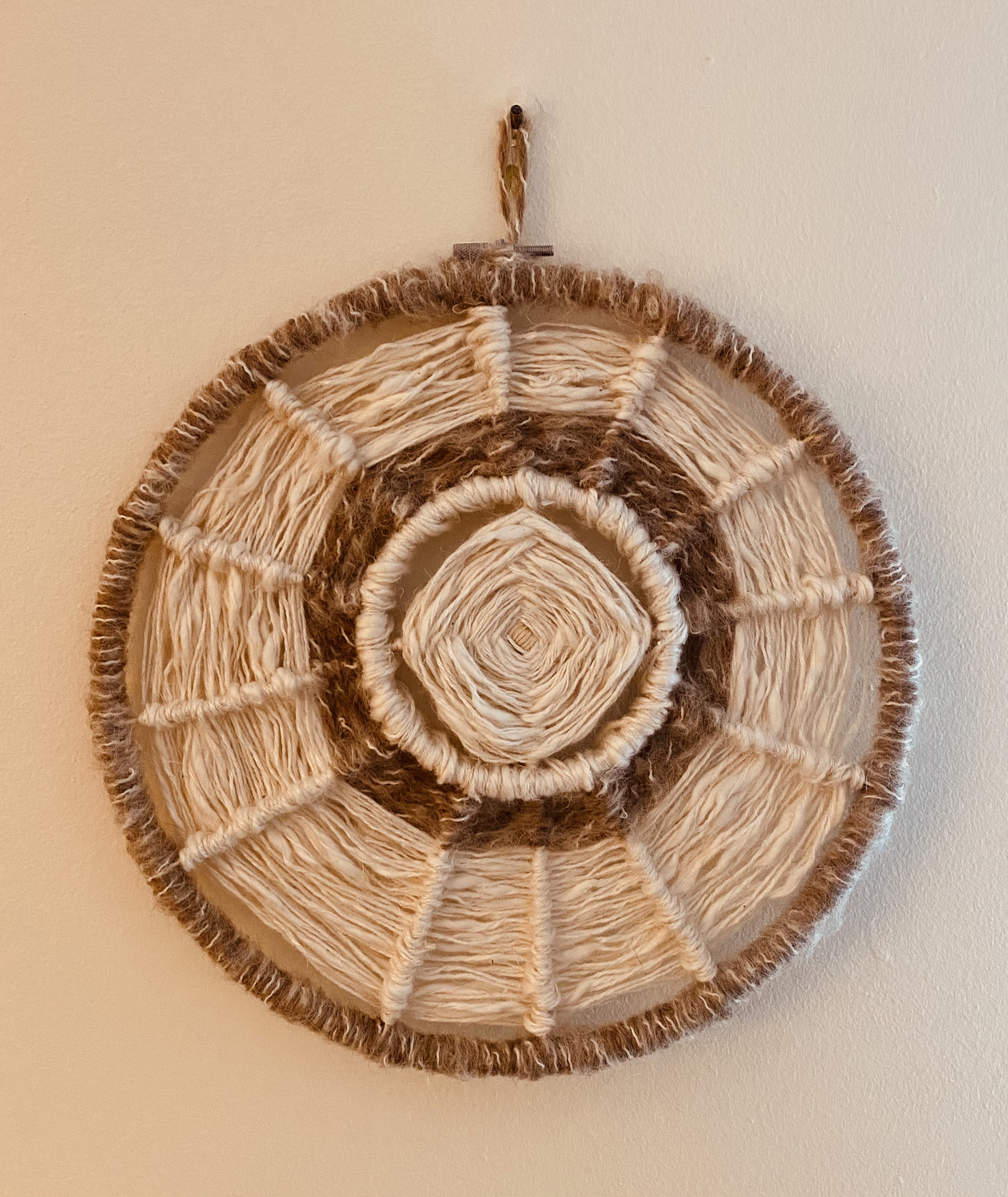
I love the long arc of weaving and the incredible potential it affords. One can sit with a simple frame loom and weave wild art pieces as well as work on a multi-harness floor loom and create wondrous and complex fabric. There are so many types of weaving and looms. Multi-shaft, tapestry, backstrap, pin, circular, inkle, Rinny Tin-Tin. Over the last decade, I’ve been teaching fiber art and craft in schools and more recently at the Shelburne Craft School, and there are some thought jewels that I’ve gathered along the way that fuel me, inspire me and make me want to keep learning and expanding. I’ve shared some of them here as a way of inviting anyone who has an inkling, to try out weaving, or any art or craft you’ve longed to try but keep putting off.
People Meet Themselves When They Weave
On many occasions, I’ve had the good pleasure of hearing people say things like, “I’m usually __________ (fill in the blank), but I’m playing with being __________ (fill in the blank) as I weave this” … or “I’ve never played with so much color before and I LOVE it!” …, or “I never realized how much tension I hold in my hands” …, or “the process of weaving while I reflect on my loved one is bringing up thoughts and feelings I’ve not held space for in so long, if ever.”
When we let ourselves just be with our hands, our eyes, and our breath as we make, our spirit has a chance to catch up and settle into the space between our lungs and in all the chambers of our heart. We can hear our own breathing again. We can let our eyes linger where they want to, and then notice where that is. We can meet our inner judge and talk it down from fear. We can usher ourselves into new territory and have woven fabric to show for the journey.
People Benefit from Having Access to Colors and Textures and the Opportunity to Experiment
This may sound so obvious it’s laughable, but hear me out. Have you ever had the experience of being invited to make something, and are given a certain set of materials that everyone else has, and a series of instructions that everyone else has, and you make something at the end that looks like a weird, kind of close but disturbingly not-close version of the thing you were supposed to make? Or is that just my life? In my experience, nothing botches up creativity more than when we are in a circumstance that doesn’t let us feel and see our way through materials we want to touch and witness. I’ve been blessed with a bunch of students who “go rogue” on the regular. It’s hilarious, and it’s shown me that people have their own ideas and their own version of learning that needs to be honored and allowed for as much as possible. Yes, sometimes technical truths need to be thrown in the mix to ensure that people can weave the thing they want to weave, but I’ve learned that creative drive is strong and shouldn’t be stamped out by rigidity.
People of All Ages Need to Play
I think we all know this intuitively, but what I’ve found is that people of all ages need access to opportunities where they can experiment, follow their noses, see what happens, try this and that, on low-stake projects. As we age, many of us become concerned with how much things cost, how much “time is worth”, how useful something is, and whether there is value to whatever it is we are doing. It puts so much pressure on the creative part of ourselves that just needs a freakin’ minute to look at things, try things out, observe what happens when certain materials interact with others, and take notice of how we feel about what we are seeing and experiencing. We need the chance to just be and drop in to our flow. When teaching elementary aged people as well as folks in their senior years, I’ve heard many exclaim, “Oh wow, I get to use this?” and, “I can’t believe I can weave with all of this! It’s so much fun!”
That makes my day.
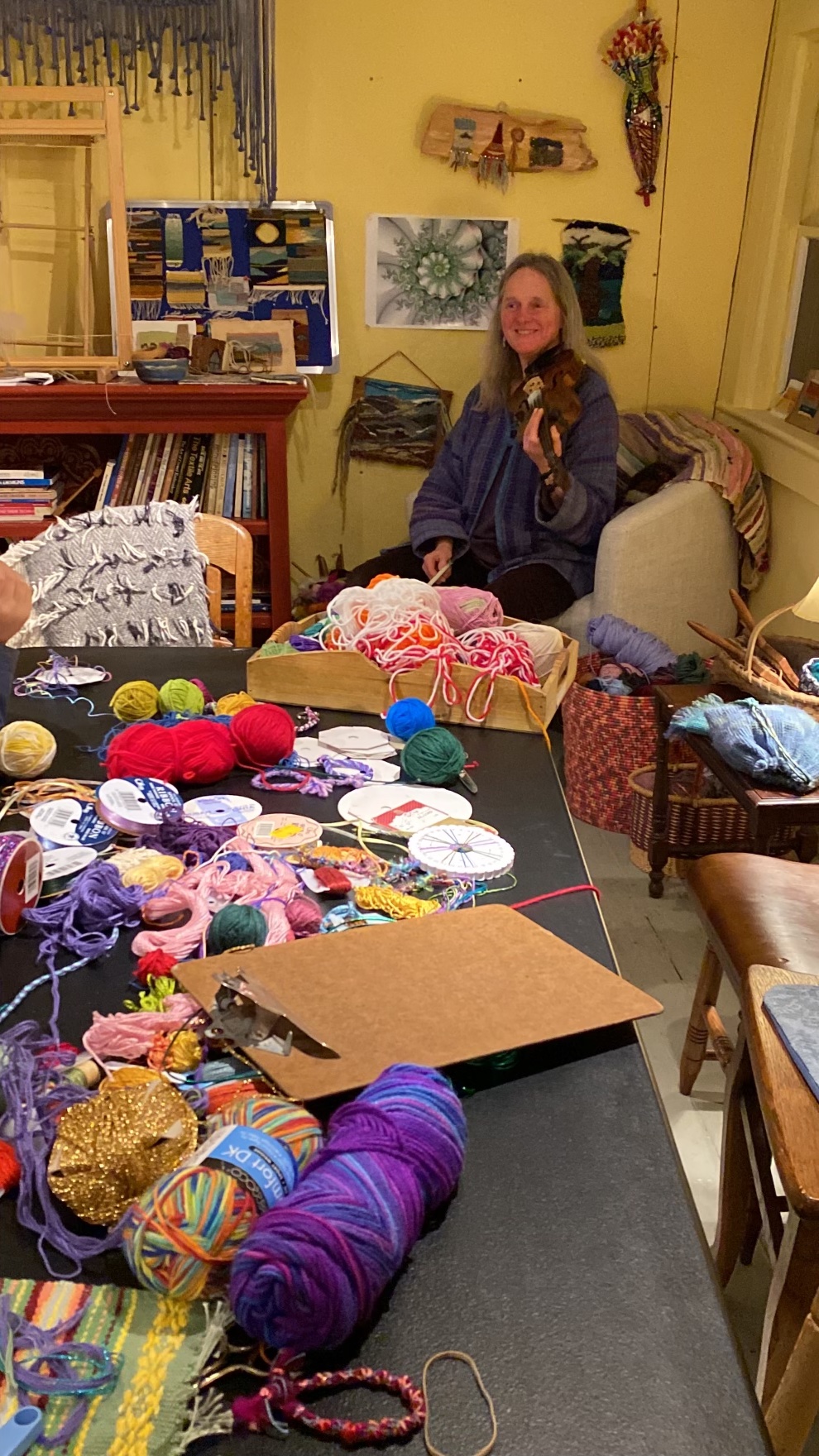
My friend and weaving teacher, Lausanne Allen, playing the fiddle while guests learned to braid using the Kumihimo method during an event at the Shelburne Craft School.
Weaving Can Be Very Simple and Very Complex
I’m hitting home runs here with obvious statements, but it’s worth saying that weaving is, at its most basic, the process of moving one material over and under and over and under another material. That’s it. Simple as that. From that foundation, we can weave the most complex and wondrous images and textiles imaginable. But it all starts with interlacing whatever it is we are weaving with. Isn’t that marvelous? Weaving is for everyone. It can be taught to people as young as nursery school age, and there is no age limit. In fact, weaving can help those dealing with the effects of stroke, dementia, and Alzheimer’s disease, as it has been shown to strengthen and encourage neuroplasticity in the brain.
When We Get to Do Things We Love, We Are Living the Universal Dream
Disclaimer: This is my view based on a whole lot of things. Feel free to take it or leave it.
If we are doing what we love at least sometimes, we can experience ourselves and share with the world our inherent gifts. There are no losers in this set-up. (Of course, I’m assuming that doing what we love doesn’t include hurting other people or living in a way that disregards others’ autonomy and integrity.) When we share what we love with others who are interested, we are giving from the place of our truest selves, because what we love is connected to who we are; the spark connected to our creativity is born from energy itself, and it interlaces with others’ creativity, like a cosmic dance. It’s amazing!
Whether it’s weaving, dancing, sculpting or singing, writing, building or baking (the list goes on and on), if we love what we are doing and sharing it with others in some way, we are putting some good energy into the world. And my friends, the world needs that big time.
Doing what we love = good medicine.
I hope whatever you are doing today includes you sharing the spark you have with the world in whatever way feels great to you. Until next time.





 Healing Handcrafting