Healing Handcrafting


2 Comments

Summoning Creativity #9 ~ How Did You Do That?

I am on a plane right now, heading back to the Northeast US from Mexico. I was invited to go on the trip by the director of the Shelburne Craft School, Heather Moore, and was able to bring my daughter. Heather had her family with her, too.

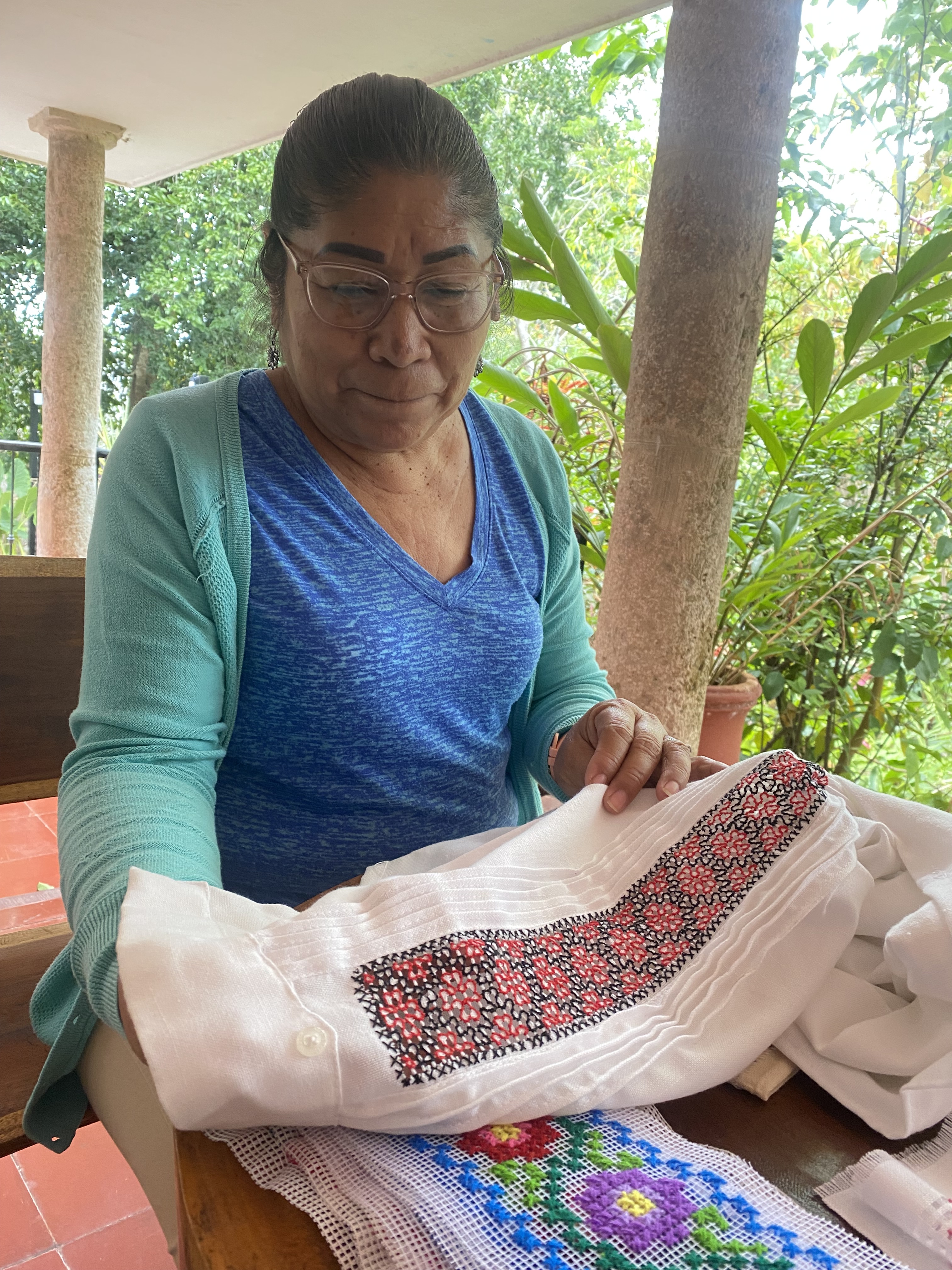
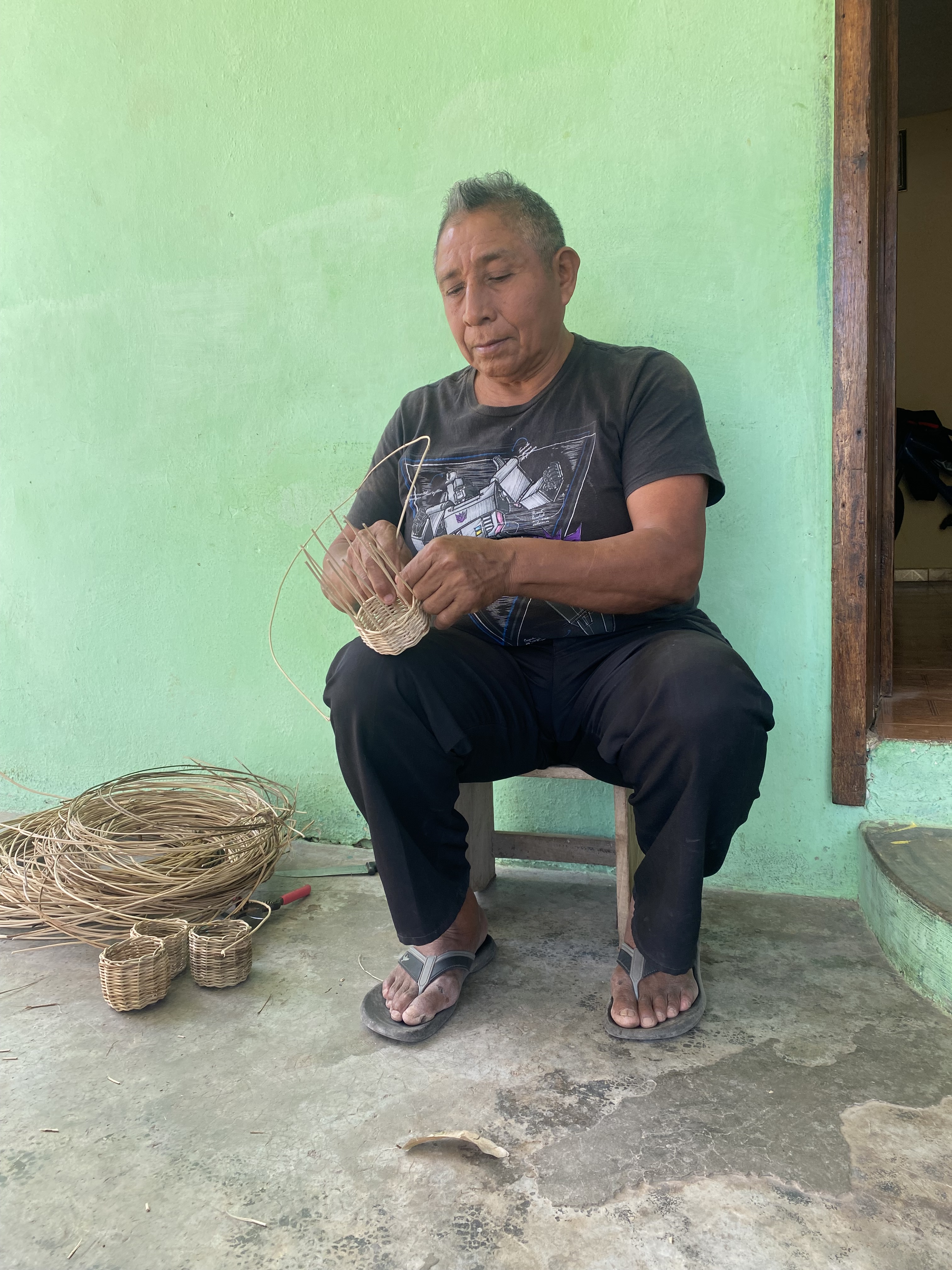
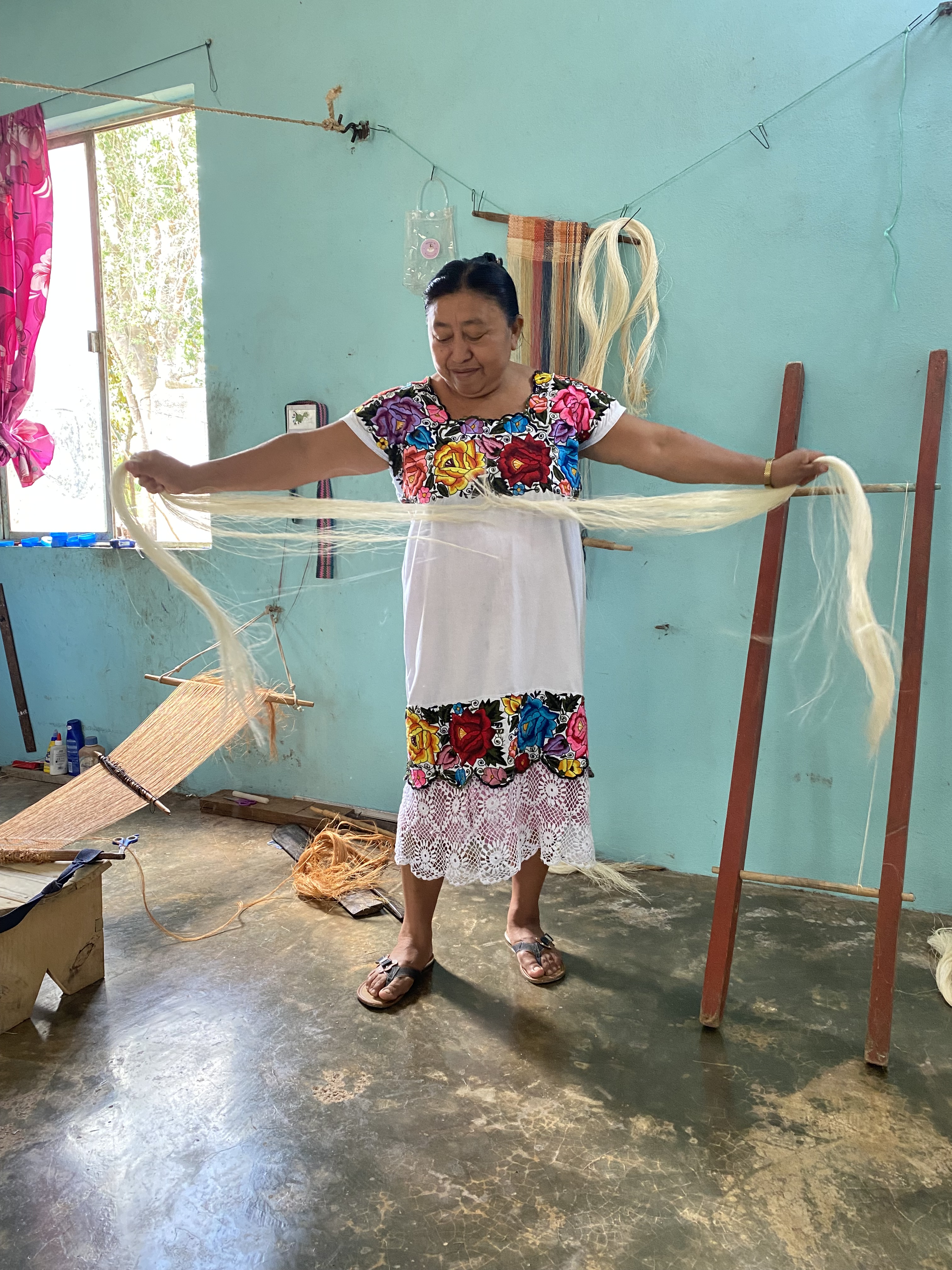
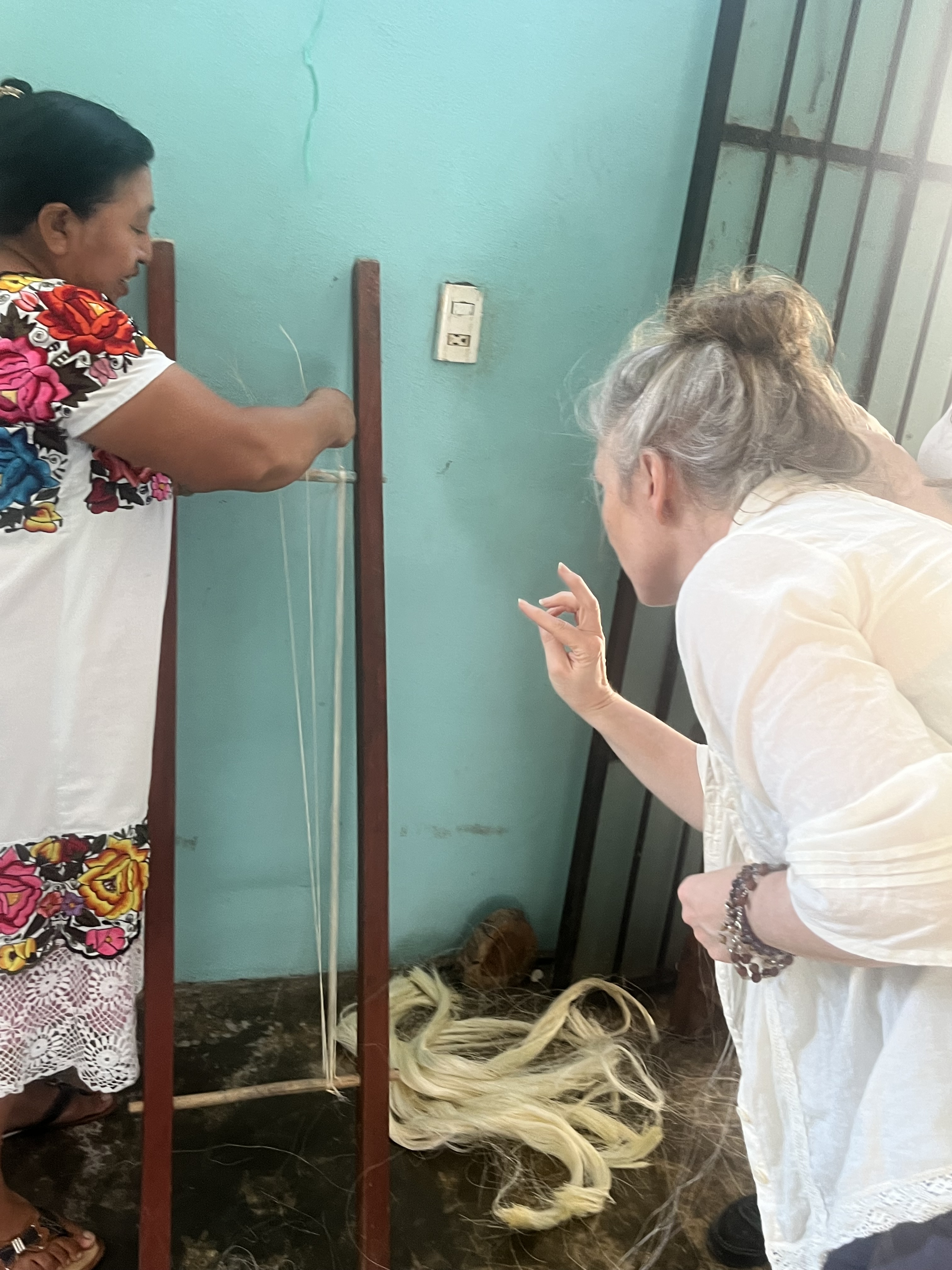
The purpose of our trip was to scout for artisans and opportunities in order to build a travel program for a group next year. We visited the Espadas family who are carrying forward ancient Maya pottery methods in Uayma, an embroider named Perla who is studying and practicing traditional stitching methods (she can be reached via Murem in Valladolid), a basket weaver named Mariano Chi in Ebtún, and a weaver, Dominga Cen, in Tixhualactún (she can also be reached via Murem). I’d also hoped to meet with Silvia of Bolsas Yaax Kiw who makes gorgeous bags out of henequen fibers, but due to my overshooting my relationship with habanero peppers and the consequences of that, plans shifted and time ran out. I really regret that, as her work is gorgeous. Silvia can be found here.
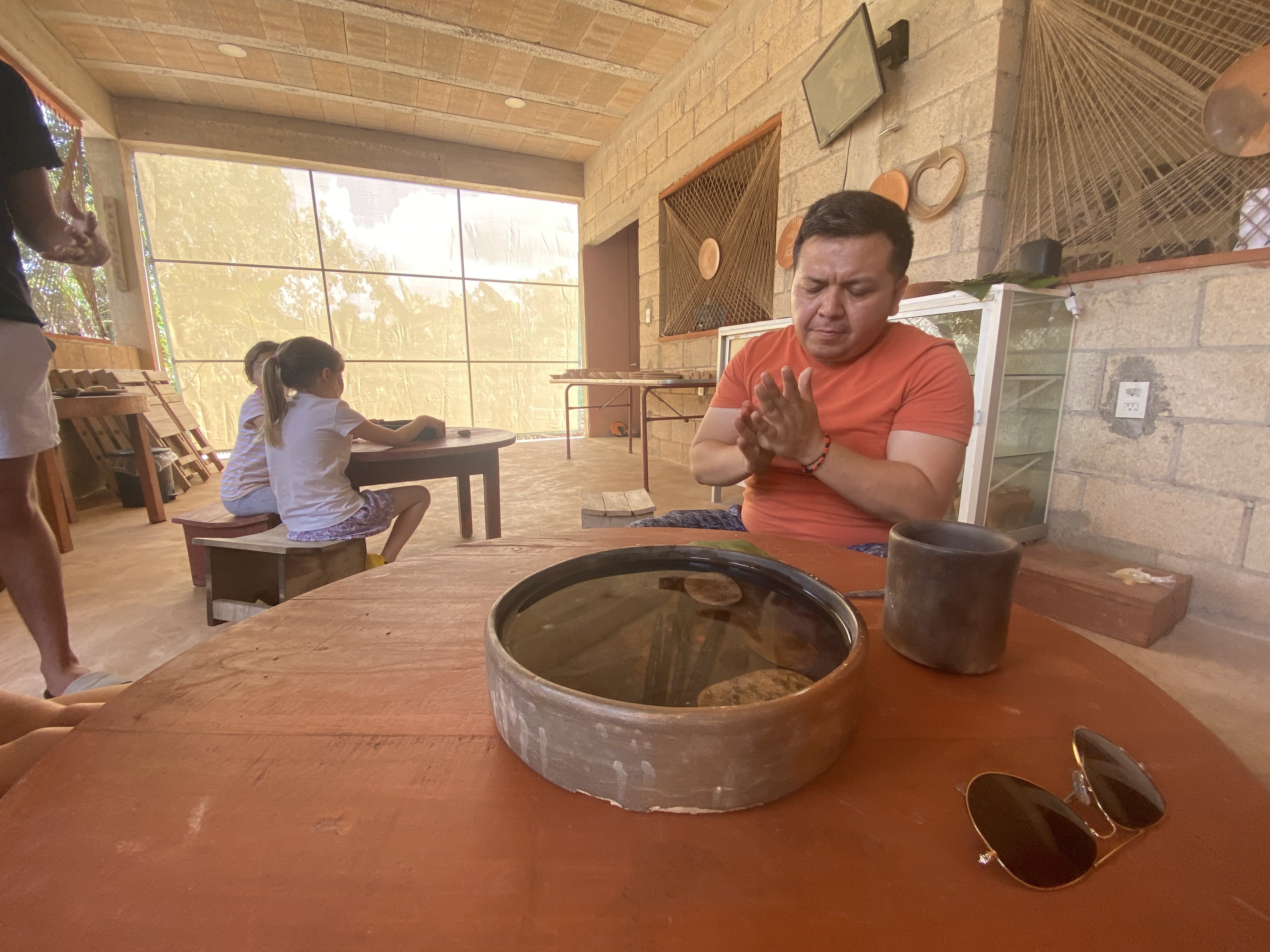
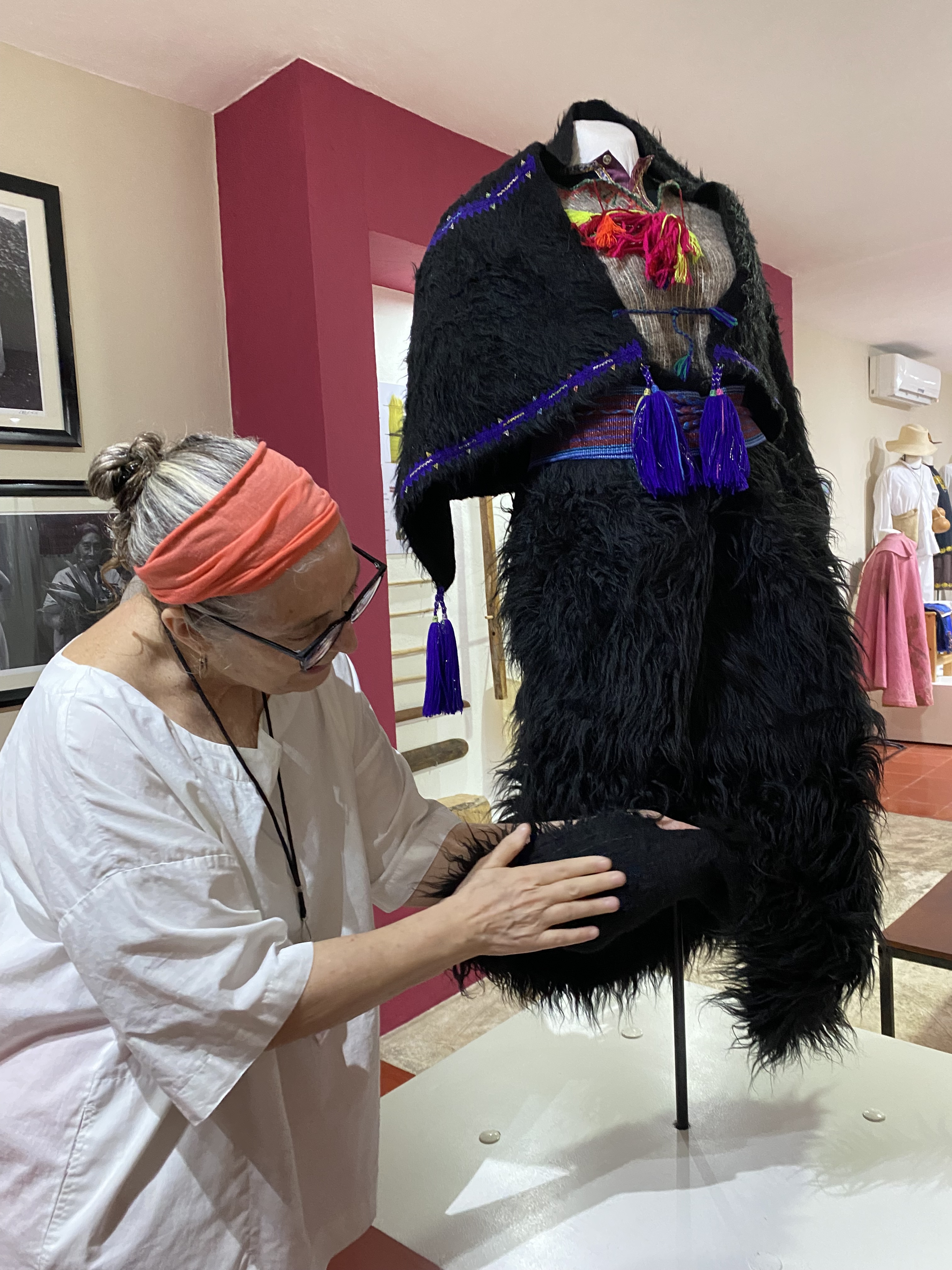
I was often overcome with emotion, in the presence of those sharing their art and craft with us, with so much generosity and care. I felt very lucky, and very much aware of the fact that I was experiencing something unusual and precious. If you are on Instagram and feel like seeing some of my posts on our trip, you can find them here.

Leading up to the trip, I’d been thinking about what brings people together and what separates them. I thought about the fact that I don’t speak Spanish and here I was, going to meet people to learn about their art. I was trusting that the artisans we were meeting with would be able to show us what they do, and if we were paying attention, we could learn without words, and ask for clarification through hand gestures and facial expressions.

We could express the question, “how did you do that?” and a bridge would be formed. Of that I was certain.

Tey Mariana Stiteler, who directs the beautiful  Murem – Museo de Ropa Etnica de Mexico in Valladolid was instrumental in linking us up with three of the four artisans we met with, and she translated for us the whole time! And in Uayma, we had this excellent translator and guide. Even still, there were countless moments when, just by watching, listening, and absorbing, we were learning and connecting and understanding each other even without translation.

“How did you do that?” became the bridge I’d imagined between people interested in each other.

It was beautiful. These experiences expanded my mind and stretched my heart.

For this month’s Summoning Creativity theme, we are looking at ways to dive into a “how did you do that?” mindset. There are no specific requirements that have to do with travel if that’s not in the cards. But look around. See if you notice anything that someone made that you think is cool, interesting, unique… whatever! If you can, ask that person how they made what they made! You don’t even have to do the thing itself if you don’t want to!

Just don’t stop with the observation of the thing. Take it step further and wonder at it, ask about it, and see what happens.

Maybe there is an artisan market in your area that highlights work from your region as well as places around the world. Check it out! Ask a question.

Maybe there’s a family member who makes a delicious dish that you only eat at their house. Ask them how they make it!

Maybe there’s a person nearby with a beautiful flower garden and you’ve admired something in it. Ask them what the plant is or how they go about a specific gardening task.

Maybe there’s someone who knit/crocheted/felted/or wove a piece of clothing. Ask them about the pattern or draft and see what they say.

You get the idea! When we notice what others are creating and making and we take an interest in those things, we are connecting in a way that is higher and freer than so many other things we are encumbered by these days.

I hope in this coming month, you get to experience that sparkly moment between yourself and another person, maybe someone you never would have met or talked to had you not noticed something they made. If you end up having a cool experience as a result of asking, “how did you do that?” please share it with me! I’ll love to hear the story!

Until next time,

Bradie


Leave a comment

Monday’s Musings: Neck Pain & Looms

I haven’t been able to weave lately because of a back/neck injury I sustained one month ago tomorrow. As I’ve worked to get back in touch with my body and what it’s communicating to me (if only I’d listen!), I’ve been thinking a lot my looms and which one will be my entryway back into weaving.

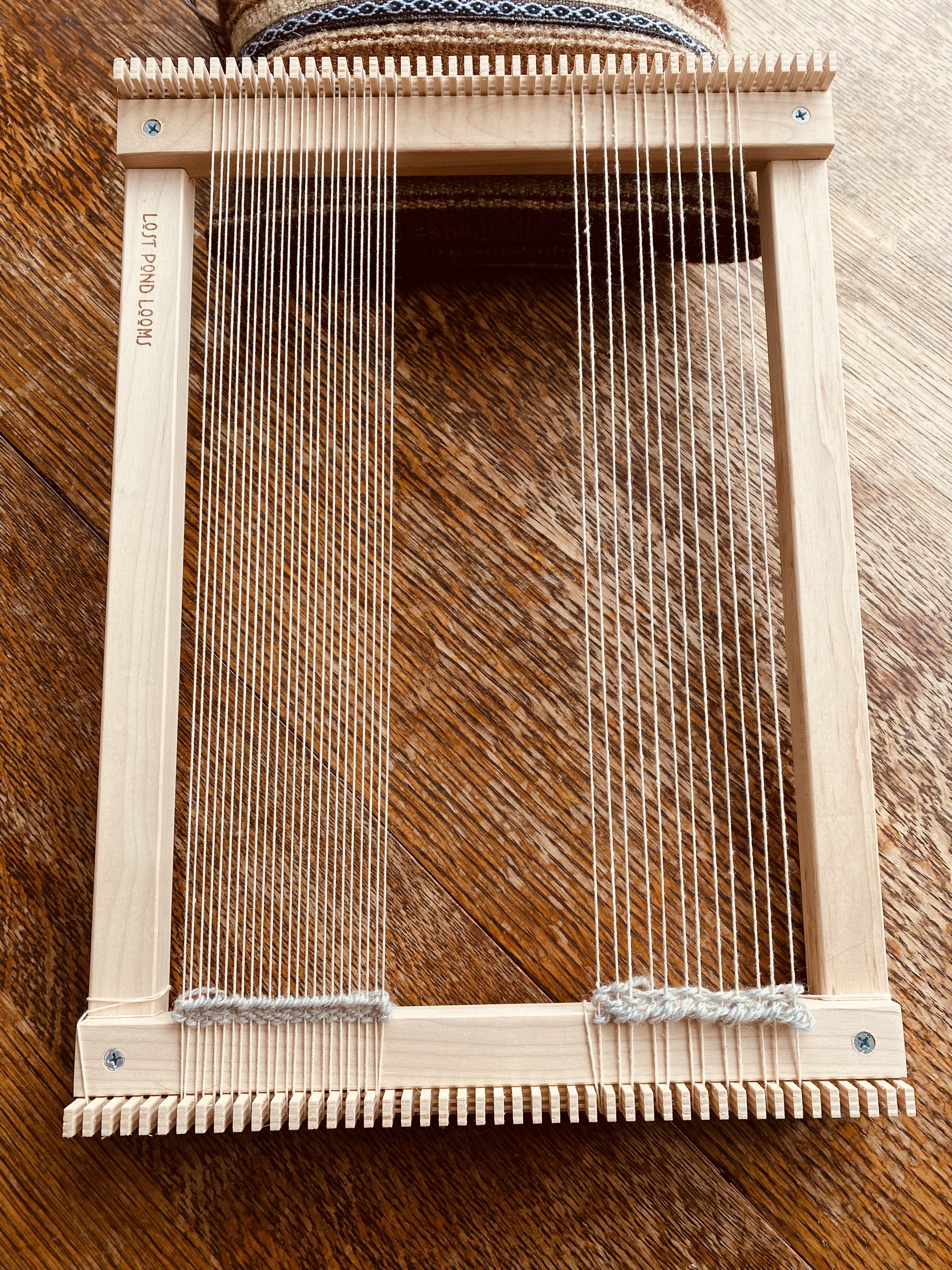
I think for the sake of my back, I’ll start weaving again on this wonderful one from Lost Pond Looms. I am planning on using this loom in both my Introduction to Tapestry Weaving Classes and Wild Weaving classes, as we phase out the ones we have been using. I like this loom because it is super strong and allows for different warp spacing. I also love that we are buying it directly from the person who makes them, and he’s from the next state over in NY.

So, taking it slow, and learning ever more to listen to the language of my body and woven form itself. And in the meantime, I’m circling my weaving tools, thinking about what they will hold soon, and looking forward to picking up my yarn again.

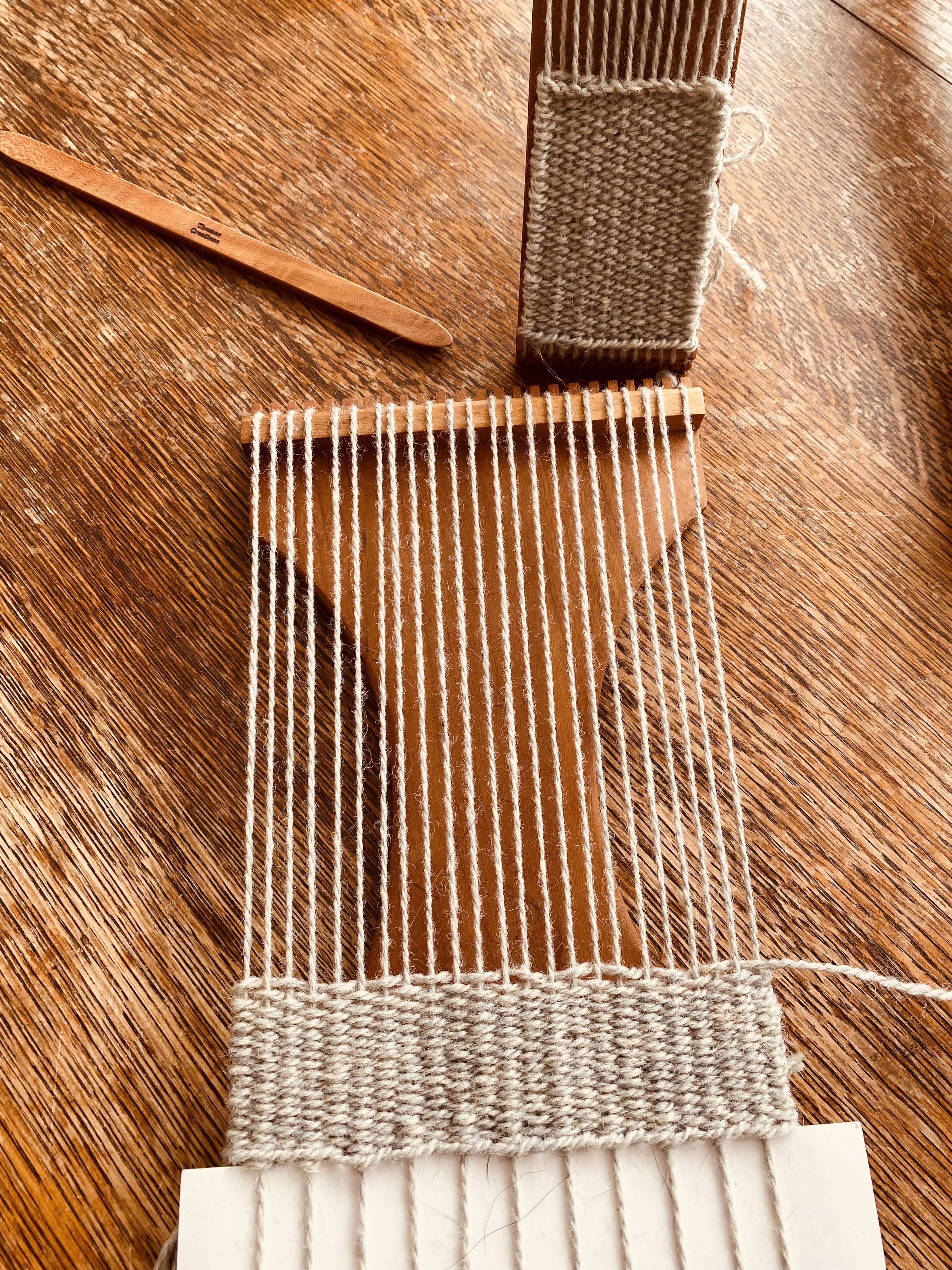
Here’s another Lost Pond Loom as well as a shed stick from Threads Thru Time and an itty bitty loom from Stephen Willette.


Leave a comment

Fun Kid Craft ~ Sock Puppets! 

I’ve been meaning to write a post about sock puppets for months! But, you know… life. I was reminded of these hilarious characters when I read through the stupendous thank you notes I received from the kids in my son’s class for all the activities we did over the year. A large number of them said making sock puppets was one of their favorite activities. So, of course I should share what we did!

#1: Gather socks you are willing to separate from. Got any loose ones kicking around, lonesome without their mate?

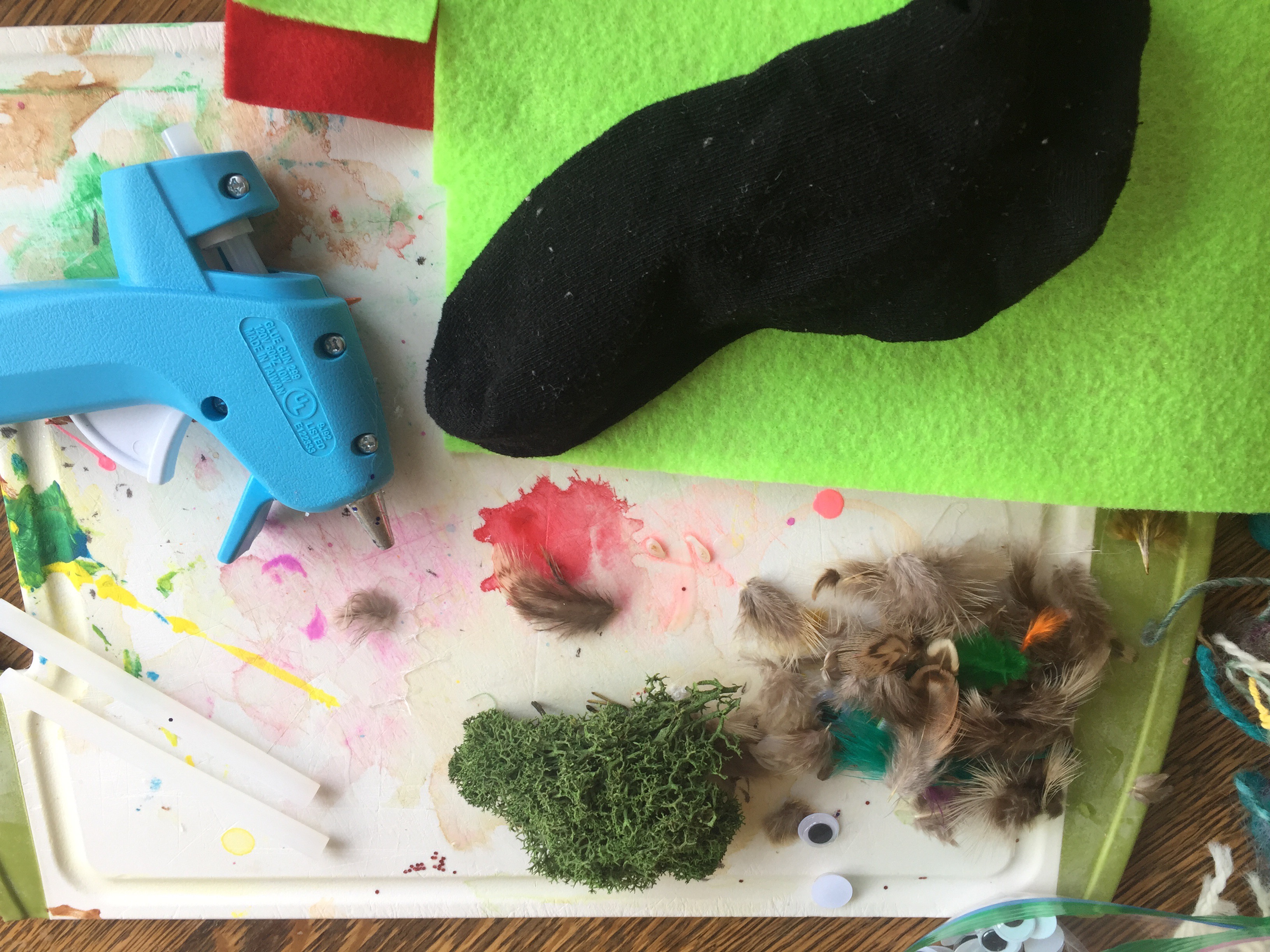
#2: Collect random bits of stuff you have in the arts & crafts category. Pom-poms, beads, googly eyes, moss, old costume jewelry, felt, buttons, yarn…

#3: Get glue ready. I found my glue gun to be the most effective but standard glue works, too. Clear glue is better because you don’t see it once it dries.

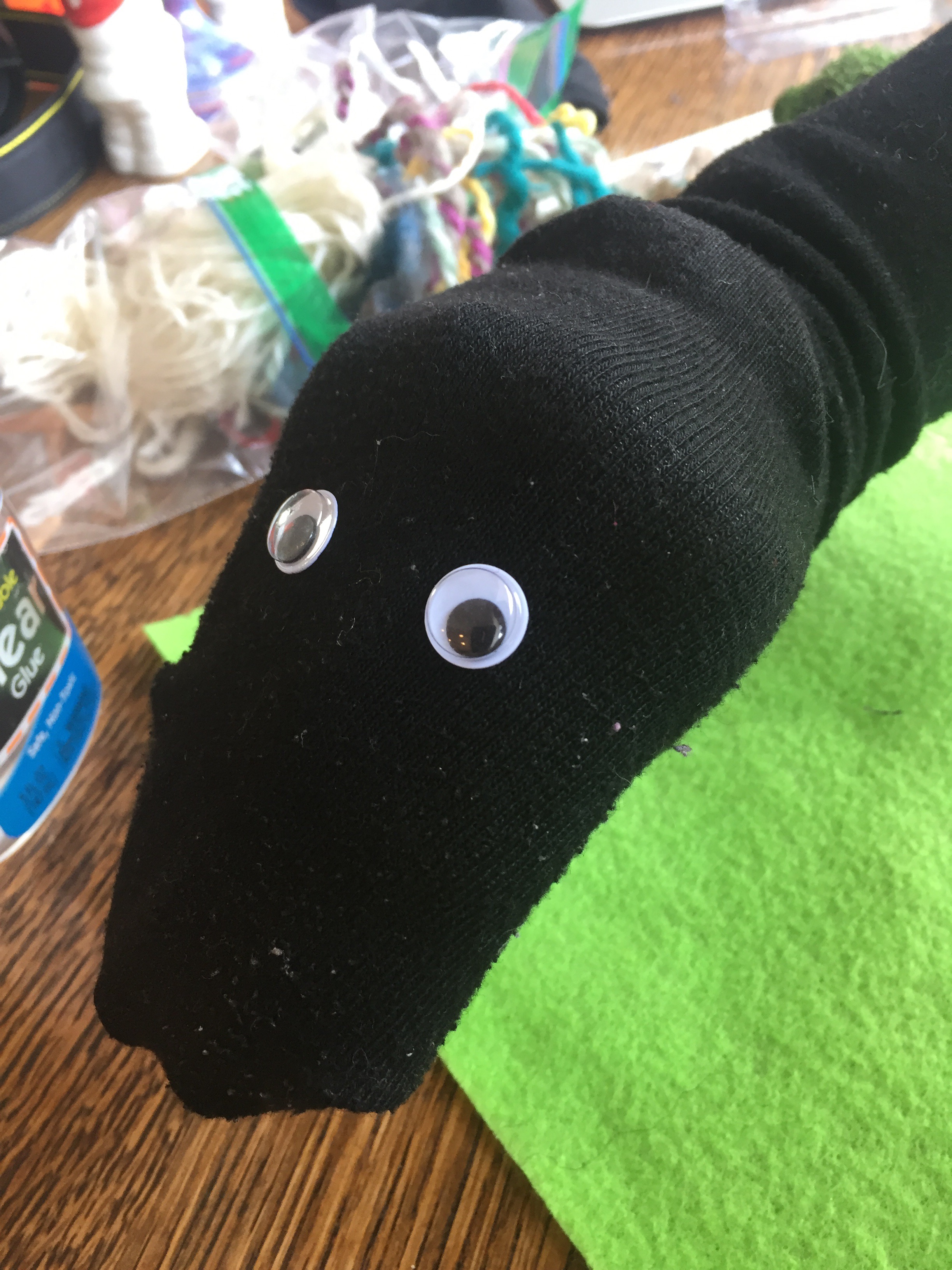
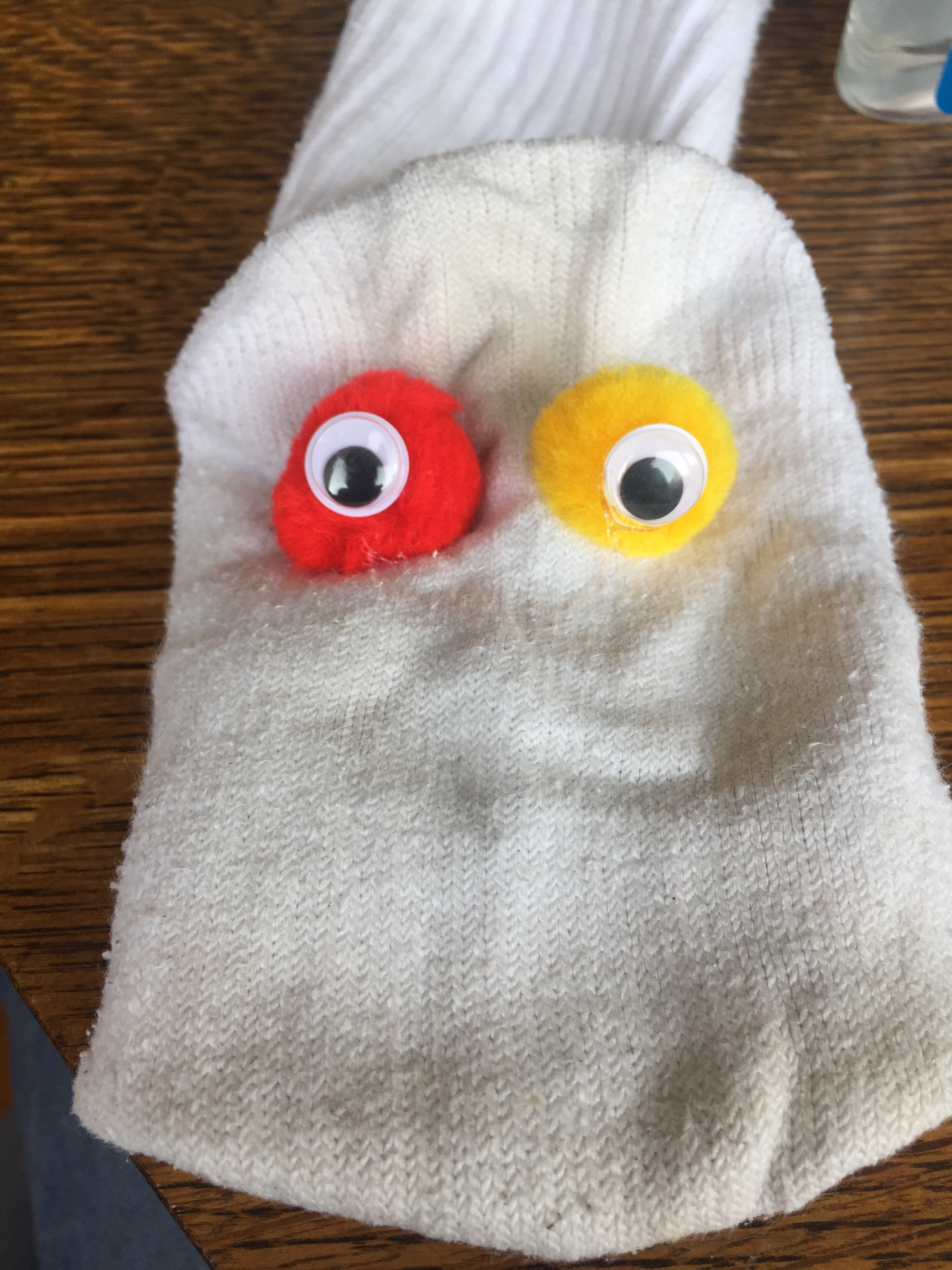
#4: Arrange sock on hand. I find that the heel of the sock fits nicely over the knuckles. When you open you hand, keeping your fingers together and away from your thumb, you can tuck the extra sock fabric that would otherwise be around your toes, into that space, creating the mouth. Close your hand, holding the mouth in place, and glue on the eyes where you want them. Then, gently remove the sock and lay it on the table.

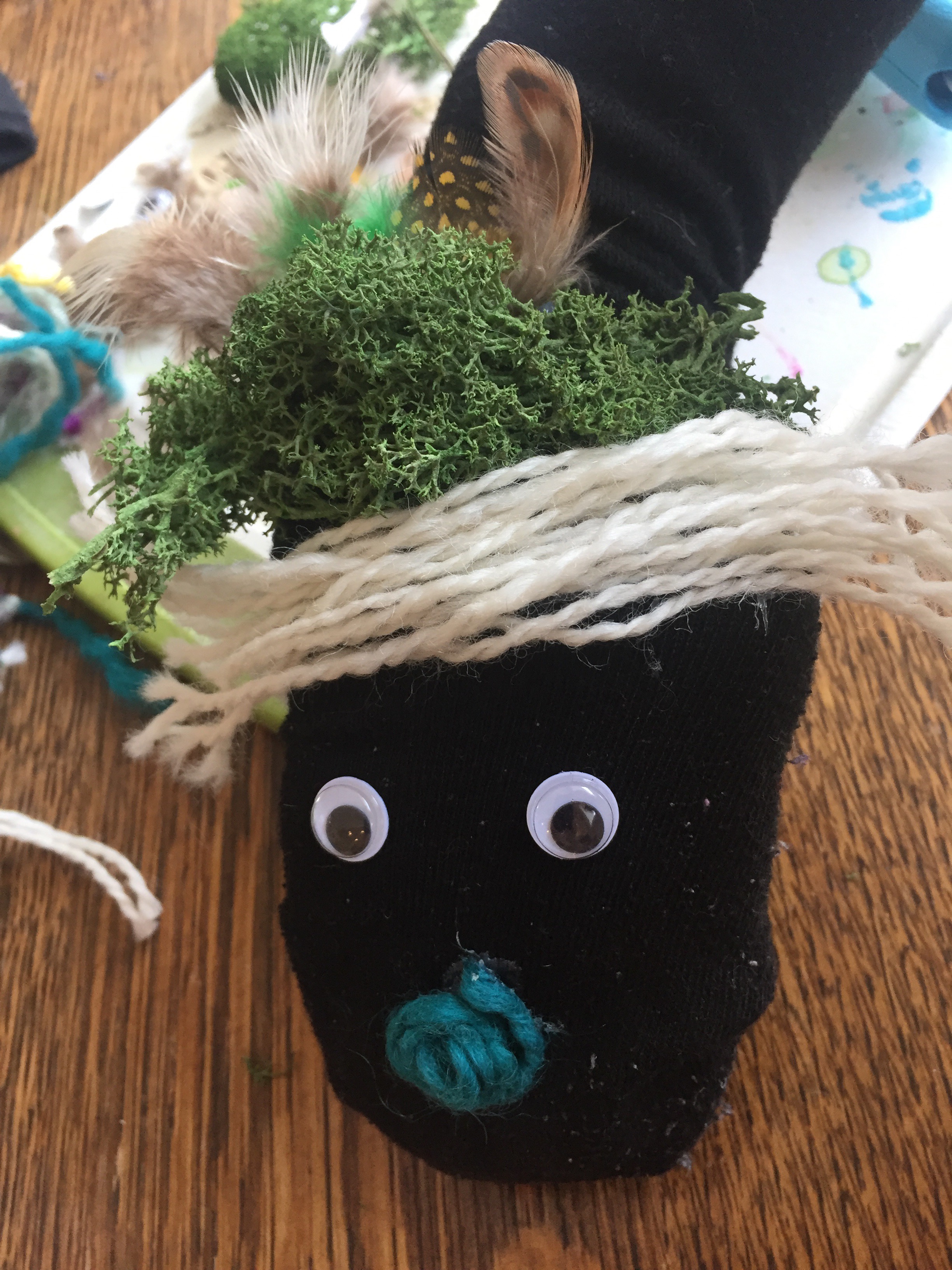
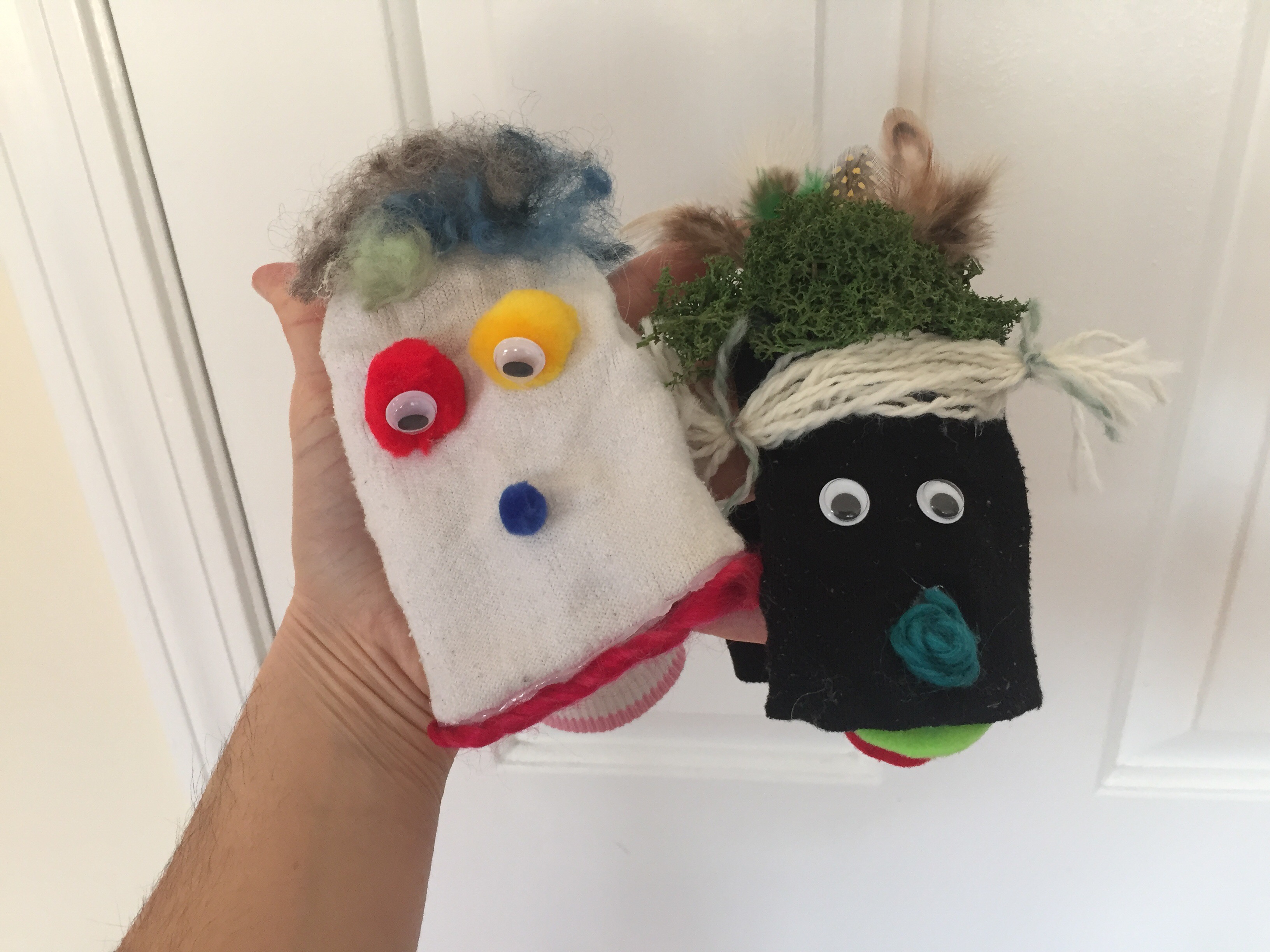
#5: Notice the personality that is already evident! Amazing, what eyes do. 👀 Start adding whatever you want to your puppet, being careful not to overglue. You don’t want the sock to stick to itself. On mine I knew mossy hair was necessary, and feathers.

And more hair… and a nose…

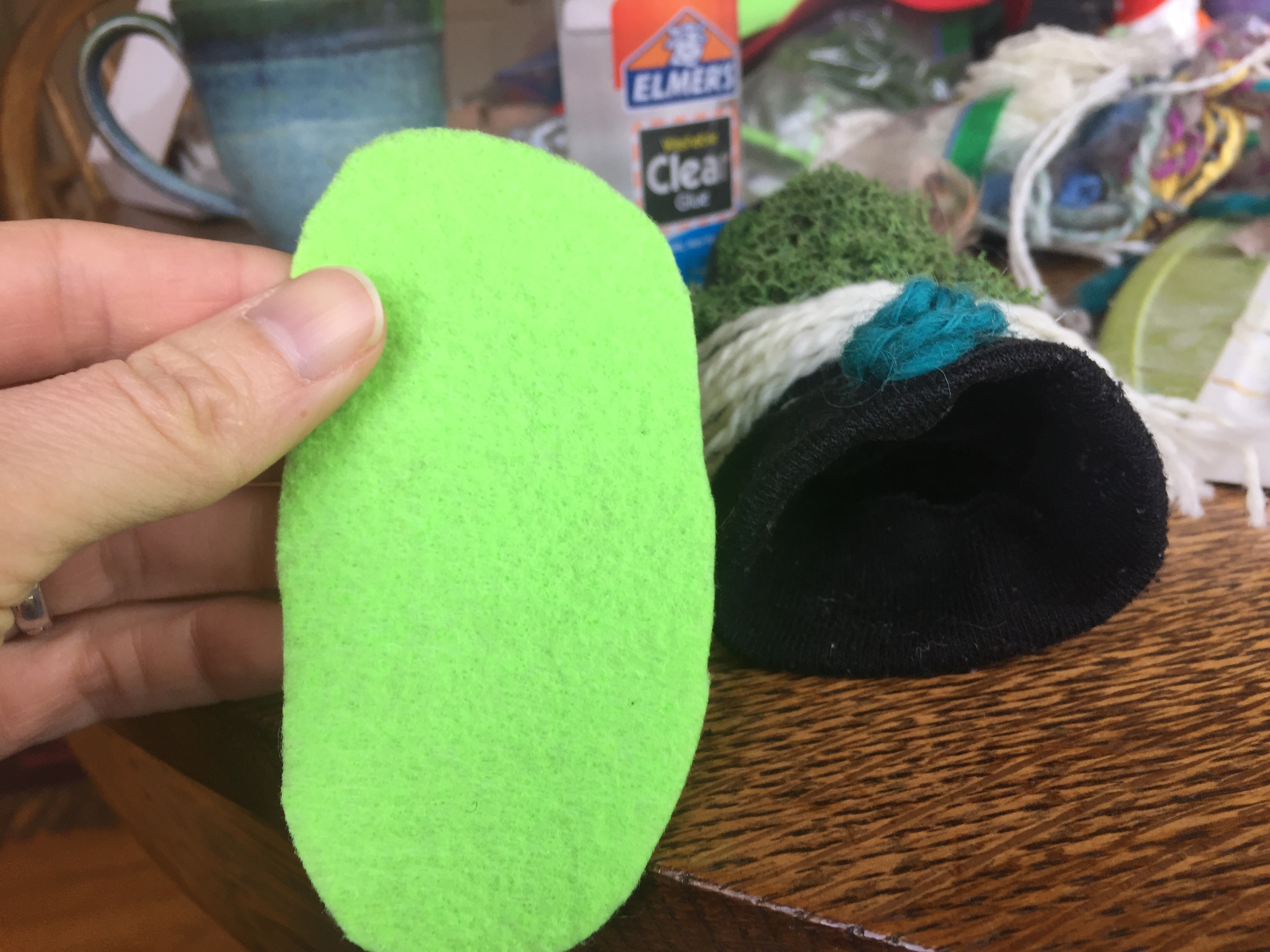
#6: after the adornments dried for a few minutes, I started on the mouth. I propped open the space designated for the mouth and eye-balled the size.

And cut out a felt oval…

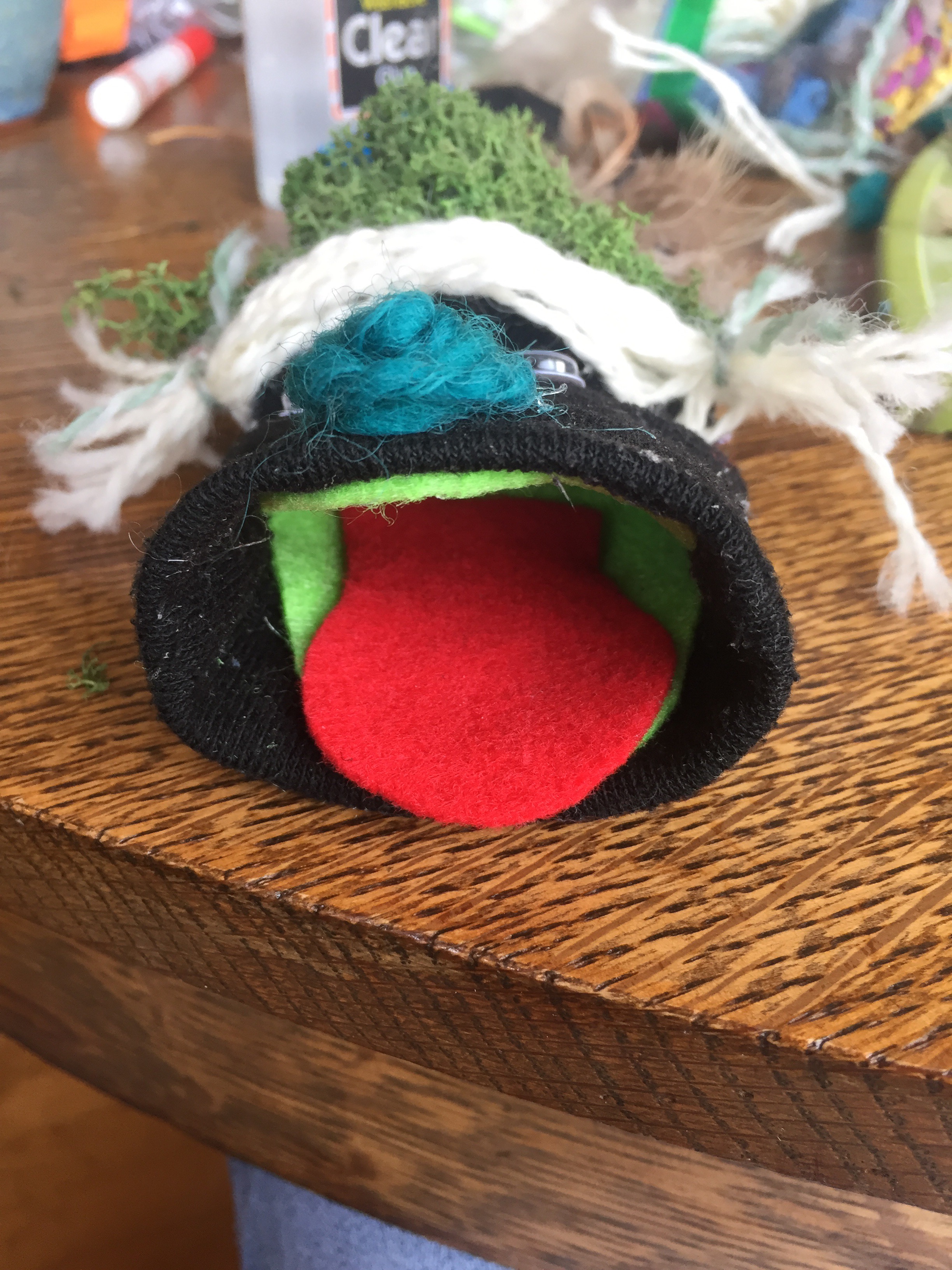
I tucked it into the sock mouth to ensure a good fit, then took it out, put glue around the edges of the felt, and tucked it back in there.

Then I added a felt tongue which was simply a smaller oval with one side cut off.

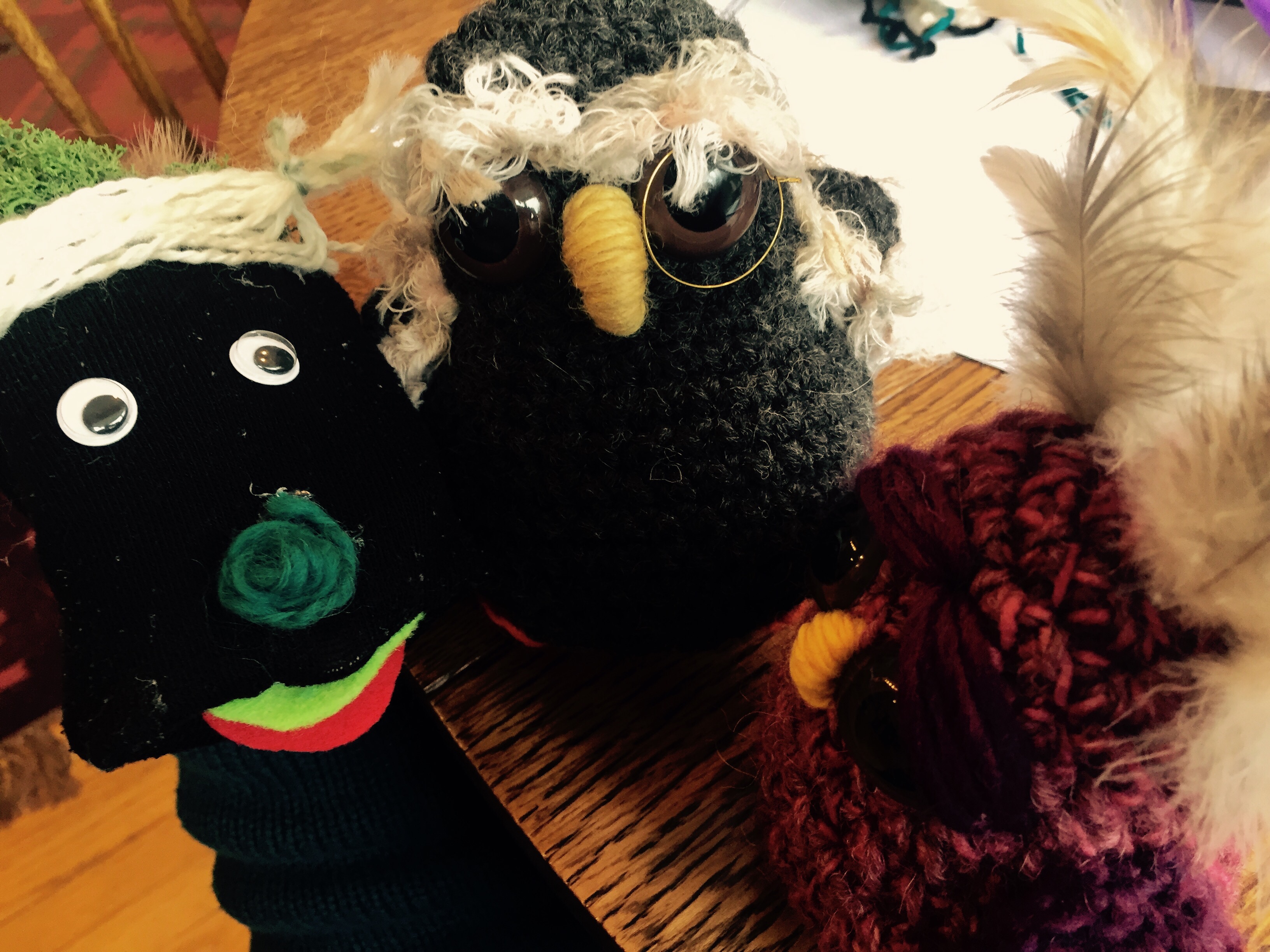
#7: And Voila! You can introduce yourself to your new friend!

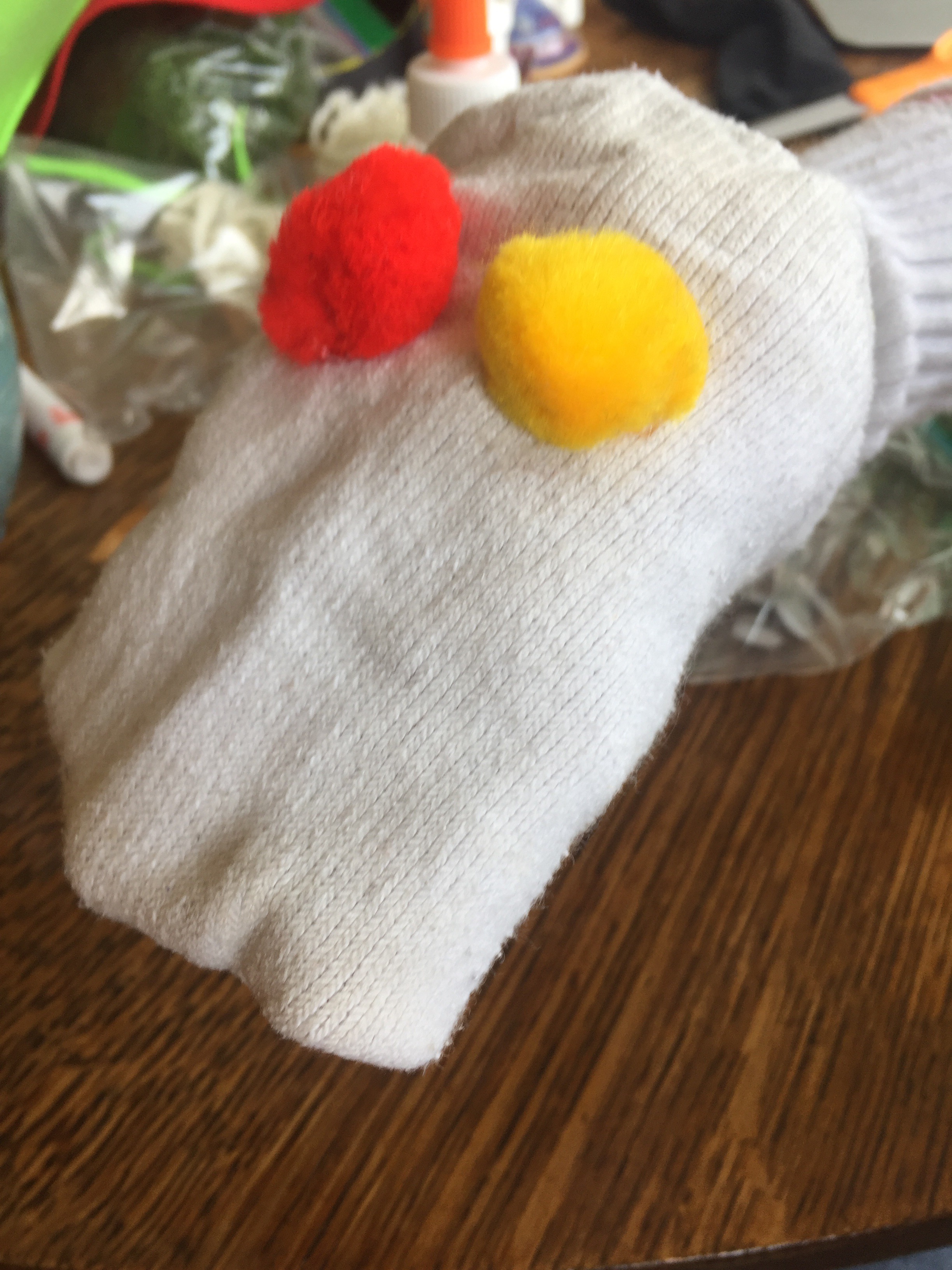
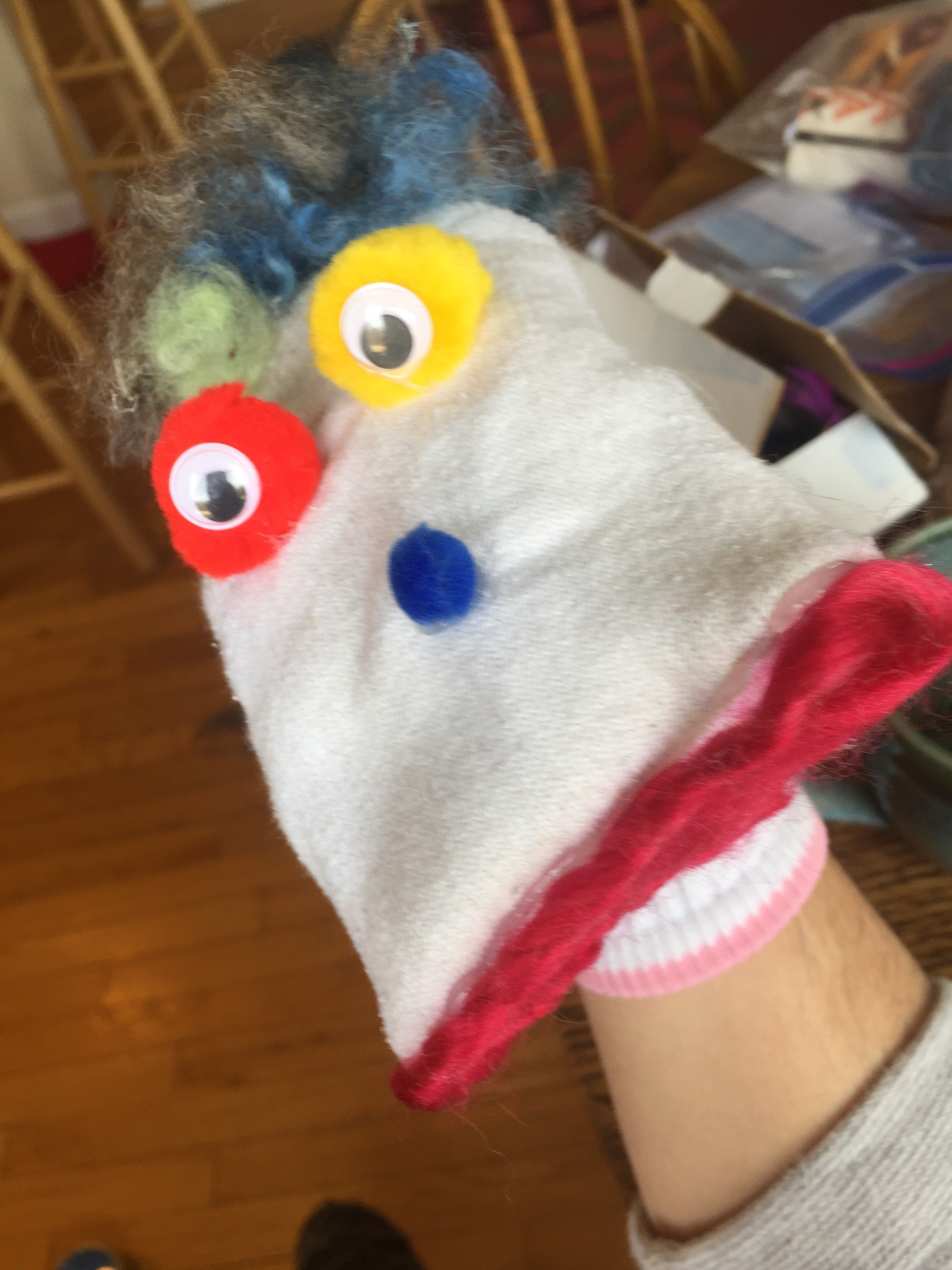
Here’s another one I made with a tube sock.

Ugh, do I need to use bleach?

Nah…

Shiny red yarn for a lovely lip expression. This took a little patience as the yarn needed ample time to dry in order to withstand this character’s rather loud voice.

I can’t share pics of other people’s kids, but I can tell you, we had so much fun that day! These characters come out of nowhere and invite story telling, play acting, and frivolity! Here’s some other perks:

👉 They are inexpensive to make.

👉 They require only as much detail as you feel like giving them. A sock with a mouth on its own is fun. Each thing you add gives it more flavor.

👉 Patience is needed, and flexibility in expectations ~ both good things to practice! Sometimes we gotta wait for glue to dry. Sometimes we don’t know how to make top hats.

👉 Puppet shows never get old.
Have fun!


Leave a comment

Farm to Frame Felting Fun with First Grade Friends

I am so very lucky to have standing dates on Fridays when I teach kids how to do things with wool and with yarn. These Fridays are now known as “Fiber Fridays”, and have become a part of my life I am extremely grateful for and proud of. I think about it a lot, why I want to do this stuff with kids. First of all, I have two kids of my own and I relish any chance I get to participate in things in their classrooms. I get to meet their friends, know their teachers and just be part of their school world for a small time, which is amazing. I never leave without internally bowing to teachers, para-professionals, one-on-one specialists, reading specialists, special educators. They make the world go round, in my book. Their love and dedication to the field, and the skills they have, just blows me away.

Okay, so yes, I love being in my kids’ classes. I also love going into other classes and meeting even more kids and answering questions and getting excited about new stuff. It’s just fun and a beautiful complement to my work as a psychologist. I’m not being a psychologist in any formal sense of the word when I am in with children on Fiber Fridays. However, I am sharing something that I truly believe is deeply healing to the human spirit, and is a restorative practice. Handwork/fiber craft tie humans together in a most fundamentally ancient and organic way, and exposing kids to as many ways as I know how to work with fiber has become a prized part of my career.

In one of my first grade classes (the one my daughter is in), we’ve been exploring wool. We started with real free flowing exploration. I brought in big wool batts, smaller mounds of wool in a variety of colors, some fabric, some yarn, and a needle felting tool for just me to use, just in case some quick stick-togetherness was needed. I showed the class first different ways we can play with wool. I pulled it apart, I twisted it, I formed it into shapes and wrapped them in fabric and tied yarn around it. I encouraged them to just play and sculpt and imagine, and I let them know that there were no specific things they had to make at the end. Each table got its own basket of a big assortment of wool and then, it was off to the races! I was actually amazed, and I learned so much that day of free wool play. Children made babies, cradles, nests, birds, balls, clouds, old ladies, and animals. They played and laughed and shared. For some reason I was really worried that they’d be confused or adrift without a specific goal in mind, but I was wrong! They were happy to just go for it! I was lucky to have plenty of help from the teachers and a parent volunteer with cutting fabric, wrapping, needle felting and tying. It was peaceful and joyful. I do believe working with wool is magical.

Two weeks later in the same class, I referred back to our previous experience, and said, “this time, we are going to experiment with wool mixed with soap and water!”. Our project was to make felted balls. Before we began, I first showed them balls I made at home. I also showed them my “oops” items… a disc that was supposed to be a ball… a nest that was supposed to be a ball… a weird creasy ball that was supposed to be smooth. You know, it’s kind of hard, at least for me, to get a wad of wool to felt into a perfectly smooth felted ball with just warm, soapy water and your hands. I don’t know how Martha Stewart does it!

I then quickly showed them this book:

oops

And we talked about having one idea in your head when you go to make something and how sometimes it doesn’t turn out like that. I told the kids that we are learning, experimenting, having fun and seeing what comes out of our efforts.

On the floor I had set up a drop cloth with towels covering it. On that were six plastic mixing bowls, two with soapy water and four with clear water that had to keep being replaced as kids dipped their creations into them to rinse the soap.

Water + Wool + Soap + Being Okay with Oops = Felting

Balls were made. Some were smooth. Some were crinkly and seamy. We got a mushroom, some discs and some wild looking blobby alien life form planets, or maybe coral? I saw a bunch of children totally okay with experimenting and just seeing what happened and I think that right there is a major piece of wisdom gleaned from mindful handwork.

Freedom to experiment and see what happens, within one’s own heart and spirit, is such a beautiful thing, and it’s something that I think we all should tend to as often as we can. I am often guilty of hanging on so tightly to what my plan is that I forget to see what’s actually happening right in front of me. I forget to loosen my belly and breathe and just let things be as they are. It’s so easy to forget that.

You know what else blows kids’ minds about wool and felting? With some simple ingredients and some agitation, soft and fluffy wool is transformed into felt and it is impossible to return it to its original form. I can’t explain why something so obvious is so mystical and amazing to kids, but it is, and I need to meditate on the symbol.

Stay tuned. I’ll be sharing more projects and ideas and insights from this cool gig I have.