Healing Handcrafting


Leave a comment

Cookie Sheet Weaving Project

Hello All~ I sure do hope you are doing okay, wherever you are. I have so much I’d like to say and share about what this COVID-19 pandemic is teaching me. I may have to do that in another post. But here and now, I will share with you a project I made up for wonderful kids I get to spend time with, even though we are all doing some wicked epic social distancing. I have spent large bits of the last seven years teaching fiber art in my kids’ classes (and in some others, too!) and I can tell you, the kids inspire in me so much longing to keep making, keep creating and keep sharing. Now that our Fiber Friday classes are happening on Saturdays via Zoom, I’m trying to figure out lots of yarn-y things to teach using materials we might have kicking around at home. The thing with weaving is, you can make a loom out of so many things! “Homework” for this week is to look around the house and yard to see if we might find weird, unexpected, unique or random “looms” that could be woven on. These could be sticks, frames, chairs, trees… whatever! I hope I see some good ideas next week!

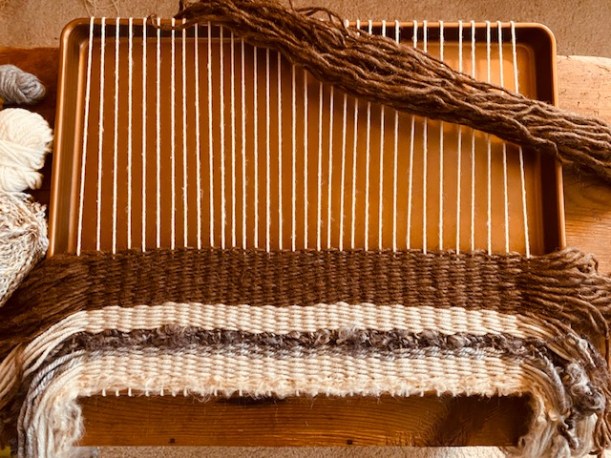
This project is aptly called the Cookie Sheet Weaving Project. As you can see, I’ve used a cookie sheet, yarn, and tape to make this loom. I’ll give step-by-step instructions and maybe you can give it a go!

Materials:

  • cookie sheet, any size
  • yarn
  • scissors
  • tape

Optional Materials

  • fabric
  • large eyed tapestry needle
  • lots of variety of yarn- this is a great project for using up small bits of yarn stash

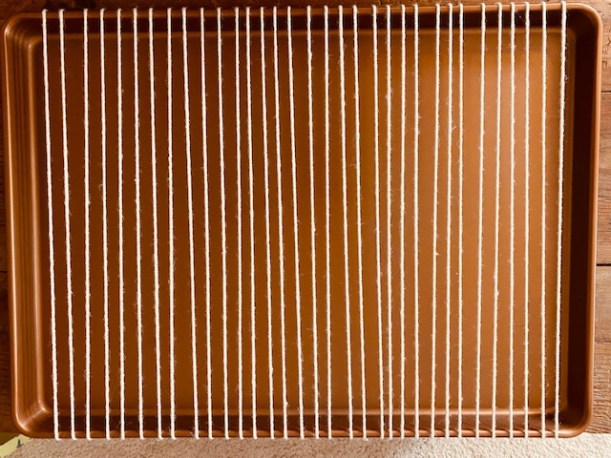
This is what your loom will look like once it is set up. I’ve chosen to warp my tray the long way, making my weaving piece wide. You can do it the other way, too. You can also choose to warp only a portion of the tray.

IMG_3323

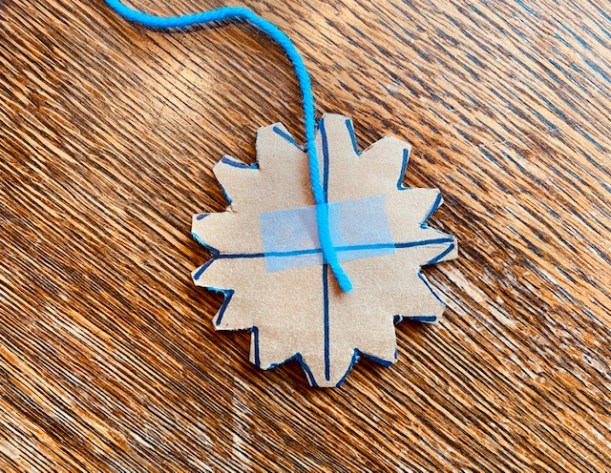
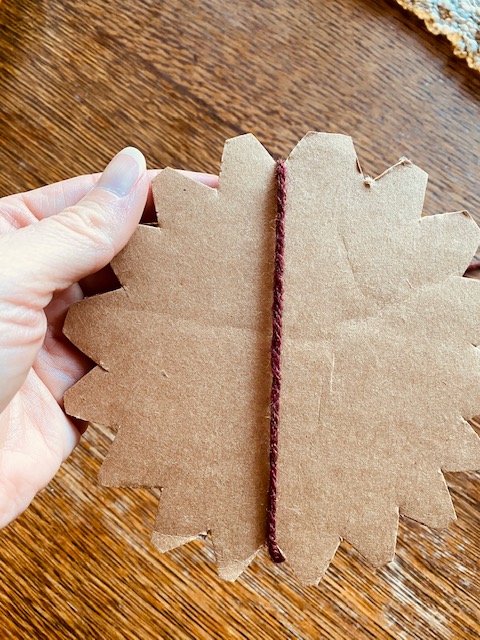
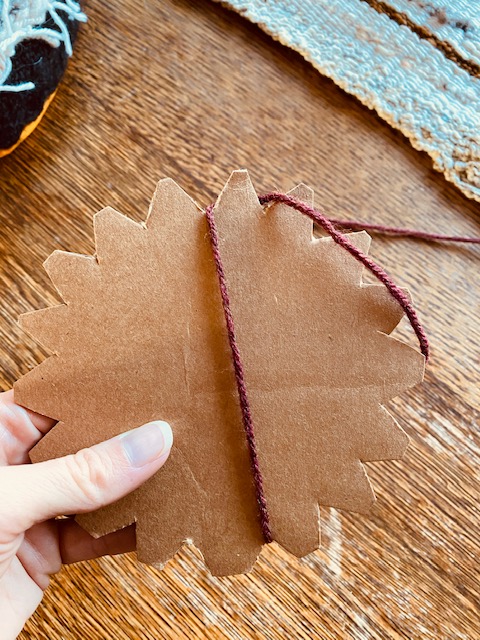
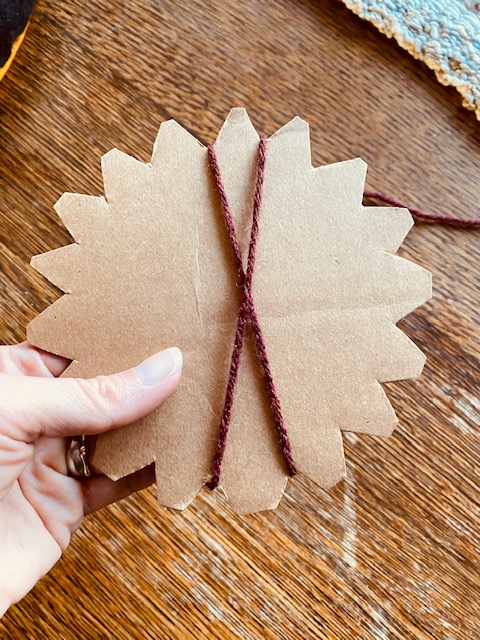
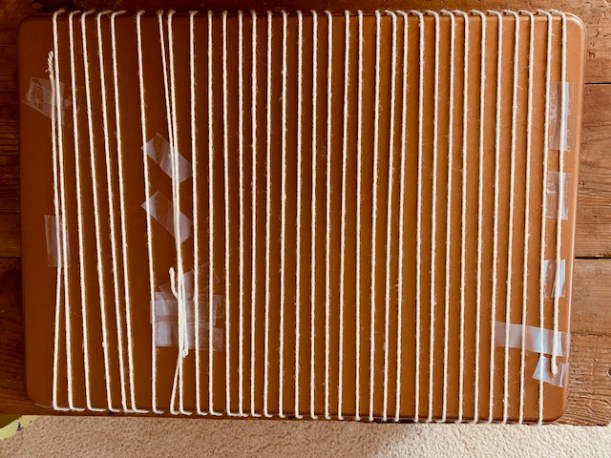
To secure the warp, tape the end of skein of yarn to one side of the bottom of the tray, and then start wrapping the yarn around the tray, with about a 1/4 inch to a 1/3 inch between each wrapped thread. You can see, the underside of the loom isn’t gorgeous, with tape everywhere, securing the warp. Don’t worry about that. It’s most important that your warp is securely fastened onto the tray. Since my tape wasn’t turbo sticky, I used a lot of it.

IMG_3324

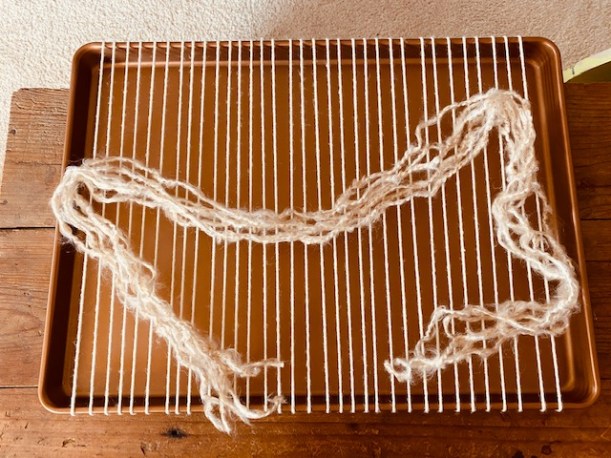
I opted for making a very fringy piece. Rather than moving back and forth and back and forth with the yarn, leaving no fringe on the edge, I chose to cut lengths of yarn that were several inches longer than the width of the cookie sheet. I wove each thread individually and then made sure that the remaining yarn was about equal on each side. If you don’t want fringe, just keep weaving back and forth with a long length of yarn, being sure not to pull too hard on the warp threads as you come back the other way.

IMG_3326

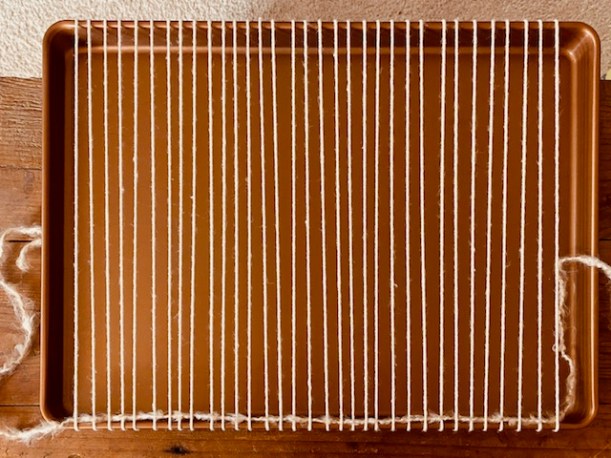
Row 1: I started by taking one end of a cut length of yarn and going under the first warp thread, over the next, under the next, and so on.

IMG_3327

Row 2: With the next cut length of yarn, I went over the first warp thread, under the next, over the next, under the next and so on. In this way of weaving, I noticed that I liked weaving from right to left, over and over again. This is different than when you weave with a very long length, moving back and forth from right to left, and then left to right as you head back again.

IMG_3328

Because I have a LOT of small balls of yarn, I chose colors and textures that go well together and I cut a bunch of lengths at a time so I could just get into the flow of weaving. This is a very portable project, so I had it all over the house depending on what I was doing.

IMG_3346

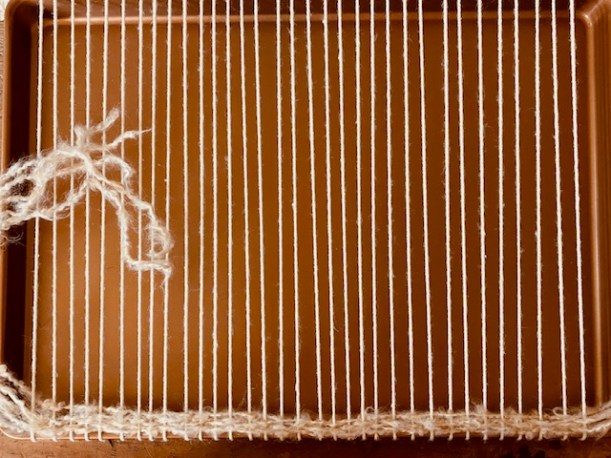
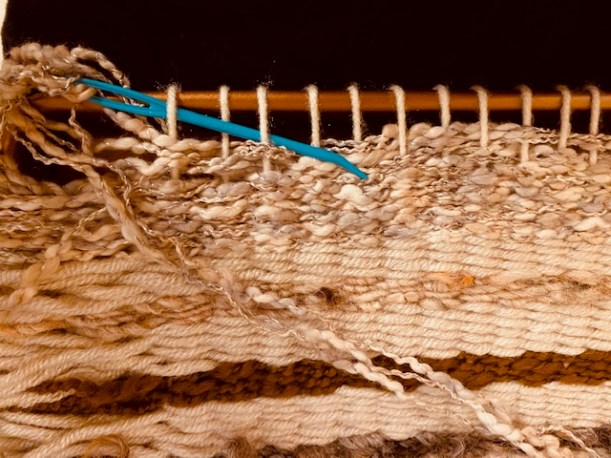
And I wove, and wove… and wove… Once you get to the top, you’ll notice that there’s not much room for your fingers to move the yarn around the warp threads.

IMG_3371

If you have a tapestry needle, this is a good time to get it. Threading it with the yarn you are weaving with (the weft), you can really get up to the edge of the tray.

IMG_3372

Before I thought about taking the project off the loom, I tied off the fringe on each side. You just take one weft thread, and the next one, and tie it in a double knot. Make sure that the two edges you tie are on opposite sides of the warp thread. This will ensure that the warp is secure and your piece won’t become loose and/or unravel.

IMG_3386IMG_3387

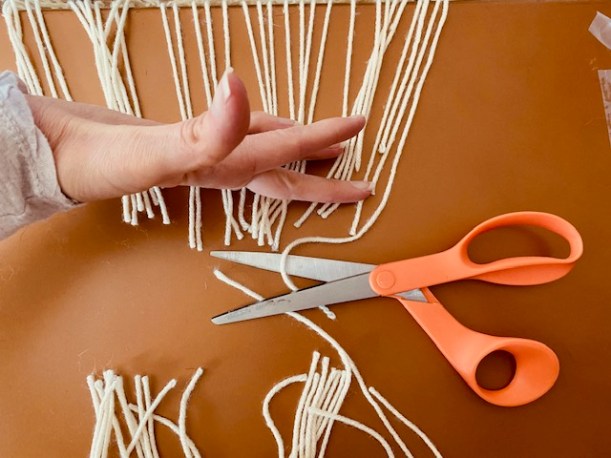
When your fringe is all tied up, flip the tray over and remove the pieces of tape that are securing the edges of the warp. Then, cut across the middle of the warp threads, freeing the piece from the tray.

IMG_3389

You have a choice to make here. For both choices you should tie off the warp threads in the same way you did the fringe, tying one thread next to its neighbor. If you have an extra one at the end, just include it with the two next to it.

Then, the choice… Do you leave the warp as fringe, too? Or do you sew it into your weaving? There is no right answer except for doing what you think is best for your piece. If I had used a thicker, more interesting or robust yarn for my warp, I think I would have left it as fringe, but the yarn I chose is kind of tame compared to my fringy side, so I opted to sew it in.

IMG_3390

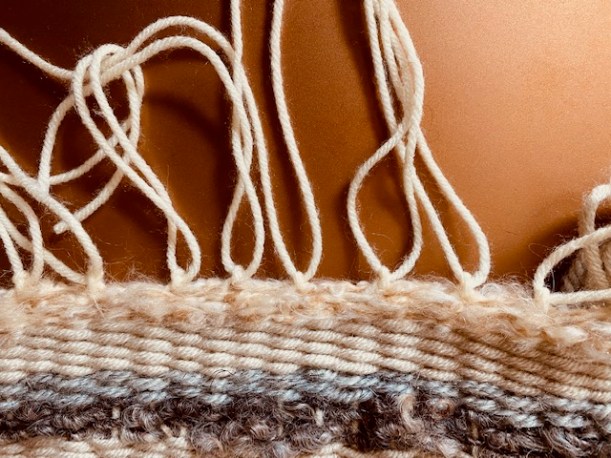
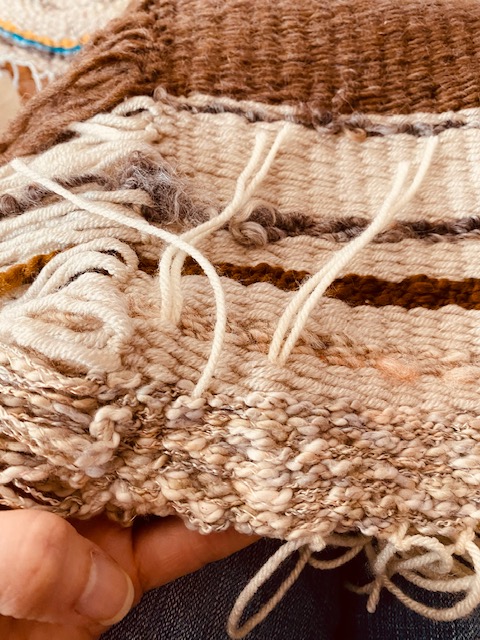
Here’s the warp threads tied off.

IMG_3391

I chose to sew the two tied threads at a time, because they are already tied together as one.

IMG_3393

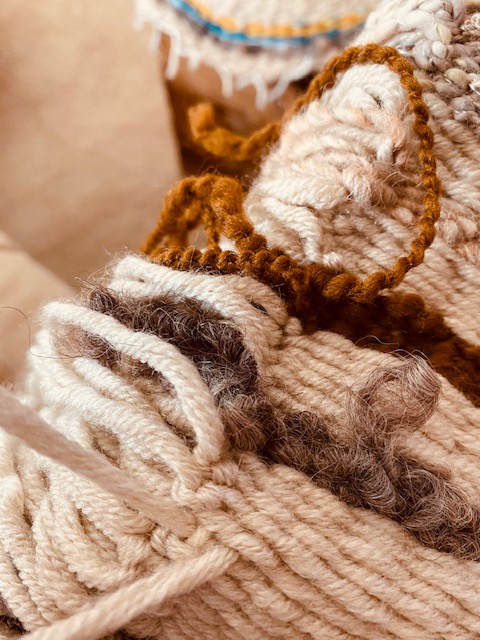
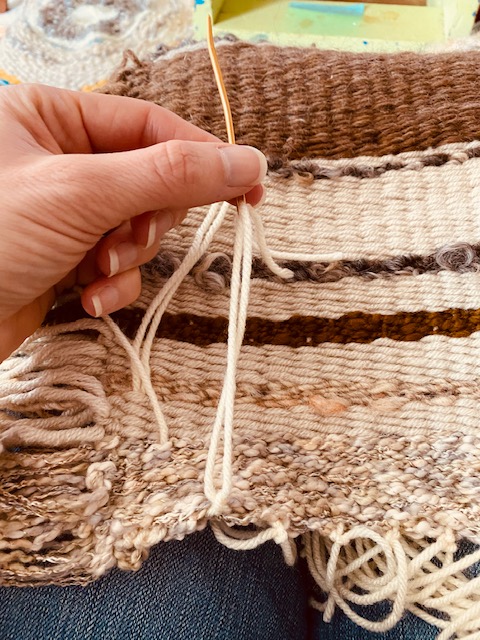
Using your tapestry needle, bring the warp threads back through the weaving, drawing the needle through the column of the woven piece that is right under it. Don’t pull too tight here as you’ll pucker your cloth.

IMG_3395

Flip your piece over to make sure the warp threads are really hidden in the column of weaving. Sometimes they peep through too much and you have to do it again.

IMG_3396

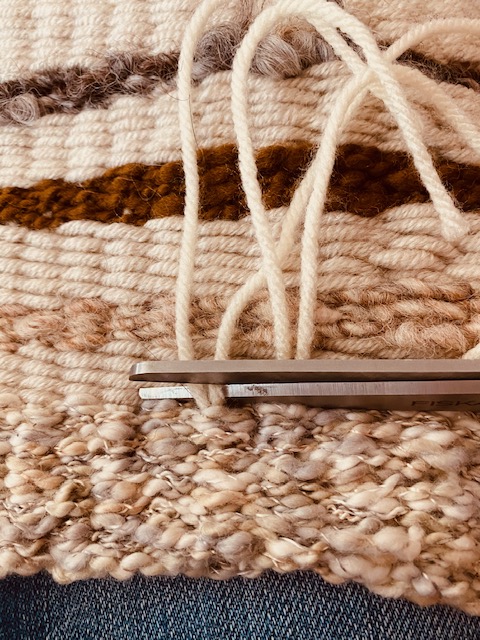
Once you’ve gone through a couple of inches, you can snip the remainder off.

IMG_3399

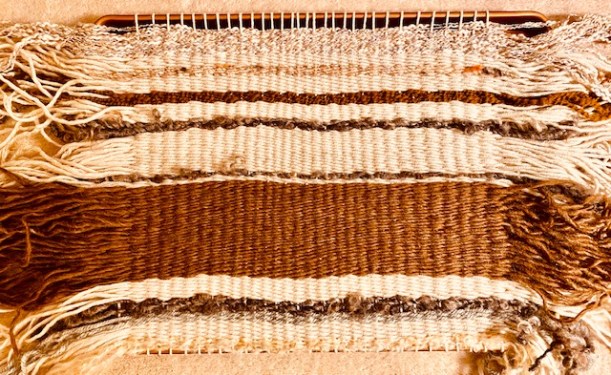
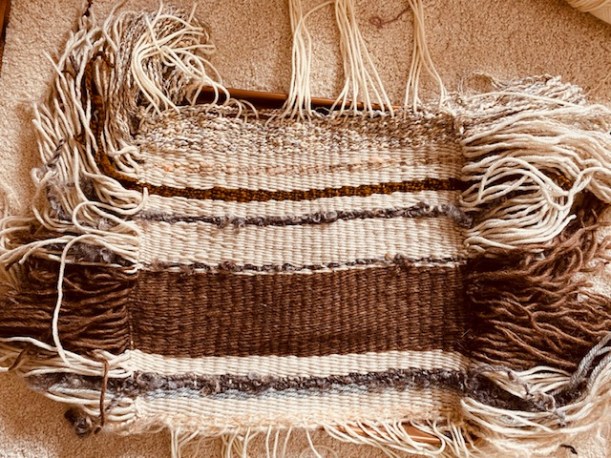
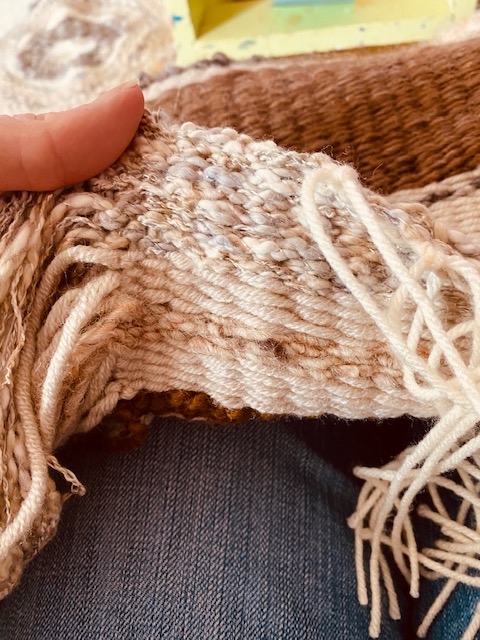
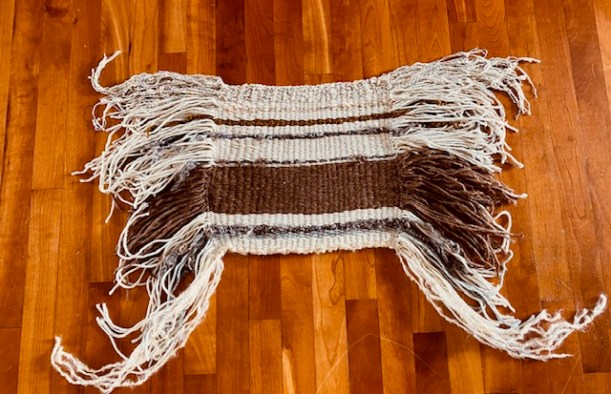
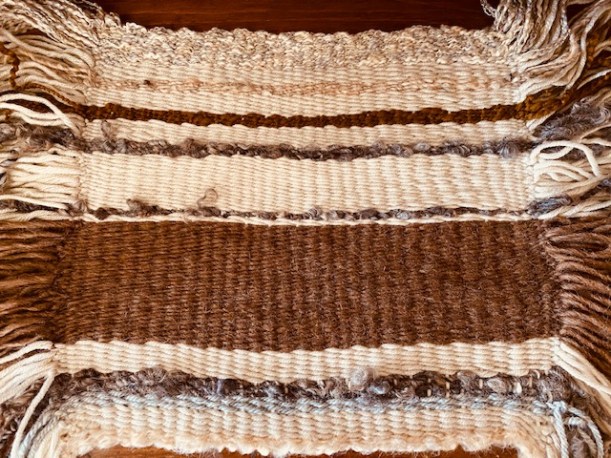
Here you see my piece with the wild fringe and sewn in warp threads. This thing definitely needs a little fringe-cut.

IMG_3401IMG_3400

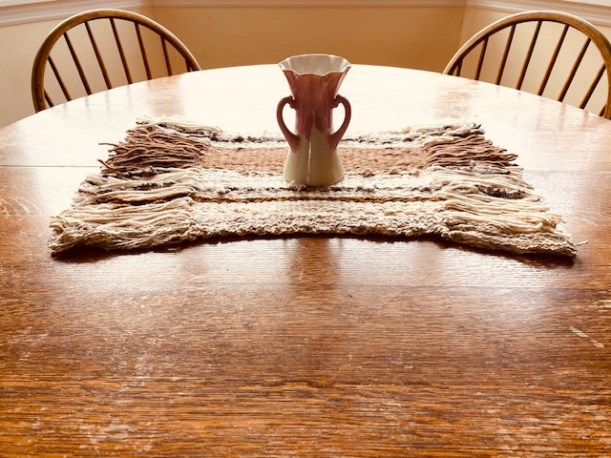
And there we have it! Who knew I needed a new woven table decor piece?!

IMG_3404

Stay tuned for some more fiber art ideas. These will always be great for kids to do, but for sure, these are also fun for folks of all ages. It’s the truth that handcrafting is good for us. It quiets the mind, especially once we get into a good flow. It helps ground us when things feel wild or unpredictable. And, it can give us the chance to see that we can make some really beautiful things.

Take good care,

Bradie


Leave a comment

Beautiful Video to Share

I’m a lucky person, having friends and family who share beautiful things with me when they come across them because they think I’d like them too. That’s a lovely thing that people do. 

My buddy John just introduced me, via Vimeo, to Monica Hofstadter of Doucement. Let this lovely video swirl around you for a while. It captures so much beauty and loveliness and gentleness in the midst of super lush arm knitting set to lilting dream music. What a joy! 

That’s all I got today! I wanted to share this with you, because I thought you’d like it. 


4 Comments

Monday Musings~ Worry Sucks

I definitely spent a lot of time worrying about people I love and places I hold in my heart these last few days as Irma coverage got scarier. I avoid the Weather Channel because damn is it dramatic, and the turbo intense music is insulting. But even reading about the hurricane in my own quiet head made for stress and ineffectual worry. My worry literally did nothing to help people. 

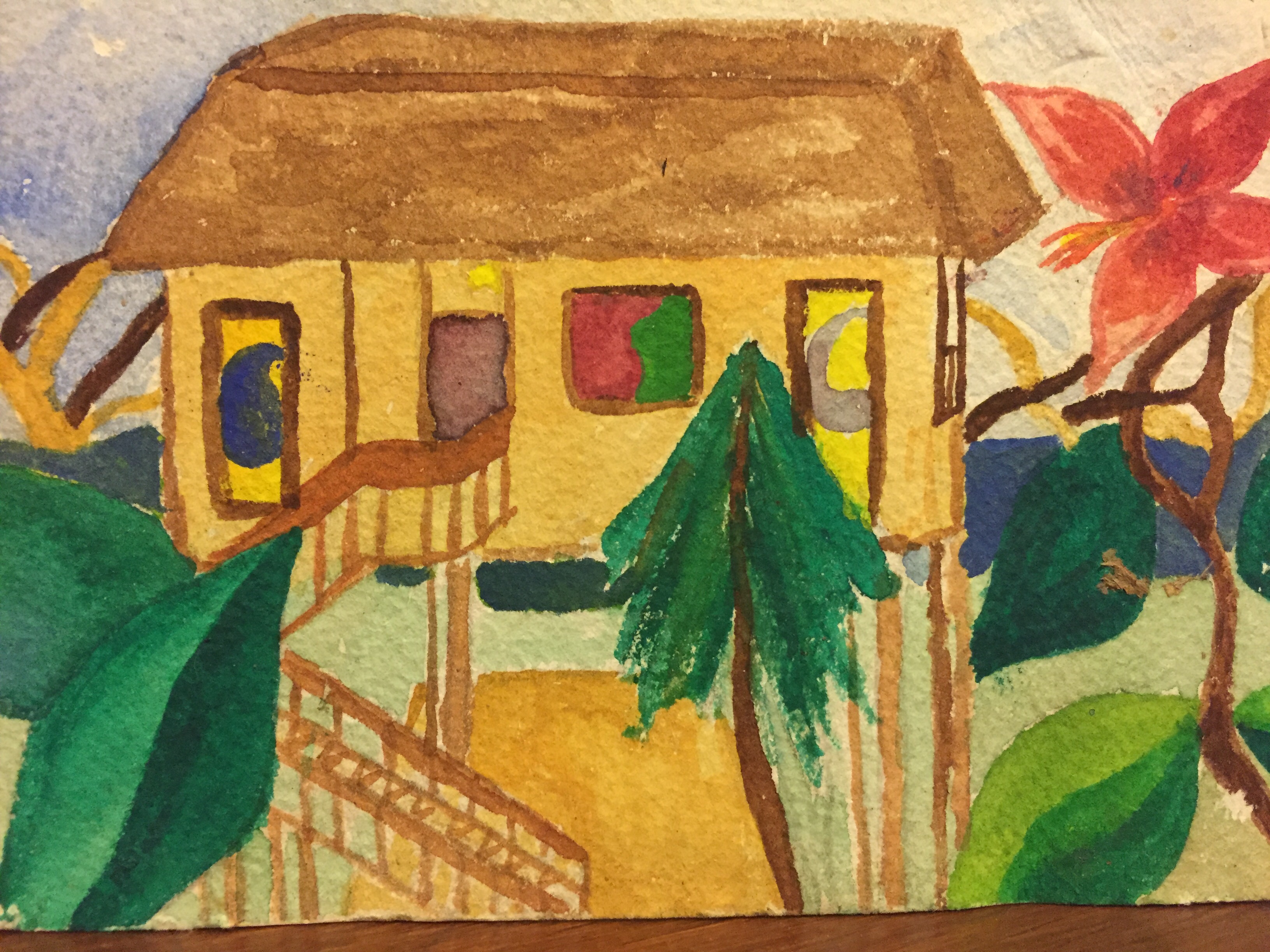
But, I cleaned the hell out of my house and found a painting I did years ago of the house grew up in on Sanibel. I’m not a skilled painter, but I love it. 


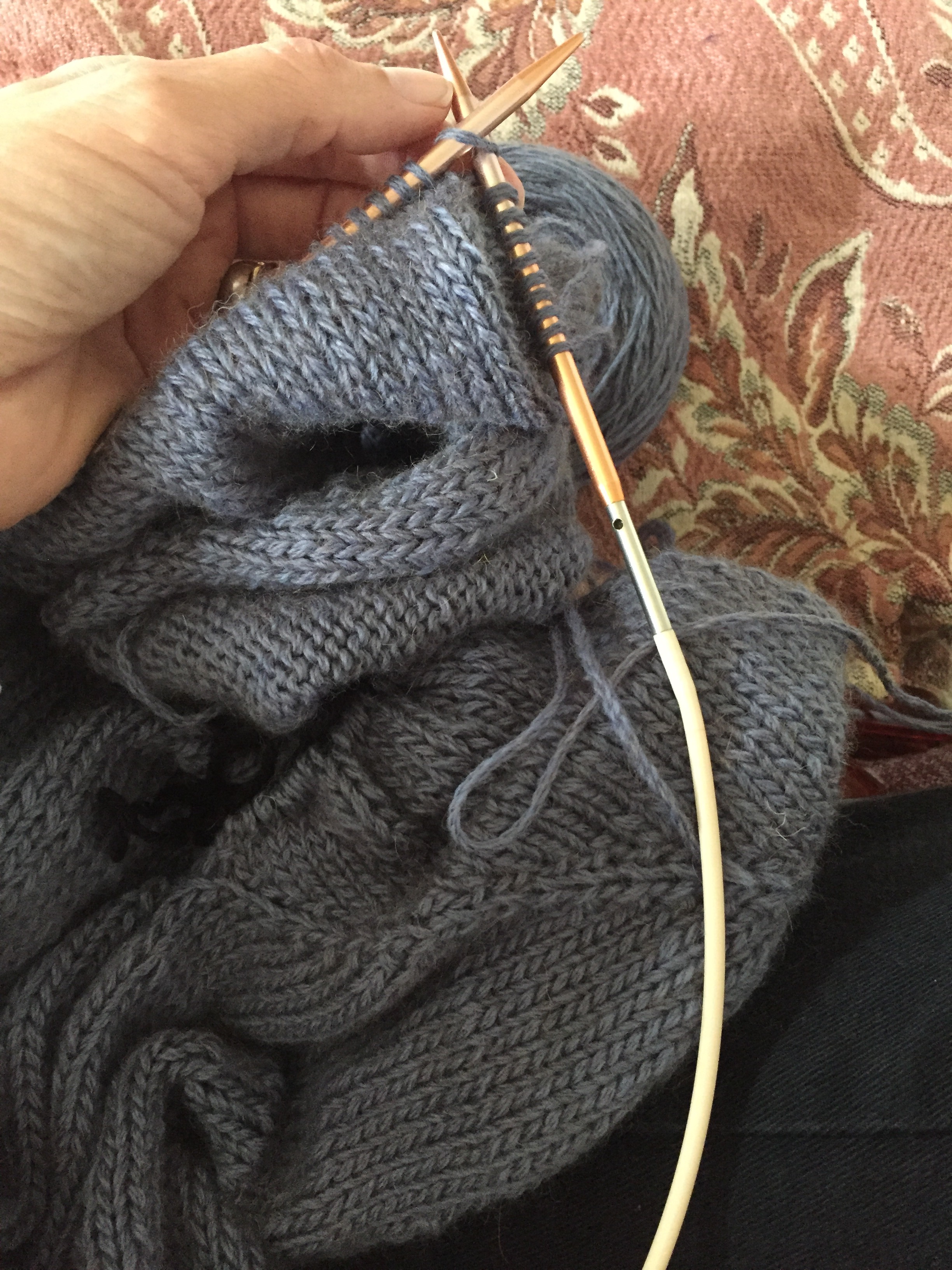
I picked up a sweater I’ve been working on for five months. I even knit a few stitches while watching a terribly stupid movie. I’ve never done that before. A success? 


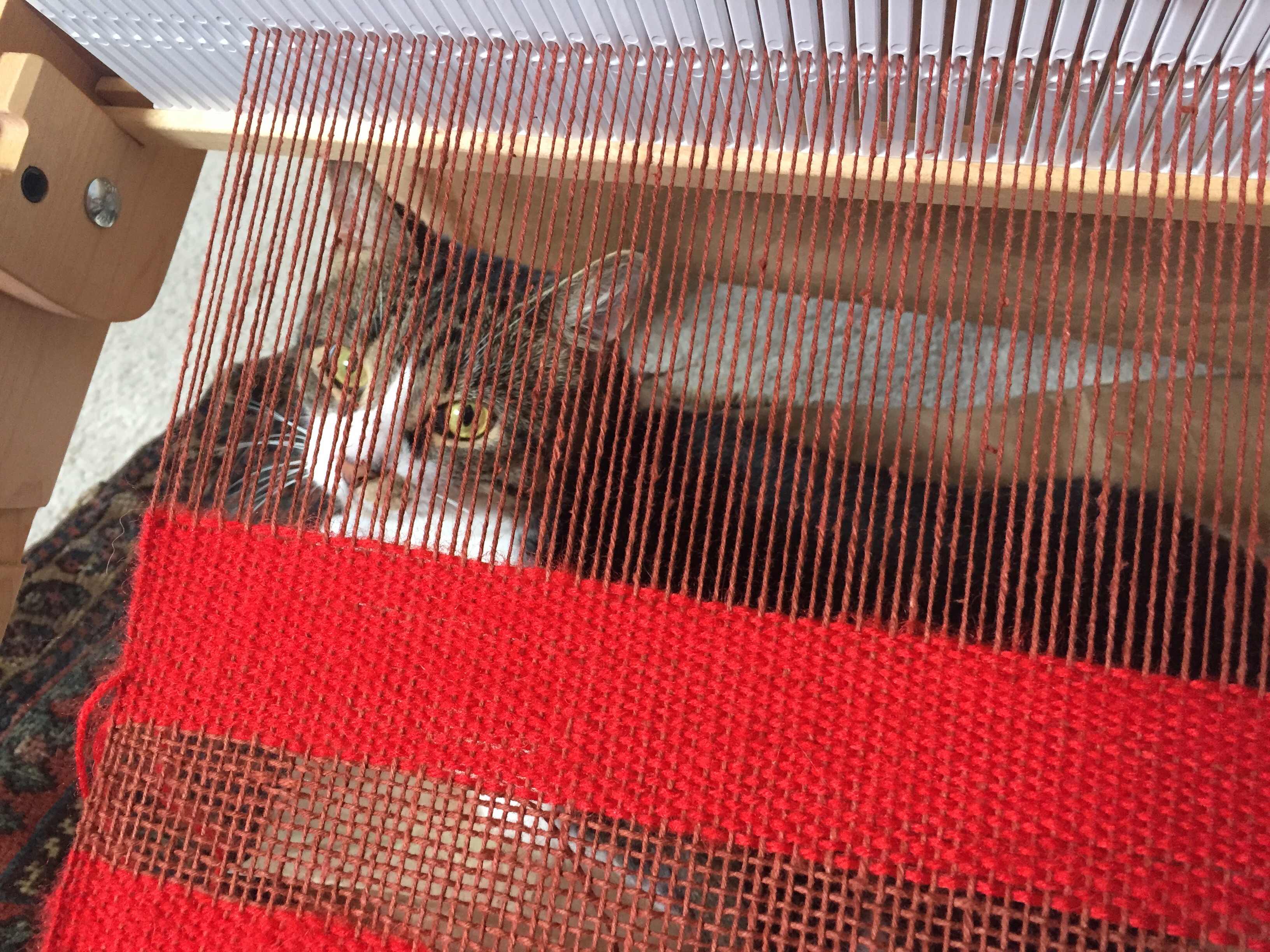
I wove a little with my buddy, Mittens, who is achieving a starring role on this here blog. 


I had some sister time at the lake,


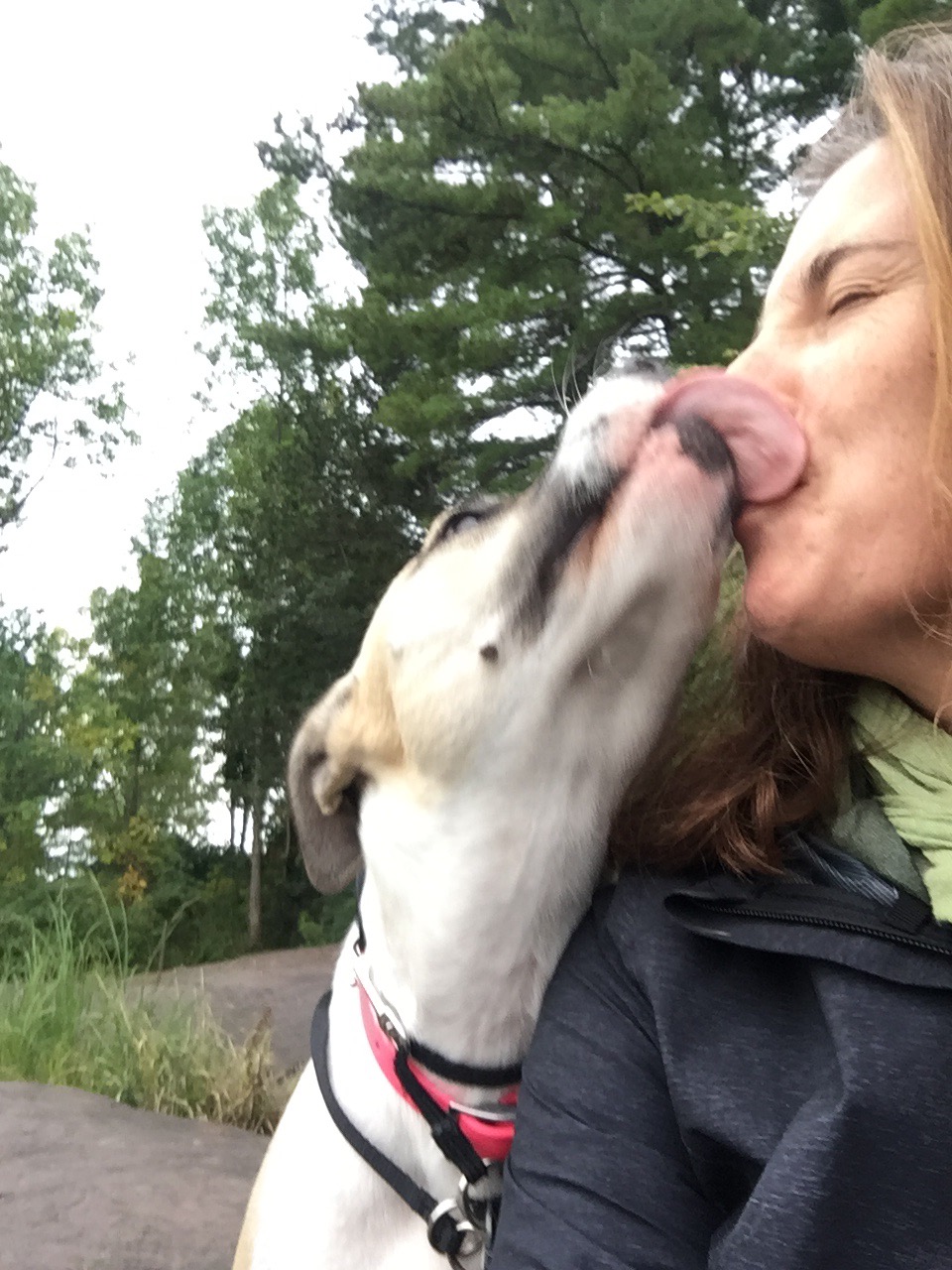
And got some crazy love from my puppy niece. 


I sent a lot of love into the air and realized I need to learn to build a fire from scratch. 

Last week’s goals are this week’s: seriously. Finish the shawl (or maybe table runner?). I’m screwing up enough to make me want to bail on the whole thing but I feel like the little bitty mess ups might not be reflective of the whole thing. Just like a bad day doesn’t mean the whole month is bad. But seriously, my selvages need work. <Palm slapping head>.

I played with my littles a lot after school and truly, sometimes playing just means sitting on the floor and letting them climb all over me so I can tickle them. This will remain a goal. Our days are infinitely better when we heart to heart connect after a long day apart. 

I never did start the hat I have stuck in my head as an idea. I was too worried. 


Leave a comment

Make A Book From Scratch Summer Camp, Recap…

This summer was a time of taking a few risks, including putting my fiber art teaching love out into the universe in a different way. I’ve shared already the camp I offered to do with weaving. You can read about that here. The second camp I offered was all about making a book from scratch. It’s important to me for kids to know and be frequently reminded that they can make stuff, really cool stuff, with found items, recycling and a little ingenuity. Art supplies are expensive, as are art classes, but if you know how to get your hands on materials that are free or inexpensive, you have at your fingertips myriad ways to make art, to be an artists, to add your own beauty to the world. So… I was messing around one day after daydreaming about making a book for collage. My first book was the one pictured below. It’s made with handmade paper, wool that I wet-felted for the cover, a piece of driftwood and cotton thread for stitching together. I’ll show you the camp process, mostly in pictures with a little text, because I think the images speak for themselves. This is the project that inspired the camp.


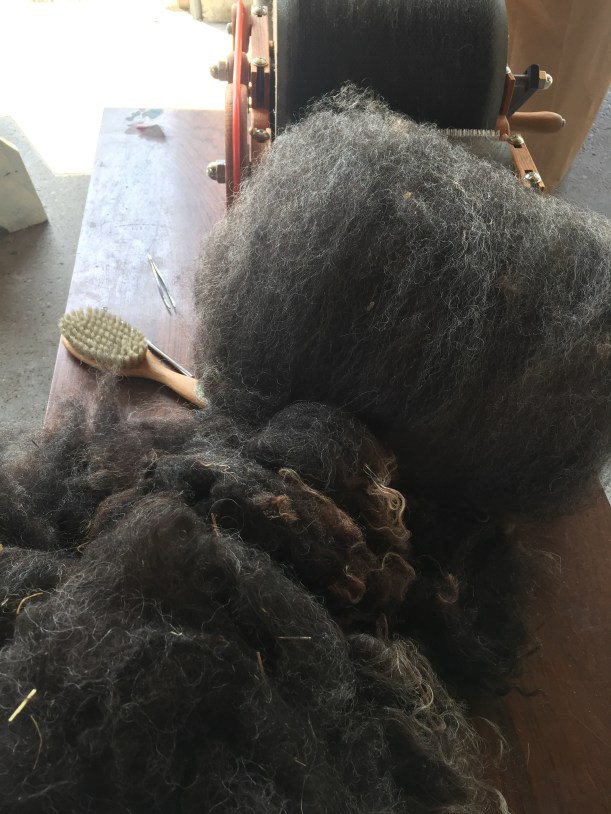
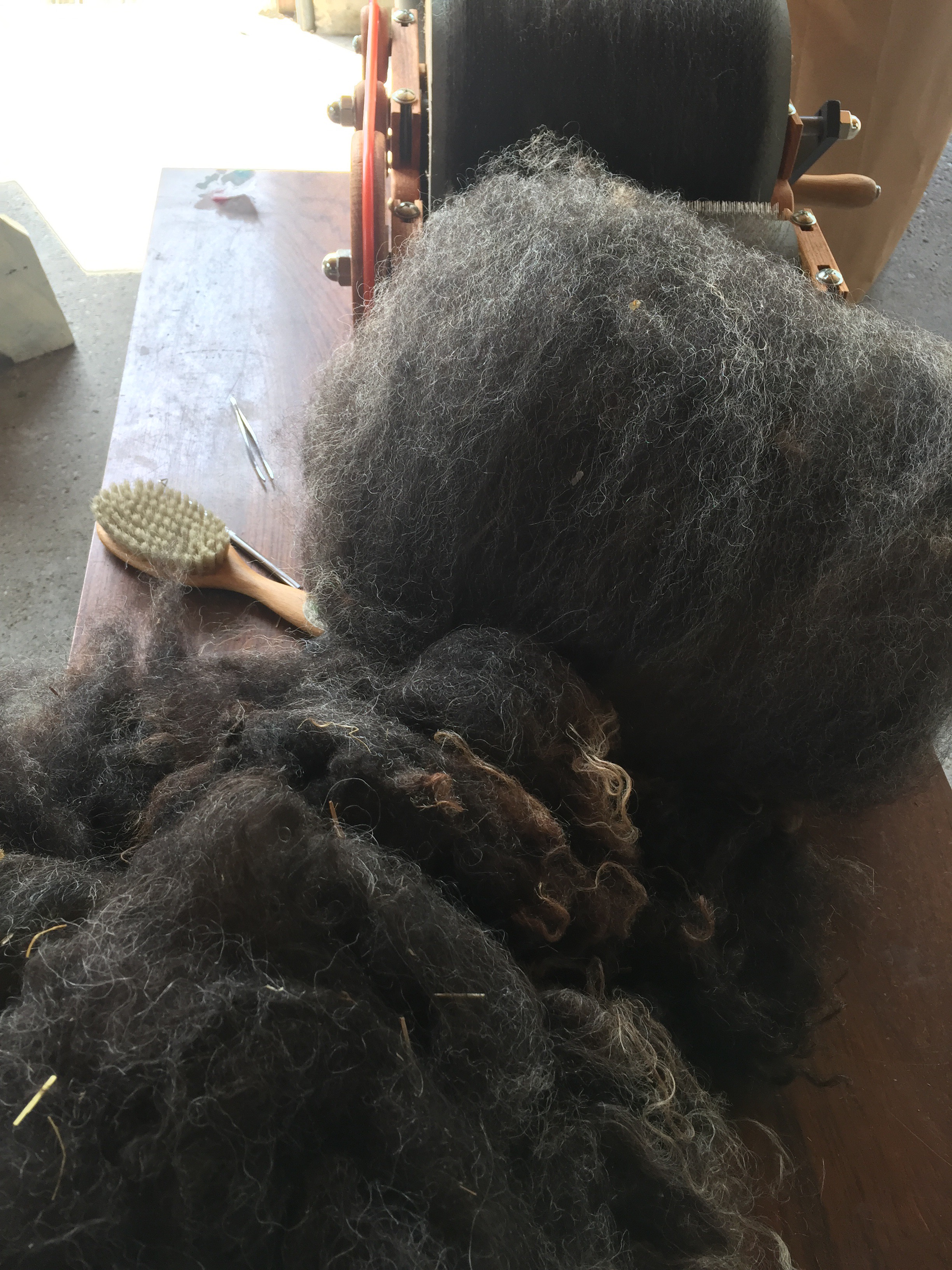
I spent a good deal of time before camp began prepping some materials. Carding Shetland wool…

img_3399

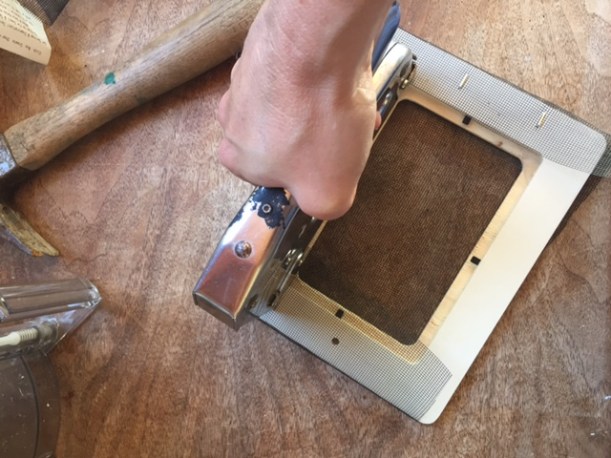
Making frames… a word on that: I found wooden frames at Michael’s craft store for $1 each. These saved the day. I had a number of frames on hand that I found at garage sales but I figured that kids are sometimes interested in making sure everything is even and balanced and fair, so, I decided to ensure that each child had the same size frame.

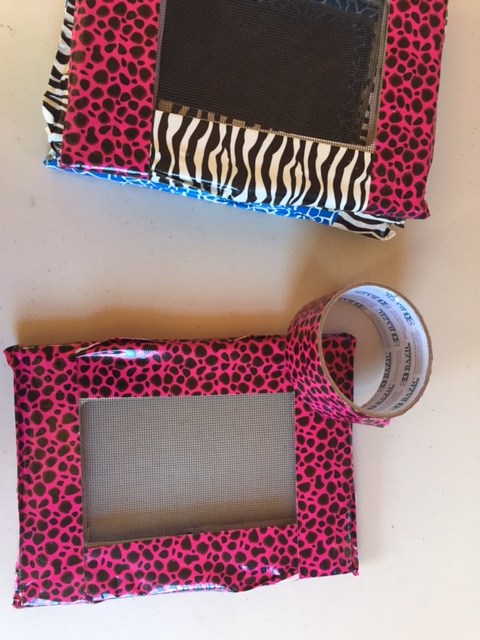
Also, I’ve been trying to find on line the tip I came across for outlining the frames with duct tape. I want to give credit to the blogger that shared that brilliant idea! Doing this makes for much easier removal of the paper once you flip it onto the drying surface. I will always do this now, and if I come across the blogger’s site, I will for sure share it here.

FullSizeRender-15

Here’s me stapling the screen onto the frame. I used my mom’s staple gun, which made me think of her. I feel close to her when I’m crafting or creating. You can read about why this is relevant here.

IMG_3643

While things go better with kids when things are fair, they go even better than better when kids know which thing is theirs. It’s lucky I had this flashy duct tape on hand. No guess work needed!

IMG_3649

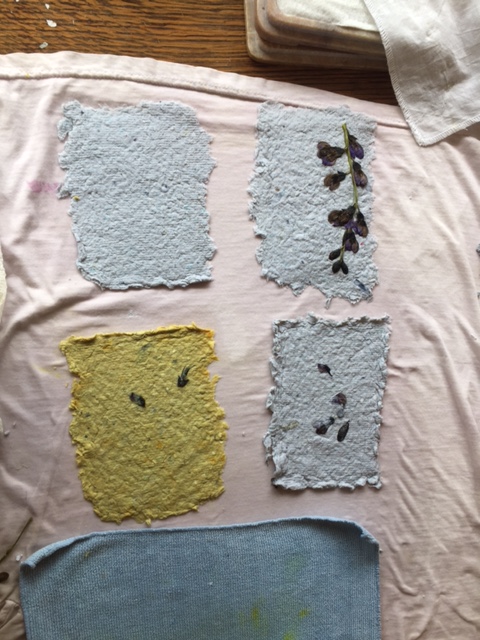
Here’s the thing about paper pulp (made in a cuisinart with recycled paper and water; the paper I put through the shredder first)~ not all kids love touching gooey, smushy, splootchy wet stuff. It’s handy knowing this ahead of time so you can have at your finger tips ideas of what steps kids might enjoy doing in the process, like soaking up the water from the underside of the frame/screen with a sponge, stirring the pulpy concoction, adding flower bits, etc., in the even that full-on hand immersion in paper pulp is out of the question.

IMG_3234

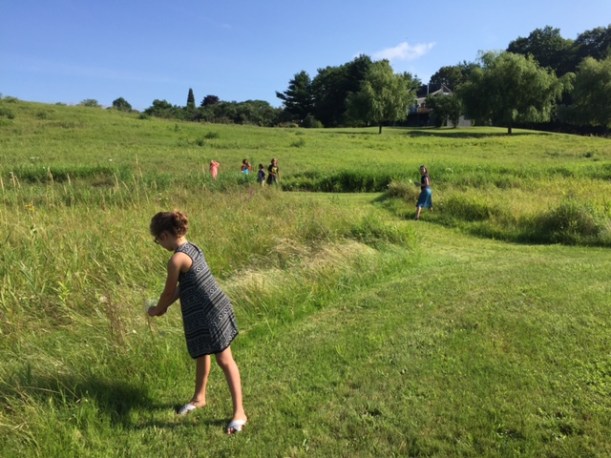
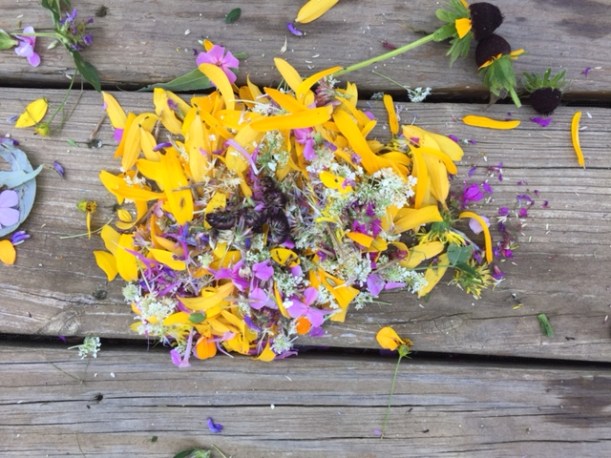
Here’s the kids looking for flowery colorful bits to throw in to our pulp.

IMG_3689

If those colors aren’t inspiring, I don’t know what is.

IMG_3696

I spent a good amount of time experimenting before camp started…

IMG_3240

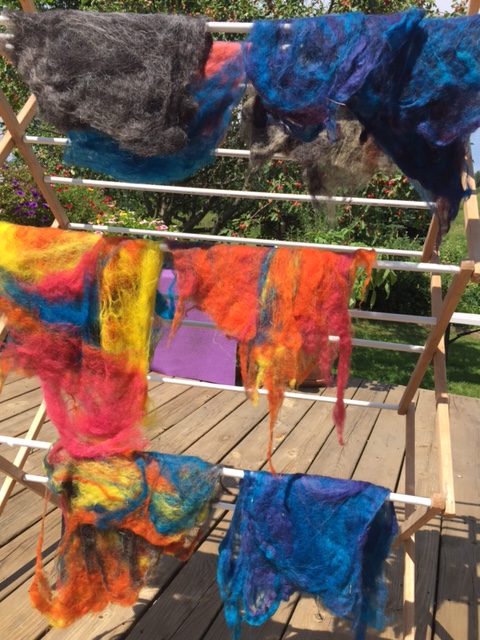
And dyeing wool…

img_3409

Here’s some kids using a drum carder to prepare wool for felting. This camp included chances to do as many jobs as possible in the time we had. I had the kids pick a lot of the grassy bits out of the wool, fluff it open to prepare for carding, and then card it. There were varying opinions on this. I could sit and pick at wool all day and be fine. I love looking at those tasks as a chance to just chill the heck out and be with my thoughts. Not all kids love that, of course, so some felting was a wee bit chunkier than others, and that’s okay!

IMG_3733

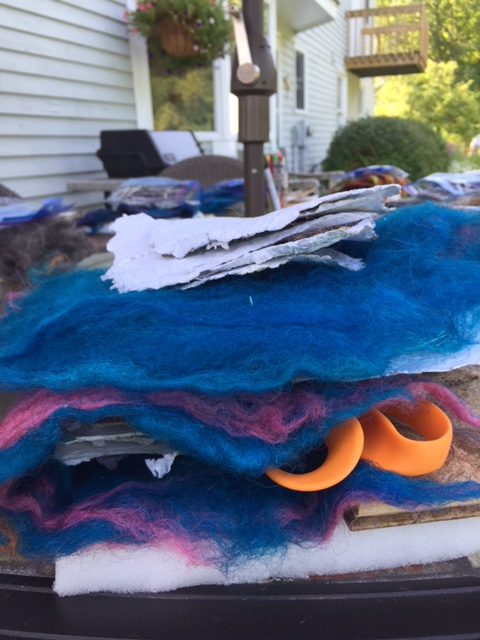
For the wet-felting part, I had the kids arrange the layers of wool they were using to make their book over on a plastic table on top of a sheet of freezer paper. Then, we covered the wool in warm, soapy water, and covered it all again with freezer paper. The paper stayed strong while the kids pressed and rubbed their hands over their wool. Once it was showing signs of felting, they could take off the top layer and use their hands to felt directly. Again, some kids love that textural messy feeling and others don’t. Leaving the freezer paper on for a while longer helped those who preferred keeping their hands free from that specific wet-wool feeling.

IMG_3740

Then, once dried, the kids arranged their books as they wanted them, and had a chance to needle felt a design on to their covers. The night before the last day of camp, I sewed the books together. Originally, I’d hoped the campers would do that part, but we ran out of time.

IMG_3746

I think these books are all so beautiful. Interspersed between their handmade paper, I included sheets of handmade paper from India that is more amenable to writing. I will keep working on my own paper making skills to see if I can get closer to that quality.

FullSizeRender-16

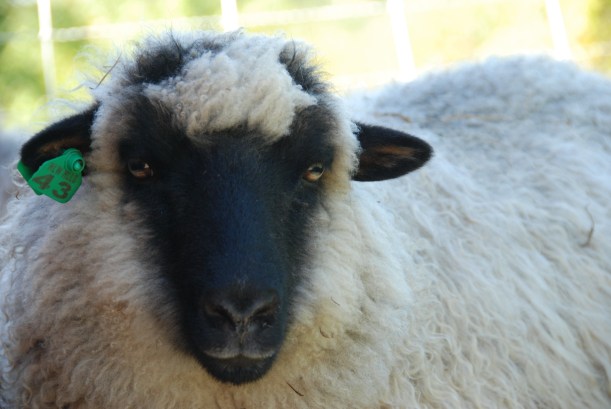
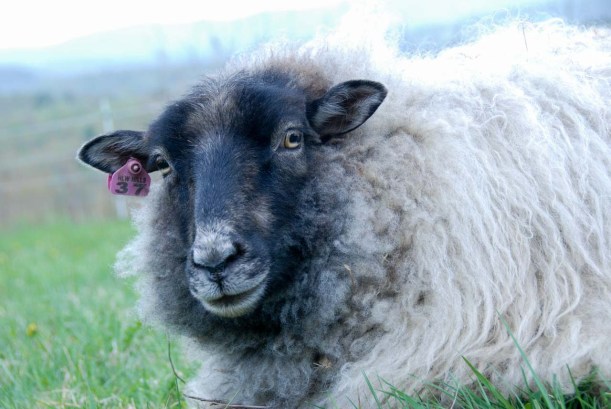
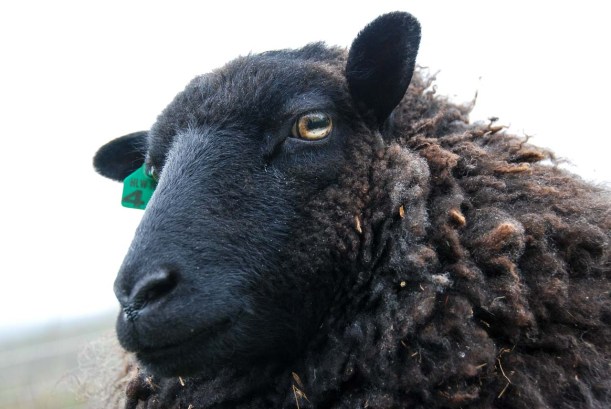
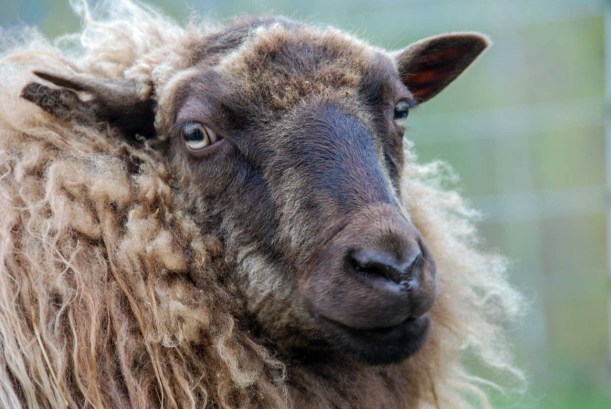
And listen, it’s not right to ignore the behind-the-scenes stars of the show… the sheep! Something I love about being a part of the fiber handcrafting and fiber art community is that I get to meet so many wonderful people. This is the second year that I’ve gotten wool from a wonderful man named Peter Moore, who lovingly cares for his four Shetland sheep. I met Peter because he posted online that he had wool available, and I jumped at the chance. I can say that I would call Peter a friend, now, and I truly don’t know how we would have ever met if not for our mutual love of sheep! Let me introduce his lovely wooly friends:

Meet Dolly…

Sheep_091714_017

And Violet,

Sheep_051516_011

Phoebe,

Sheep_051516_007

And Daisy!

DSC_7424-1

They are all half-sisters and are four years old. Their wool was the centerpiece of this camp (in my opinion), and the kids were champs, learning new skills every day and hopefully leaving with something they were proud of.

DSC_7440

I’m sitting at my desk now, listening to the wind blow around the house. The temperatures are cooling and the birds are busy at the feeder. I am looking forward to the cooling down, the bundling up, the quieting of winter. Summer can be a full-on explosion of activity, work and play. It’s the extroverted season. These camps were a beautiful expression of all of that. I wonder what new things I’ll imagine up as I sit in the dark introverted winter. I guess we’ll see next year!


4 Comments

What Happens When Fibery Handcrafting Takes Over My Life…

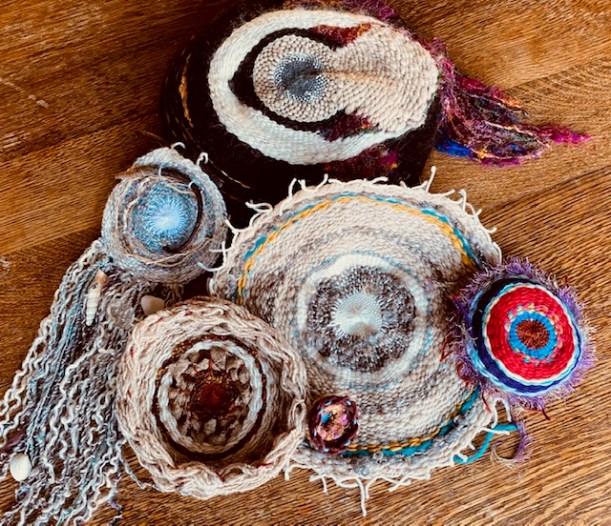
I finished my circular weaving project and what started out as one idea evolved into a moving symbol for me. Wild bird flying into golden fire 🔥. 

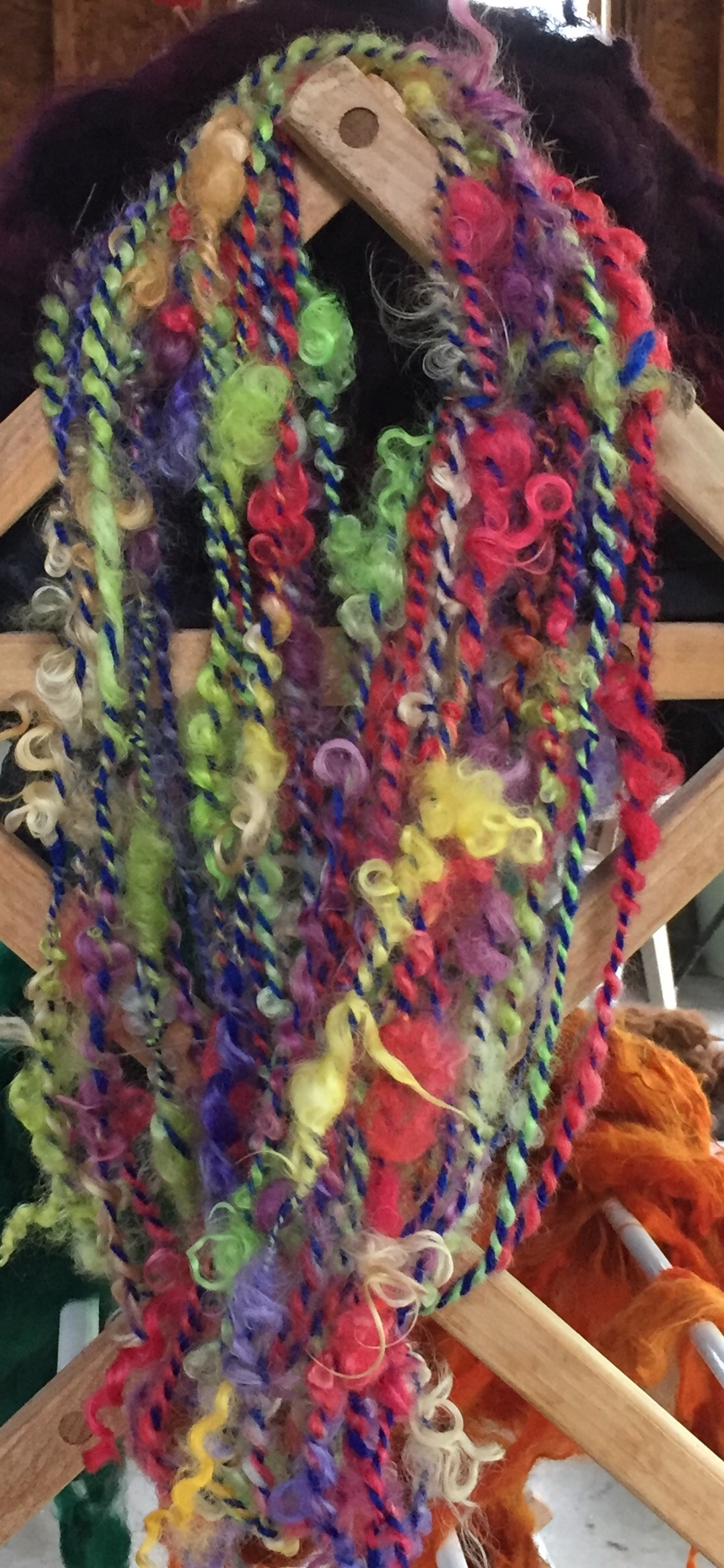
Tour de Fleece spinning mania!!!

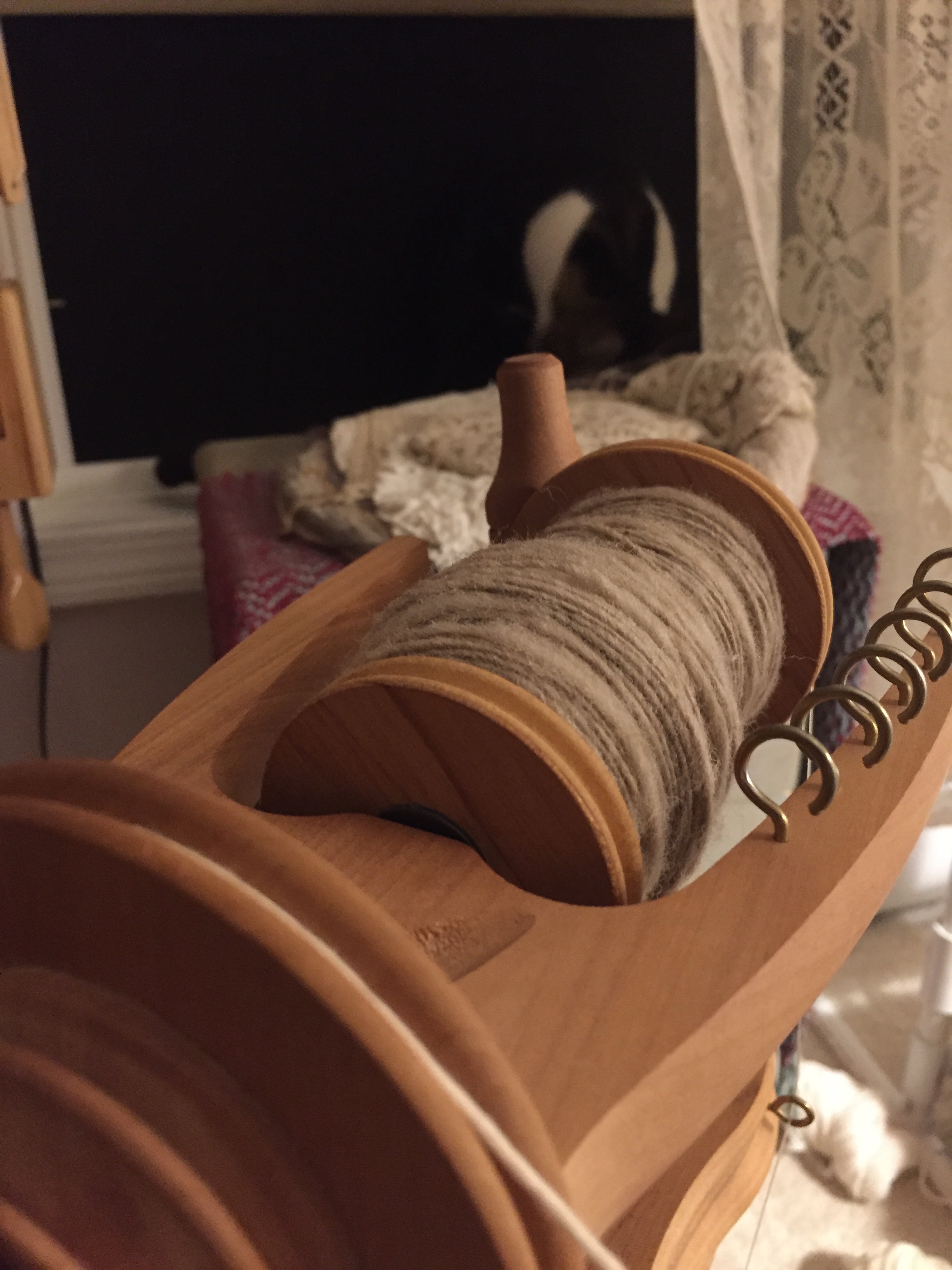
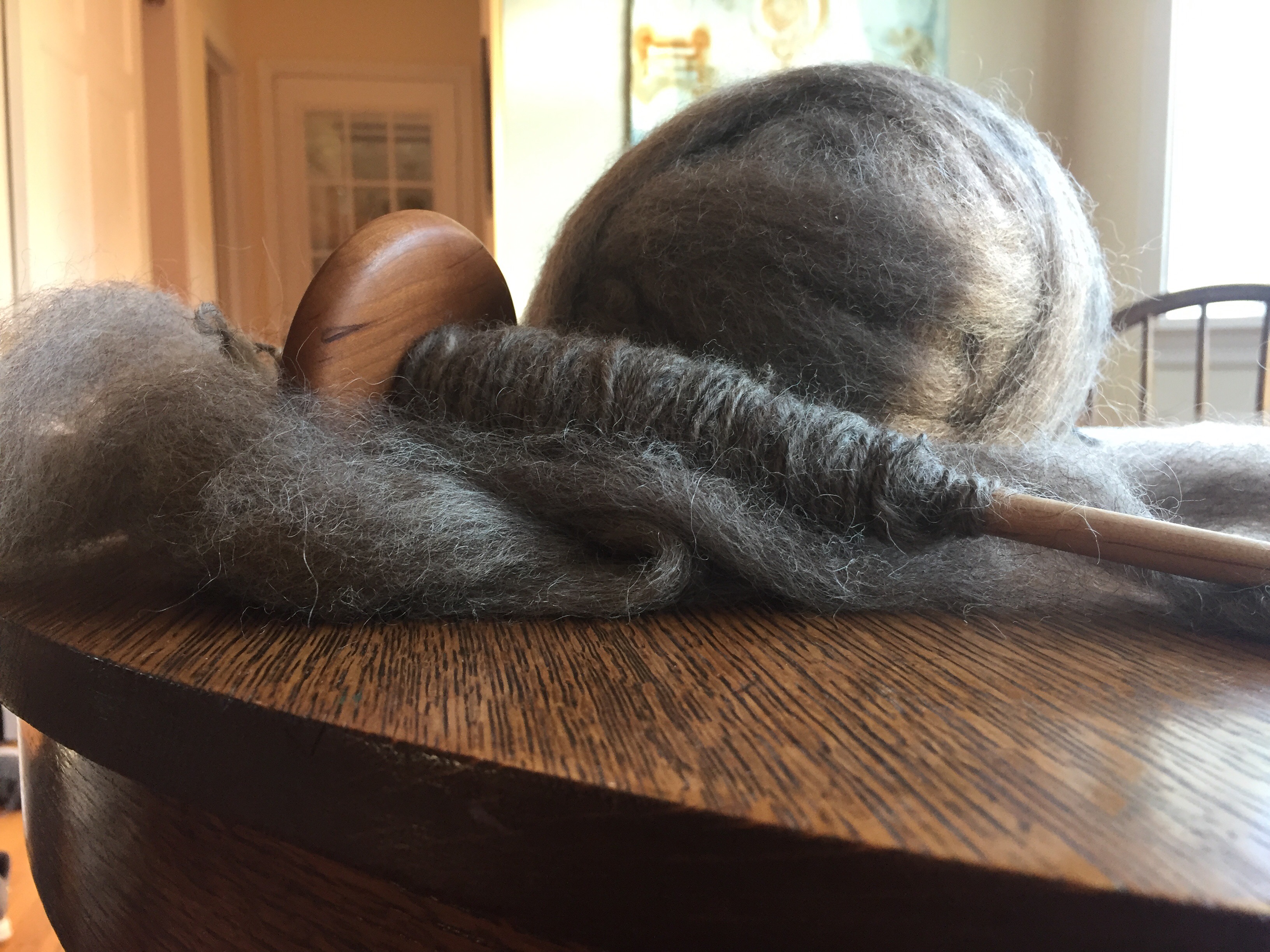
Lots of spindle practicing… it’s slow going. 

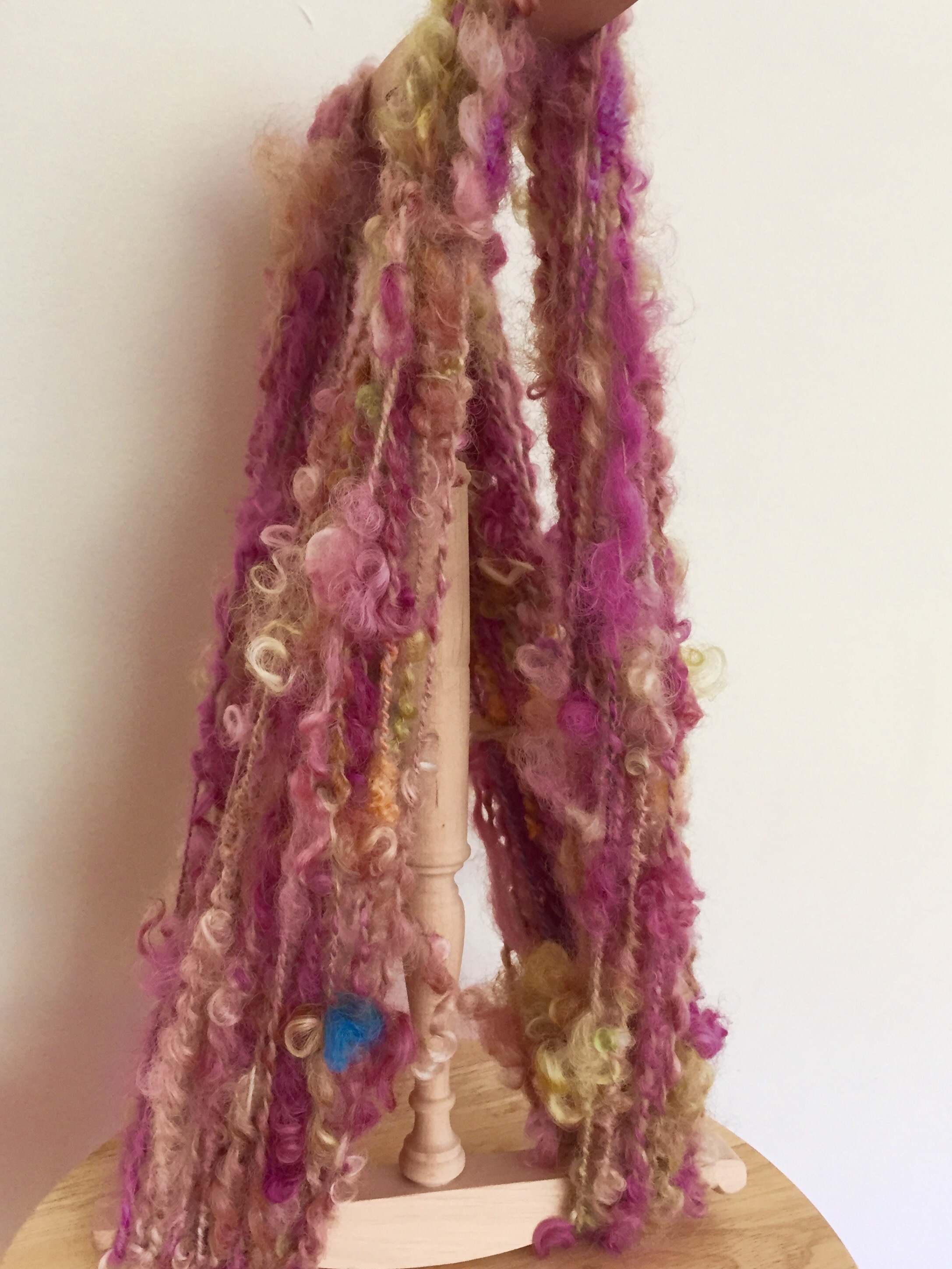
Curly locks bring lots of smiles…

Yummy, yummy yarn…

More practice…

Fireworks magic for balance…

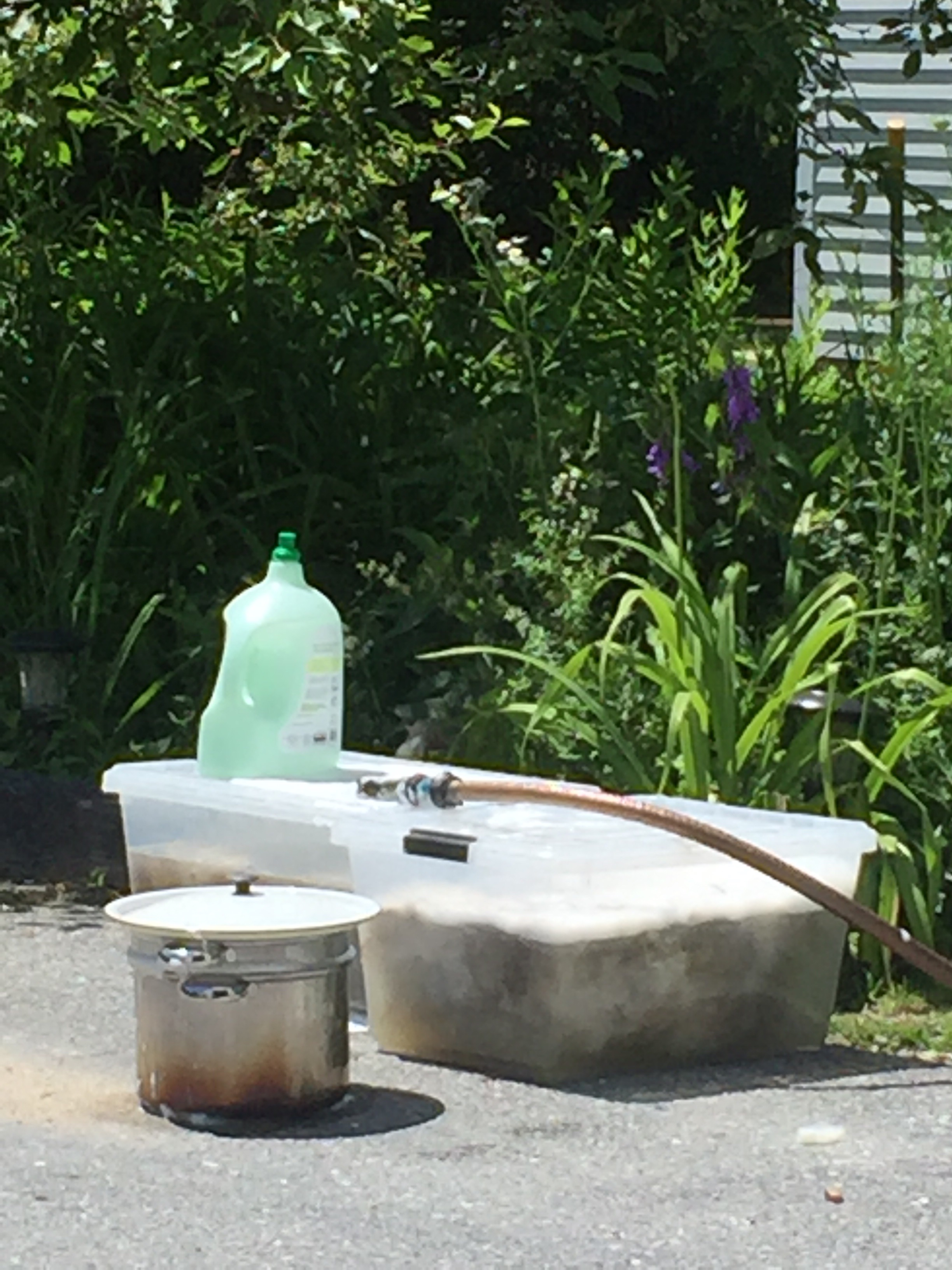
Lots of Shetland wool washing…

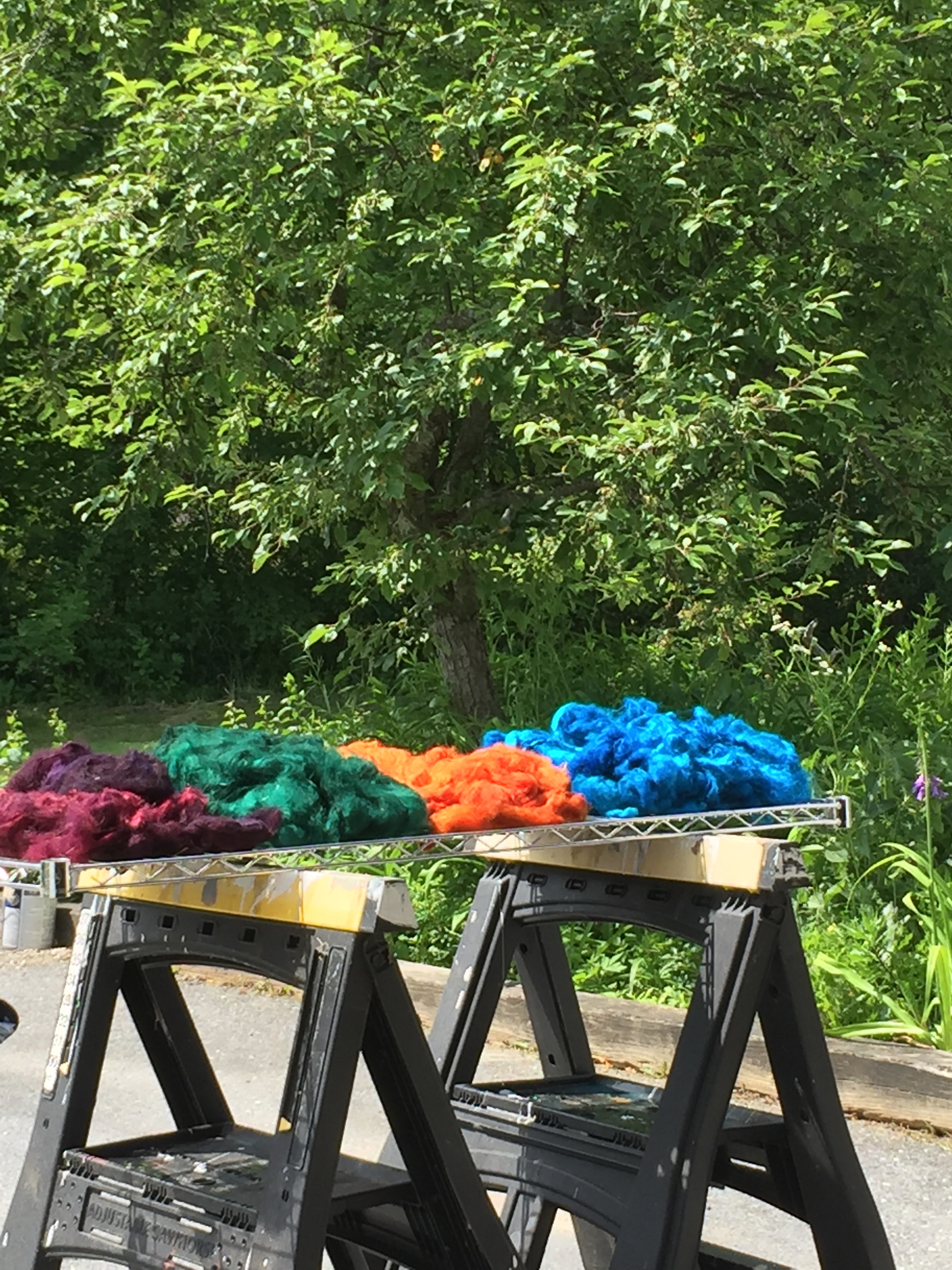
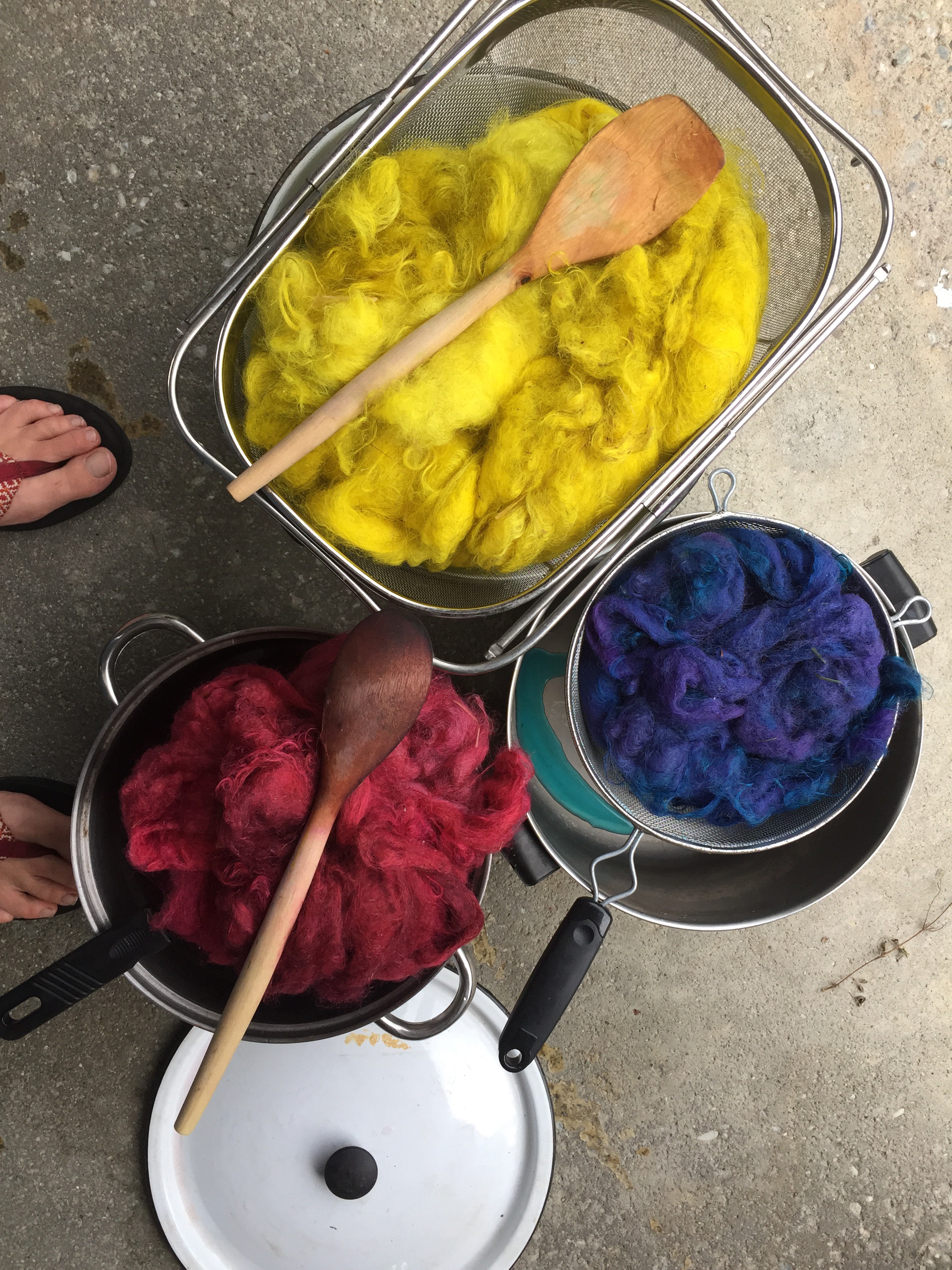
Lots of Shetland wool dyeing…

With some gorgeous alpaca…

And some Shetland carding while the dye pots do their thing…

Adding color to the fantasy basket…

And more spinning…

And dyeing…

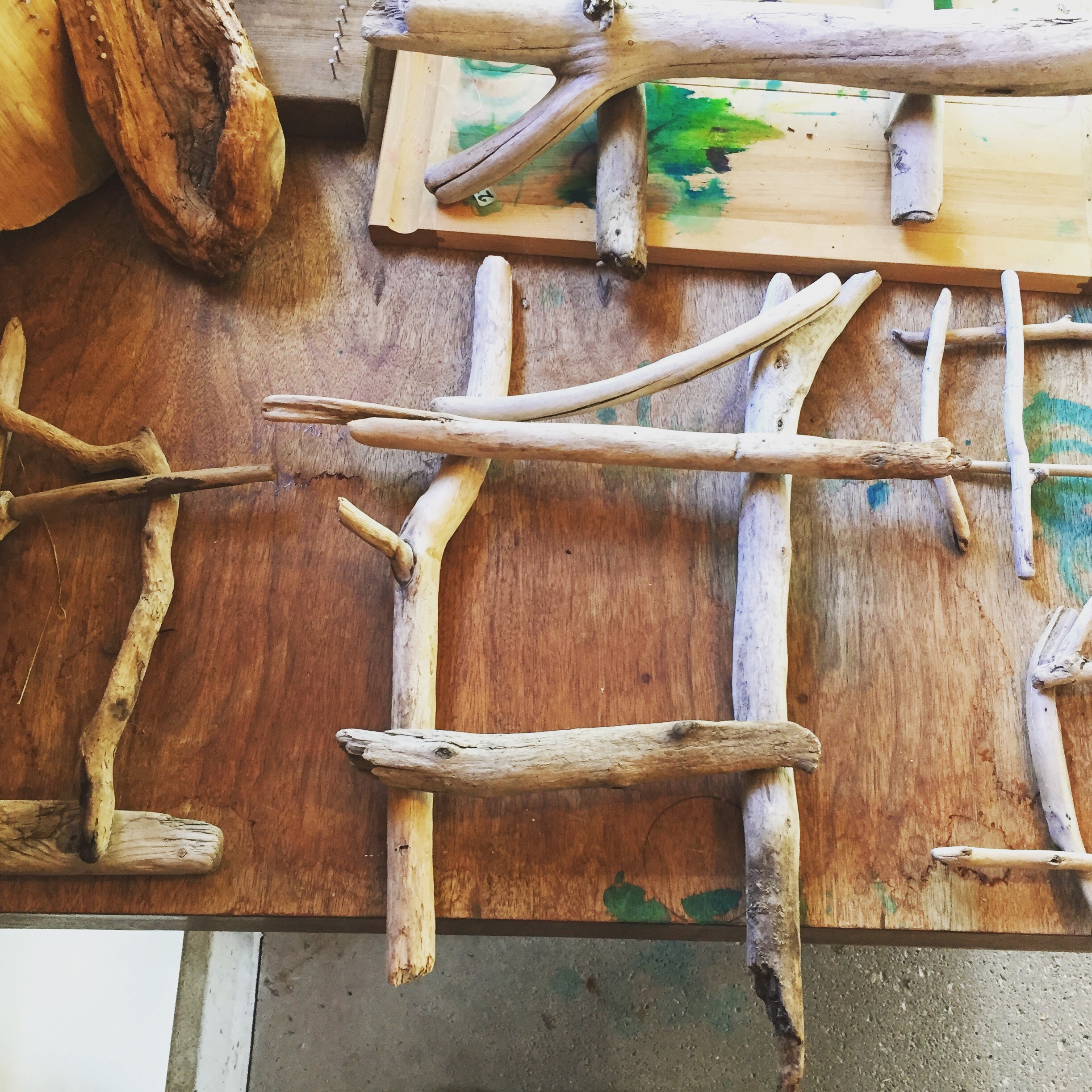
And loom making for a weaving summer camp I’m hosting in a week… (yay!)

And, repeat…

Summer is my favorite time. ❤️


Leave a comment

School and Yarn are a Perfect Pairing

My life is organized by school years. I’ve not really had much time in my life when that was not the case. I completed my own schooling when I was twenty-five. Then I worked in schools for six or seven years (I already can’t remember that detail), and then I worked for years with kids in my practice who were in school. Now my own children’s school schedules shape our family’s life. The calendar year means very little to me except for a quiet chance for me to reboot and rethink where I place my energies. The school year, on the other hand, shapes most aspects of our lives.

I spent a lot of time in my kids’ school this year. I volunteered in their classrooms teaching the kids all different kinds of things to do with wool, yarn and other fibery crafts. I also taught the same things in a more official capacity in two other classes. I loved it and I plan to share more here about some of the lessons that I taught. One thing I did in both my kids’ classes was leave a loom set up, the simple kind, for kids to work on as they pleased, with the idea that at the end of the year (or whenever it was finished), I’d turn it into something to decorate their teachers’ rooms with. Yesterday, I finished both of these woven pieces. My son’s 3rd grade classroom filled their loom. Almost every time I went in, someone was working on it.

Here’s their finished piece:

FullSizeRender-3

My daughter’s 1st grade class didn’t do many rows on theirs, but I assured their teacher I could make wall-art with it, not to worry. That class also did epically cool stuff with wool they dyed with Kool Aid, wool they felted and wool they experimented with.

Here’s their wool decor:

FullSizeRender-1

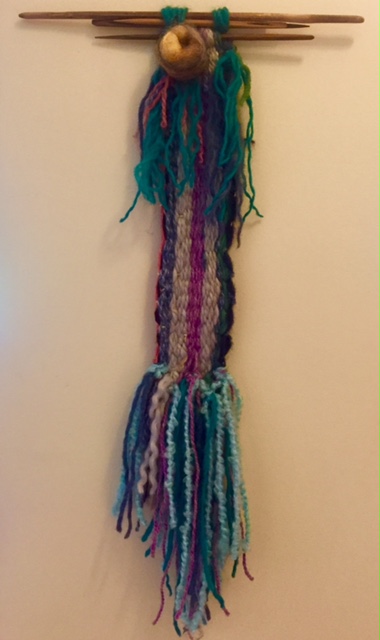
And, here’s their finished woven wall hanging:

FullSizeRender-2

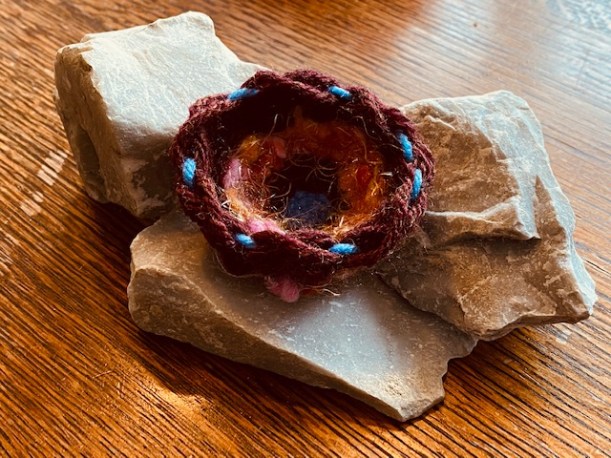
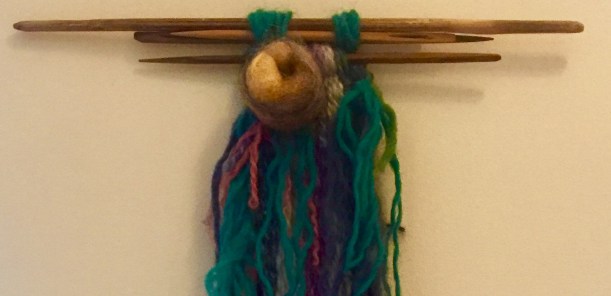
I used antique wooden needles and a sanded dowel to serve as the structure from which the weaving hung. I also had a needle felted little nest hanging around that I opted to attach to the piece. I made that in their class as a demonstration one day and wanted to include it to represent that part of the work they did.

FullSizeRender

As I worked on turning the woven pieces into wall-art yesterday, I thought about all that has transpired since September, for my children, for me and my husband, for our family as a whole. It’s so much life squeezed into all of these academic months. I reflected on how much my kids learned with their fabulous teachers and with their peers this year, how much more they are doing on their own compared to September, and how much some of our growing pains have been, well, painful. I thought about how lucky I am to have been able to hang out in their classes so many times this year and be given the chance to learn how to teach better, listen better and be more flexible. And, I thought about how much I want to keep doing this. Handcrafting and fiber art are extremely effective mediums for teaching kids about art, history, creativity and themselves. I hope I do this for a long time.

Fueled by that hope, I cleaned off my work desk, and daydreamed about summer break.

FullSizeRender-4


Leave a comment

Farm to Frame Felting Fun with First Grade Friends

I am so very lucky to have standing dates on Fridays when I teach kids how to do things with wool and with yarn. These Fridays are now known as “Fiber Fridays”, and have become a part of my life I am extremely grateful for and proud of. I think about it a lot, why I want to do this stuff with kids. First of all, I have two kids of my own and I relish any chance I get to participate in things in their classrooms. I get to meet their friends, know their teachers and just be part of their school world for a small time, which is amazing. I never leave without internally bowing to teachers, para-professionals, one-on-one specialists, reading specialists, special educators. They make the world go round, in my book. Their love and dedication to the field, and the skills they have, just blows me away.

Okay, so yes, I love being in my kids’ classes. I also love going into other classes and meeting even more kids and answering questions and getting excited about new stuff. It’s just fun and a beautiful complement to my work as a psychologist. I’m not being a psychologist in any formal sense of the word when I am in with children on Fiber Fridays. However, I am sharing something that I truly believe is deeply healing to the human spirit, and is a restorative practice. Handwork/fiber craft tie humans together in a most fundamentally ancient and organic way, and exposing kids to as many ways as I know how to work with fiber has become a prized part of my career.

In one of my first grade classes (the one my daughter is in), we’ve been exploring wool. We started with real free flowing exploration. I brought in big wool batts, smaller mounds of wool in a variety of colors, some fabric, some yarn, and a needle felting tool for just me to use, just in case some quick stick-togetherness was needed. I showed the class first different ways we can play with wool. I pulled it apart, I twisted it, I formed it into shapes and wrapped them in fabric and tied yarn around it. I encouraged them to just play and sculpt and imagine, and I let them know that there were no specific things they had to make at the end. Each table got its own basket of a big assortment of wool and then, it was off to the races! I was actually amazed, and I learned so much that day of free wool play. Children made babies, cradles, nests, birds, balls, clouds, old ladies, and animals. They played and laughed and shared. For some reason I was really worried that they’d be confused or adrift without a specific goal in mind, but I was wrong! They were happy to just go for it! I was lucky to have plenty of help from the teachers and a parent volunteer with cutting fabric, wrapping, needle felting and tying. It was peaceful and joyful. I do believe working with wool is magical.

Two weeks later in the same class, I referred back to our previous experience, and said, “this time, we are going to experiment with wool mixed with soap and water!”. Our project was to make felted balls. Before we began, I first showed them balls I made at home. I also showed them my “oops” items… a disc that was supposed to be a ball… a nest that was supposed to be a ball… a weird creasy ball that was supposed to be smooth. You know, it’s kind of hard, at least for me, to get a wad of wool to felt into a perfectly smooth felted ball with just warm, soapy water and your hands. I don’t know how Martha Stewart does it!

I then quickly showed them this book:

oops

And we talked about having one idea in your head when you go to make something and how sometimes it doesn’t turn out like that. I told the kids that we are learning, experimenting, having fun and seeing what comes out of our efforts.

On the floor I had set up a drop cloth with towels covering it. On that were six plastic mixing bowls, two with soapy water and four with clear water that had to keep being replaced as kids dipped their creations into them to rinse the soap.

Water + Wool + Soap + Being Okay with Oops = Felting

Balls were made. Some were smooth. Some were crinkly and seamy. We got a mushroom, some discs and some wild looking blobby alien life form planets, or maybe coral? I saw a bunch of children totally okay with experimenting and just seeing what happened and I think that right there is a major piece of wisdom gleaned from mindful handwork.

Freedom to experiment and see what happens, within one’s own heart and spirit, is such a beautiful thing, and it’s something that I think we all should tend to as often as we can. I am often guilty of hanging on so tightly to what my plan is that I forget to see what’s actually happening right in front of me. I forget to loosen my belly and breathe and just let things be as they are. It’s so easy to forget that.

You know what else blows kids’ minds about wool and felting? With some simple ingredients and some agitation, soft and fluffy wool is transformed into felt and it is impossible to return it to its original form. I can’t explain why something so obvious is so mystical and amazing to kids, but it is, and I need to meditate on the symbol.

Stay tuned. I’ll be sharing more projects and ideas and insights from this cool gig I have.


1 Comment

Recovering, Crafting & Learning Post-Election

Hello to you. It’s been a while. Given that my blog is about the healing benefits of handcrafting with a little bit of elbow room to talk about other things, I made a choice not to write every day about how I’m metabolizing the election outcome in this here United States of America. But to be frank, it’s all I’ve been thinking about. My Slow-Stitch journey has taken a pause and will resume soon (I apologize to any who might be following that and stitching along). I really found it hard for a bit to do anything that was remotely and technically enjoyable because I could not emerge from my own dismay. Things that have helped: attending a peace rally, going to a lecture addressing white privilege and US history, talking with people about their ideas and reactions, many similar, many not, and making a clear decision to be vigilant, to listen and do my best to be an active participant in my community. Joining fellow knitters and crocheters in our local group that contributes items to Knitting4Peace has also proven yet again to be a refuge and a joy~ making things with people for people all over the world is soul medicine. And, walking around outside.

I received an invitation a few days ago to participate in a local Holiday Pop-Up for area vendors and decided to do it. This is also taking some attention away from my Slow Stitch work, but it’s a good and important process for me, to get back involved with making things that I love with wool and yarn. It’s allowing me some room to let myself have fun and just enjoy being random, with a goal in mind, which I need sometimes. I’ve been spinning yarn, weaving and crocheting here and there as I can. My kitchen table is covered with my ongoing projects, my kids are excited to felt rocks and make things too, and it’s just plain feeling good.

Supermoon, bird’s nest and what I think to be coyote scat.

img_1020

Can I hide in there, too?

Some ongoing projects and yarny explorations.

Have a sweet week. I hope it includes doing what brings you calm and peace.


A Stitch-Along In The Making…

I am very excited to share that Melinda, of the beautiful blog called Knit Potion, is collaborating with me on a stitch along. We are using the book called Slow Stitch: Mindful and contemplative textile art, by Claire Wellesley-Smith as our guide.

fullsizerender-117

If you have not already, you ought to check out this gorgeous and inspiring book. The writing, the photographs and the suggested exercises make it seem possible for even a brand new hand-stitcher like myself to dive in and explore and play.  It’s funny…I feel like I afford myself a fair amount of space to mess around with yarn and wool and all of that. I definitely don’t need things to be perfect or measured just so. I aim to address that so that I can make a sweater I’ve had my eye on. But really, precision makes me nervous. Always has. Sewing and hand-stitching have been, in my imagination, things only really precise people do. Making clothing and hemming and all of that has felt so far away from where my skills lie. The stitch along, for me, will serve as a way to bridge skill and technique with experimentation and play. I’m looking forward to that challenge.

I’m also a crafter without a project at the moment. I have loads of yarn, loads of wool, way too many ideas and scattered thoughts. I need to reign it in. The loose and unorganized energy, it’s become uncomfortable. I need a place to put it, and I need to have that place be one that invites new learning, growth and freedom, but also discipline.

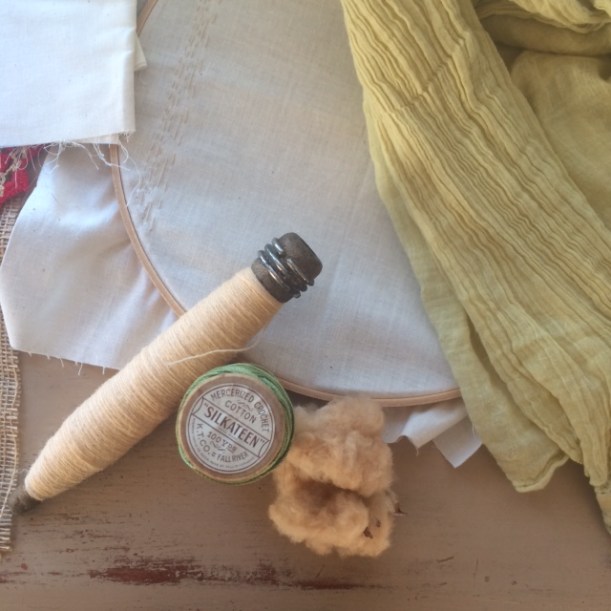
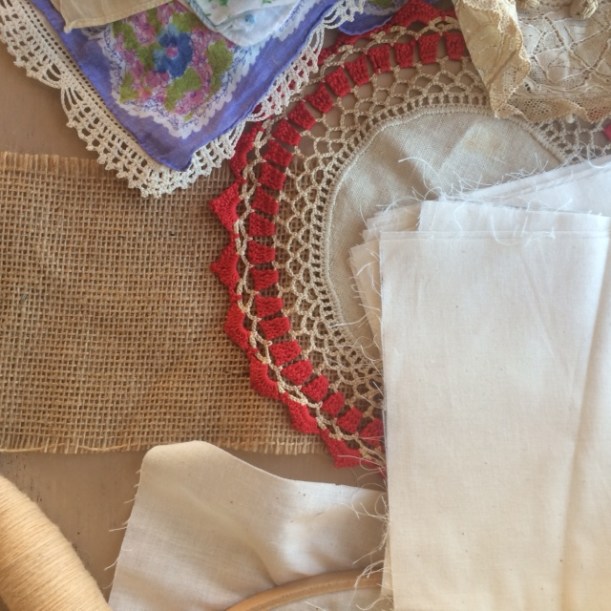
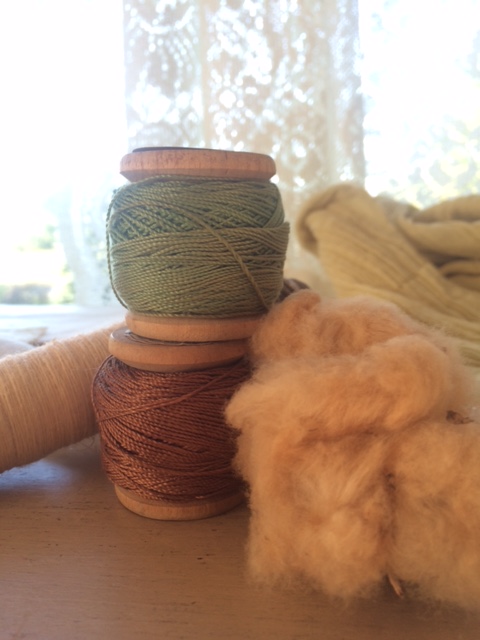
So, this is the first week of our Slow Stitch stitch-along. The task is to start collecting materials. Fabrics, threads, needles, loose bits, maybe some dyes… It is the time to turn the gaze towards the project and set the intention, or intentions, that revolve around the practice of hand-stitching. I’ve gathered many items over time and am looking forward to using them is whatever way makes sense on a given day.

Linen fabric scraps, antique handkerchiefs, a lace collar…

fullsizerender-123

A favorite cotton shirt that may have just lived its last summer as a worn item, an antique bobbin filled with woolen thread, antique cotton thread, the beginning of a hand-stitching attempt using the running stitch, and a fluff of raw cotton…

img_0506

Doilies and burlap…

img_0507

img_0509


If you would like to participate in the stitch-along, feel free to contact me! I will be posting the week’s exercise/intention/focus each Sunday (I hope!) and will update my own progress as we move along. I will also link to Knit Potion’s blog posts about her work. We will spend the first several weeks just learning new stitches and playing with them using a variety of threads and fabrics of our own choosing. The idea is to have this stitch-along maintain a peaceful and non-urgent flow. Non-pressured discipline. There are only so many hours in these short days, and we likely have other projects wanting attention (not to mention families and jobs and self-care and sleeping), so do not fret if you feel like there just won’t be enough time to keep up. Imagine the Gulf of Mexico on the Florida coast in August. The water then is very warm and very still most of the time. It is quiet and if you allow it, the small, lapping waves and the hazy sun-packed air can lull you into an awake daydream. That is the feeling I am going for with this project.

Are you a hand-stitcher? What projects are you working on? What are your favorite materials to work with?


4 Comments

Farm to Frame~ Final Project

It’s about time I report on how the last Farm to Frame morning went, in my daughter’s kindergarten class. Recall, this wonderful group of little ones started this project weeks before, learning how to wash wool, dye it, and then card it. They worked hard, and were so busy. With each passing class, students wanted to keep their wool, and were amazed by how it transformed in their own hands.

Finally, the day of the project arrived. I wish I could share pictures of the whole thing in the class, but privacy issues are real and I did not ask for permission to post pictures of other peoples’ children. Included here are picture from a slideshow I made to show to the class to detail what they would be doing that morning.

Each student got their own gallon ziplock bag. In it were a bunch of different colors and textures of wool. They all got colors from the batches that they dyed and carded, plus some extra that I already had on hand. Also, they had a piece of pre-felt, the “paper” for their felted painting.

Next, I showed the kids how they could layer the scene. I chose to make a sea creature scene to go along with their recent unit on sea life.

More examples… my daughter got to demo her skills.

I then explained that I’d be securing their pictures using a needle felting tool. It’s sharp! So I emphasized that I’d be the only one using that tool. I wanted to do this before the wet felting part so that it didn’t come apart in the bag.

Once the picture was completed, students could tell me or their teacher, and we’d help them slide it into their bags. Enter some warm, soapy water, and let the felting begin! I encouraged gentle, open handed pressing at first. Once felting began, they could lift their bags and really press/rub on both sides. I let them know that their picture would look different once it was felted! This was important. What goes into the bag comes out looking quite different and I encouraged them to be artistic experimenters, learning about what wool does during felting, and watching their beautiful colors take different forms. This proved to be an important reminder to some.

Above are the examples of finished products that my daughter and I made at home.

All in all the class went beautifully. What I learned was, children love working with wool. They love doing the work of preparing it and learning about about other people around the world who make things with it. They responded to the idea that people have been using wool for functional things since the Middle Stone Age. Time, of course, does not make sense to them in that way yet, but feeling connected to our ancient history is important, and it resonated.

Children allowed themselves to experiment and to create images, some abstract, and some impressionistic. Some wanted to use every last bit of wool in their bags; some only used a tiny amount and brought the rest home. All, I believe, viewed themselves as artists on that day, and allowed for imperfection and mystery.

If I were to do it again, I would work with smaller groups of not more than five children at a time. With sixteen children in class that day, I did not have the time or ability to make it to each child quickly when they had questions or needed help. For me, it felt rushed and a bit stressful. I think I would work it out with the classroom teacher for me to either work in small groups one after the other, or take a couple of mornings to do it. That way, I could calmly help and respond to questions or worries if they came up.

Other than that, I think it was a great success. I loved being with my daughter and her classmates and learning about teaching, connecting kids to natural and renewable resources in their own community, as well as to their shared history with our ancient ancestors.

Stay tuned as I prepare a new project to bring to my son’s second grade class! This time, it will be a weaving project!